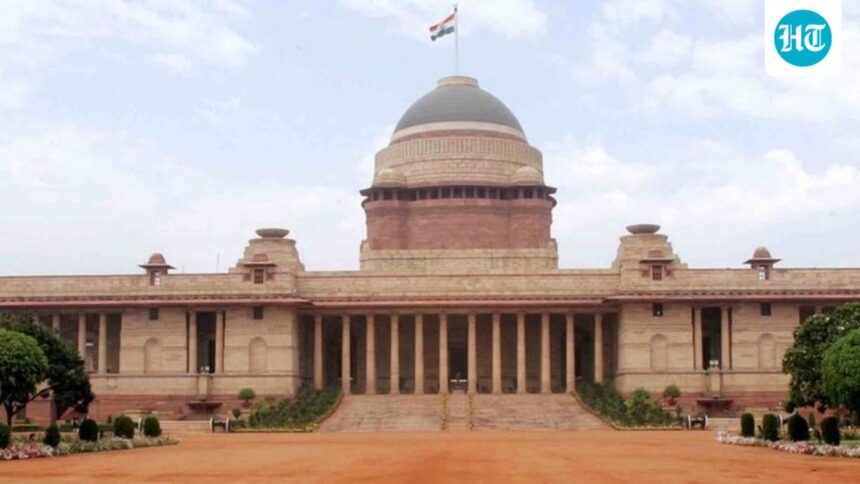
Amid the controversy over the now-withdrawn Class 8 social science textbook from the National Council of Educational Research and Training (NCERT), which includes a chapter on the judiciary, more than 50 academics and researchers have written to President Draupadi Murmu, alleging that the ban imposed by the Supreme Court amounts to “judicial overreach” that “violates academic freedom”.

In a letter dated April 7, the 51 signatories urged the President to intervene and ask the Union Education Ministry to move the Supreme Court to withdraw the ban and waive the “harsh punishment” imposed on Professor Michele Danino, teacher Subarna Diwakar and legal scholar Alok Prasanna Kumar noted. They said the issue could have “far-reaching consequences for Indian education”, raising concerns about the ban and action taken against members of the Textbook Development Team (TDT).
The signatories include academics from leading institutions such as Professor Amartya Dutta of the Indian Statistical Institute (ISI), Kolkata; Professor Anand Ranganathan of Jawaharlal Nehru University; Professor Anil Kumar Gureshetti from IIT Roorkee; Professor Arnab Bhattacharya from IIT Kanpur; Professor Chinmayi Tumbe from IIM Ahmedabad; and Professor Kausik Gangopadhyay of IIM Kozhikode, among others. They also include scientists and citizens like Dr. Johnson Udakkal, Commodore (Retd.), Indian Navy; Dr. Ritendra Sharma, Director, Center for Indian Studies, Ahmedabad; and Raghava Krishna, founder of Barhat Educational Trust.
NCERT Class 8 Social Science Textbook (Part 2), aligned with the National Education Policy (NEP) 2020 and the National Curriculum Framework for School Education (NCF-SE) 2023, was published on February 24. The dispute has been raised by the separation of judicial power, in particular references to dependency and corruption. The Supreme Court granted an automatic approval on February 26, called the content “offensive,” banned the book, and on March 11 directed governments and publicly funded institutions to part ways with Danino, Kumar, and Deokar.
Citing analyzes of legal experts, the signatories said that the matter constitutes “judicial overreach,” considering that the book can only be banned through law. They also cited a possible violation of “natural justice,” noting that the “draconian” punitive directives were issued without a hearing and could violate individuals’ fundamental rights, including livelihoods.
They also said the ban prevented teachers and experts from “objectively studying the controversial chapter” and “stifled” public debate about the challenges facing the judiciary. They said the court relied on “two sentences” without a “fair assessment” of the full class or curriculum, and ignored the new textbooks’ mandate to promote “critical thinking.”
The signatories suggested that the rest of the book could have been released without the controversial subsection, rather than a blanket ban. They warned that judicial intervention in “essentially an educational matter” risks creating “an atmosphere of intimidation.”
In their appeal, they urged the president to ask the government to withdraw the ban, allow publication without the contested dismissal, annul the measures taken against the three individuals, and ensure broader academic representation on the review panel.