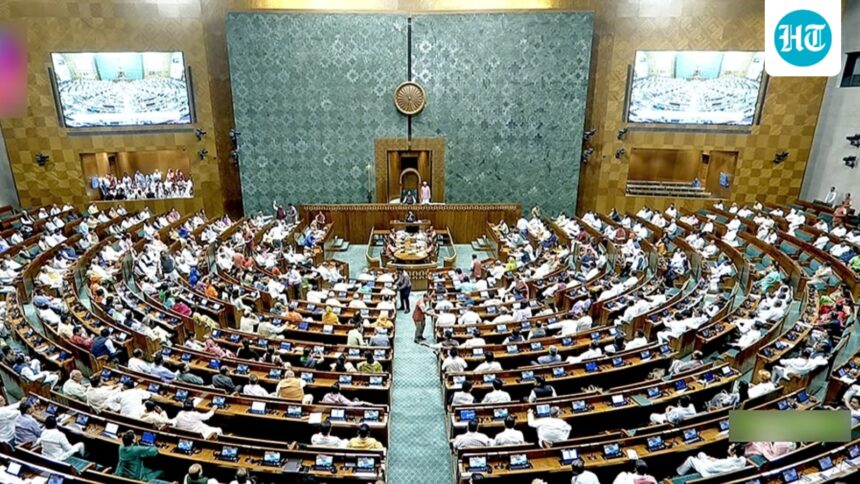
The Janata Dal United (JDU) on Monday issued a three-line whip to all its MPs in both Lok Sabha and Rajya Sabha, directing them to remain present in Parliament from April 16 to 18 during the upcoming special session of Parliament.

The JD(U), part of the National Democratic Alliance (NDA), which currently has 12 MPs in the Lok Sabha and four in the Rajya Sabha, has asked its members to ensure their presence throughout the three-day session.
This comes ahead of the three-day special session, where the government is likely to introduce amendments to the Nari Shakti Vandhan Adhiniyam Act to simplify its implementation. The legislation aims to provide 33 per cent quota for women in the Lok Sabha and state legislatures.
Earlier, the BJP had also issued a similar three-line whip to all its MPs, mandating their attendance from April 16-18.
“A three-line whip has been issued to all members of the BJP in Lok Sabha and Rajya Sabha from Thursday to Saturday, April 16 to 18, 2026. All Hon’ble Union Ministers and Members are requested to remain present in the House throughout the above three dates. Presence in the House is mandatory. No leave will be granted. Members are requested to strictly adhere to the whip and ensure their uninterrupted attendance in the House,” the party said in a letter. Your cooperation is greatly appreciated by the House.
The special session of Parliament, which begins on April 16, will primarily focus on amendments to the Women’s Reservation Act, also known as the Nari Shakti Vandhan Act. The Center is said to be planning two major changes to simplify its implementation. The original law, passed in 2023, had linked women’s reservation to the completion of the new population census and subsequent demarcation process.
However, due to delays in conducting the census, the government is now considering going ahead with delimitation based on 2011 census data. The proposed amendments are expected to increase the total number of Lok Sabha seats from 543 to about 816, with about a third of them reserved for women.
This legislation, along with the proposed demarcation bill, will likely be introduced as constitutional amendments.