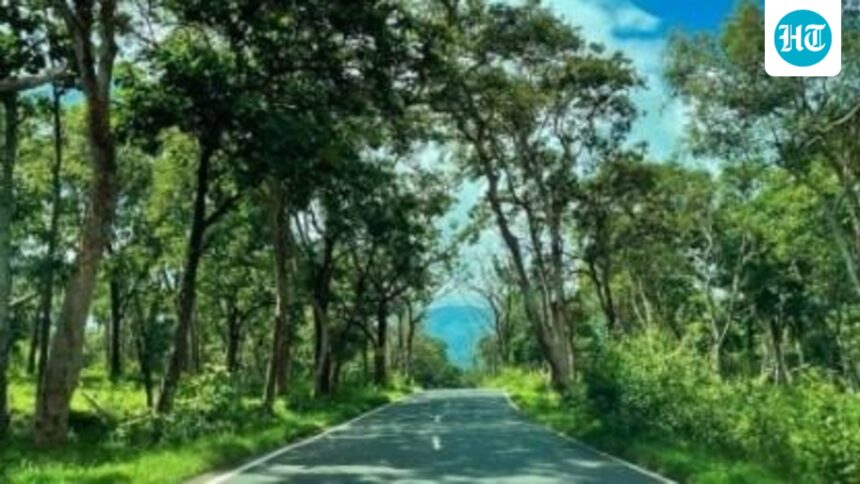
Karnataka has decided to completely reopen jungle safari operations in Bandipur and Nagarahole Tiger Reserves after accepting the Technical Committee’s assessment of the visitor capacity that the protected forests can safely accommodate.

The Prime Minister’s Office said the decision was made “based on the effective carrying capacity that was scientifically evaluated by a technical committee of experts and officials.” The government said it accepted the committee’s report and ordered the forest department to run safari services within a regulated framework.
“Directives have been issued to operate the jungle safari in an organized manner, in line with the recommendations of the committee,” the statement said.
“Karnataka has huge potential in eco-tourism and has consistently followed a model of sustainable tourism that generates local employment and livelihood opportunities while boosting the local economy,” a statement said.
The approval ends restrictions that have been in place since November 2025, when safari operations were suspended following a series of human wildlife conflict incidents, including attacks involving tigers and leopards in villages bordering the forests.
In February this year, the government allowed safari operations to resume at half its previous capacity. The number of vehicles was reduced, while working hours in the two reserves were reduced.
The duration of safaris in Bandipur has been reduced from eight hours to five hours, and services at Sunkadakatte and Nagarahole have also been operated for shorter durations. At the time, then Forest Minister Ishwar Khander said the decision to restore full operations would depend on the final assessment of the technical committee.
With the latest approval, safari services are expected to return to their previous schedule and capabilities, subject to implementation by the Forest Department.
Karnataka continues to pursue eco-tourism that protects forests while creating economic opportunities, the government said.
“The country remains committed to the ecotourism model that protects environmental integrity and ensures that tourism contributes positively to environmental conservation, local livelihoods and the visitor experience,” the statement said.
She added that sustainable tourism generated employment and livelihood opportunities for local communities while supporting the local economy.
Financial constraints have affected businesses associated with wildlife tourism. Industry representatives estimated that about 35 resorts around Bandipur and Nagarahole were almost loss-making together $3 lakh crore per day during the restrictions, while around 8,000 people directly or indirectly dependent on the sector were affected. Tourism operators also said that many visitors shifted to safari destinations in neighboring Kerala and Tamil Nadu during the period of restricted operations.
Speaking to Hindustan Times on Friday, Nagarahole Field Director and Deputy Conservator of Forests PA Seema said that no official government order has yet reached the reserve. “So far, we have not received any official order. If we receive it, we will start full-time operations from tomorrow itself,” Seema said.
Earlier in May, Karnataka Forest and Environment Minister Ishwar P Khander defended the state government’s decision to temporarily suspend safari operations in Bandipur and Nagarhole national parks last November, stating that the move was taken to protect human lives after a series of attacks on wildlife.
Addressing the question-and-answer session of the Assembly, Khandre was responding to Opposition Leader R Ashok, who said more than 4,000 people had lost their jobs due to the suspension of safari.