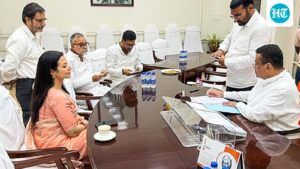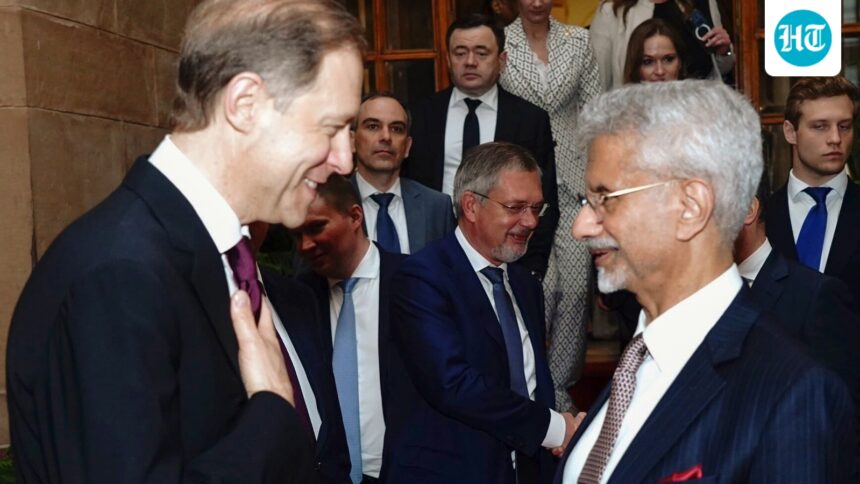
Russian First Deputy Prime Minister Denis Manturov met Prime Minister Narendra Modi and External Affairs Minister S Jaishankar on Thursday and discussed ways to enhance cooperation in vital areas such as energy and fertilisers.

Modi said on social media that he and Manturov discussed “mutually beneficial cooperation in trade, fertilizers, communication and people-to-people relations.” Modi praised the continued efforts made by the two countries to implement the outcomes of the Indo-Russian summit held during President Vladimir Putin’s visit to New Delhi last December.
Jaishankar said after his meeting with Manturov that the two sides focused on bilateral cooperation in trade, industry, energy, fertilisers, connectivity and mobility. The two sides also explored new opportunities in technology, innovation and critical minerals, he said in a social media post.
Besides, Jaishankar and Manturov also discussed regional and global developments, including the conflict in West Asia.
Russia has re-emerged as the largest energy supplier after the recent US waiver of sanctions to allow India to continue purchasing Russian energy. Russia’s importance as an energy supplier has increased following the interruption of shipments from West Asia due to the conflict sparked by Israel and US military strikes on Iran.
The Indian side is also looking to Russia for additional fertilizer supplies due to the disruptions caused by the conflict in West Asia.
Days before Manturov’s visit, Foreign Minister Vikram Masri and Russian Deputy Foreign Minister Andrei Rudenko chaired Foreign Ministry consultations in New Delhi and reviewed bilateral relations.
Manturov’s visit came on the heels of the Indian government’s decision to purchase five more S-400 air defense systems from Russia following the system’s performance during Operation Sindoor, the four-day conflict with Pakistan last year.
India struck a $5 billion deal with Russia in October 2018 to buy five S-400 air defense systems despite a US warning that the contract could attract sanctions under the Countering America’s Adversaries Through Sanctions Act (CAATSA). Russia has delivered three of these systems so far, although the delivery of the remaining two batteries was affected by the conflict in Ukraine.