NEW DELHI – Small car manufacturers may face greater regulatory challenges if a revised draft of the CAFE-3 law, which proposes to improve vehicle fuel efficiency and reduce carbon emissions, is implemented.
People involved in the deliberations said the latest proposed amendments would support larger vehicles, especially electric and hybrid cars.With the issue of Corporate Average Fuel Efficiency (CAFE) remaining unresolved due to conflict between automakers, the Prime Minister’s Office intervened in the matter and put pressure on the Ministries of Petroleum and Heavy Industry as well as the Ministries of Road Transport and Energy to finalize the standards.
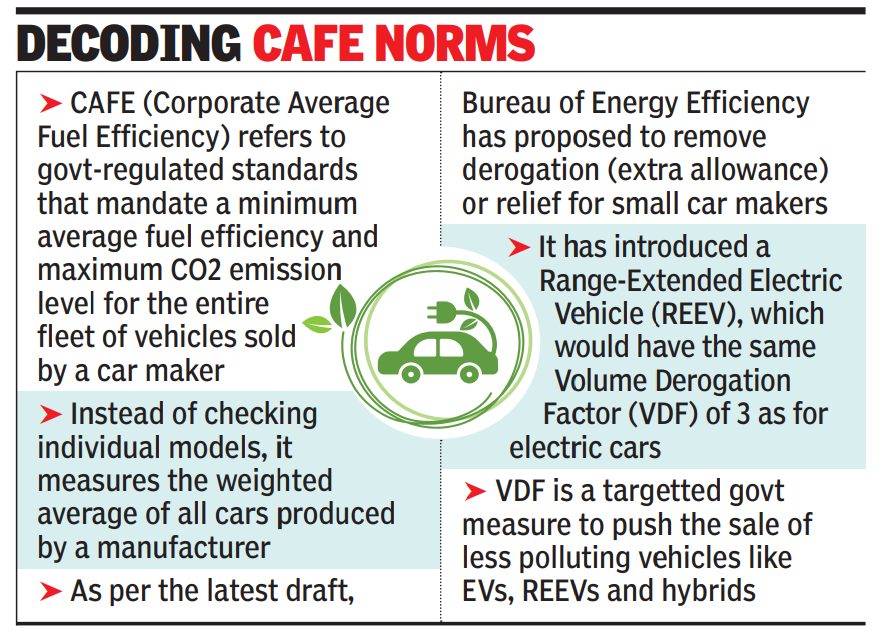
This is the third draft of CAFE-3 in the past two years.CAFE refers to government-regulated standards that mandate a minimum average fuel efficiency and maximum carbon dioxide emissions level for the entire fleet of vehicles sold by an automaker. Instead of checking individual models, it measures a weighted average of all cars produced by a manufacturer.
..
According to the latest draft of CAFE-3, which has not yet been released, the Bureau of Energy Efficiency (BEE) has proposed eliminating the exception (additional allowance) or relief for small automakers.
It has introduced a Range Extended Electric Vehicle (REEV), which will have the same volume reduction factor (VDF) of 3 as electric cars. VDF is a targeted government measure to drive the sale of less polluting vehicles such as electric vehicles, REEVs and hybrids.Removing the exception for small cars is expected to push up prices of entry-level gasoline cars, people familiar with the recent changes said. They added that REEV was introduced keeping in mind the current low penetration of EV charging infrastructure, range anxiety among buyers and uncertainty about battery life.There is debate about treating REEVs on an equal footing with EVs, considering that unlike EVs, these vehicles have tailpipe emissions when the engine is running.People familiar with the proposed policy said that since automakers are discouraged from manufacturing small cars that meet CAFE-related regulatory standards, the gap in people’s migration from two-wheelers to cars may widen.According to the draft rule, new vehicles under the proposed CAFE-3 system would increase costs by about 10%, as automakers would have to add more fuel-saving technologies to meet the new standards or face penalties, industry executives said.