It hurts when gasoline prices rise or when cooking gas becomes scarce. But have you ever wondered what enables the apps on your phone? Servers that store your photos? Or is artificial intelligence now rewriting the rules of our world?

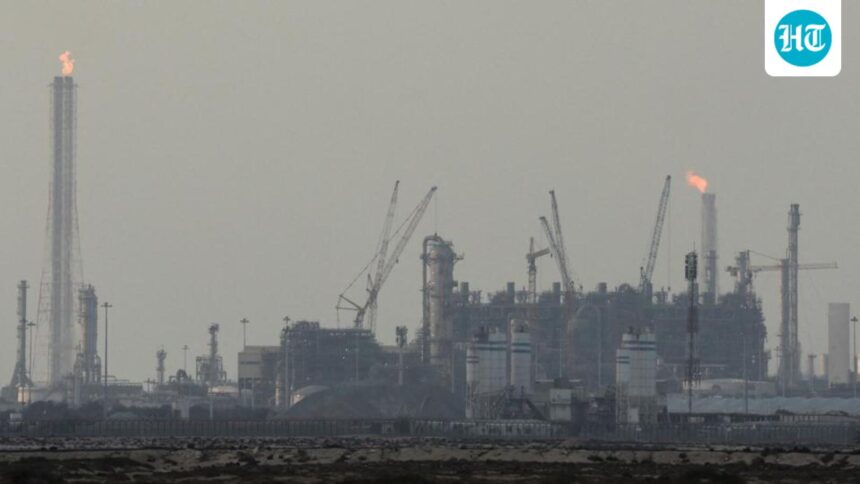
Last week, something happened in the Gulf. Huge LNG terminals in Qatar stopped operating due to force majeure. This is a legal term for an unexpected disaster. That’s also when the world’s most precise machines, semiconductor manufacturing plants, felt the first tremors.
To understand why, we must look beyond the code and to the “hidden plumbing” of the physical world. Most of us associate helium with birthday balloons. But it is the ultimate coolant in the world. In the “factories” where the chips are born, machines etch patterns onto silicon chips with microscopic precision. This process generates so much heat that it is cooled by helium. But we don’t just “find” helium; It is a complex byproduct of natural gas processing. Qatar produces about 25% of the global supply.
When this gas stops, the world of technology hits a wall. The lack of gas means machines freeze up, assembly lines grind to a halt, and silicon chips worth millions of dollars are instantly turned into expensive scrap metal.
But it gets worse. To “print” cutting-edge AI-enabled chips, like the ones inside the Nvidia H100, you need ultra-pure neon. This gas powers laser beams that etch the circuits.
Both gases are minor by-products of heavy industry, but without them, the entire AI revolution would simply run out of steam.
This is where mathematics changes: it is a calculation closely tracked by people like Dibajit Ghosh. Ghosh, a veteran of oil and gas markets who is now monitoring the Bengaluru fallout, points to the Strait of Hormuz as the ultimate choke point. A fifth of the world’s seaborne liquefied natural gas passes through these narrow and choppy waters. Unlike the Red Sea Route (where tankers can swing around Africa’s Cape of Good Hope), the Strait of Hormuz offers no bypass.
Qatar’s liquefied natural gas terminals are located deep in the Arabian Gulf. If the strait is closed, their cargo is effectively trapped. Instead, the “turn around” story goes back to US LNG tankers. The country is located such that these tankers can sail long distances around the Cape of Good Hope to reach premium Asian markets when supply in the Middle East evaporates.
This rerouting adds thousands of miles, Ghosh explains. They also require more fuel, more crew, and higher insurance premiums. Rental prices jump to $200,000 per day, an increase of 40%. This cascades through the system. This means higher energy prices. When this rate rises, industries come under pressure, factories reduce shifts, and fragile economies begin to tip toward recession.
The United States sits differently in this mess. It is now the largest exporter of liquefied natural gas, exceeding 100 million tons annually. When Middle Eastern supplies disappear, prices rise, and Americans are killed. India is suffering because half of its LNG imports come from Qatar. In return starving city gas and power plants.
Add to this the fact that India is the world’s second-largest consumer of fertilizer, and nearly 80% of domestic urea production is done using a century-old process of converting natural gas into bread. What that means is that every time gas prices rise, farmers pay an invisible tax. Ghosh says that if this problem is not resolved, it will be a matter of time before food prices rise.
Then came the “oh my god” moment this week. On Friday, March 6, speculation emerged online about Iranian strikes hitting Microsoft data centers near the United Arab Emirates. At the time of writing, it was being reported as Iranian disinformation. But what has been confirmed is that Amazon Web Services (AWS) was hit two days ago. The point is that what resides on these servers is not a generic “cloud” backing up regular data; These are the processes that support the complex banking and financial infrastructure. By targeting these regions, a message is being sent that the Gulf is no longer a “safe bet” for digital infrastructure.
The reality we face now is that our digital lives depend on physical constraints in some of the most volatile areas on Earth. A blockade or missile strike not only increases the fuel bill; It risks latency in Bengaluru and outages in data centers in Mumbai. National security now includes these lifelines. Geopolitics has finally arrived on our screens and semiconductors are power. Whoever believes in the energy that fuels this, believes in the future.
(Charles Assisi is co-founder of Founding Fuel. He can be reached at assisi@foundingfuel.com)