India and New Zealand on Monday signed a free trade agreement that Prime Minister Narendra Modi said would increase farmers’ incomes, boost rural economies and attract billions of dollars in investment, as the two countries outlined plans for agricultural partnerships, manufacturing linkages and joint exports to global markets.

The agreement, concluded in just nine months, provides duty-free access to 100% of India’s exports to New Zealand, and opens the door to agri-tech partnerships, joint ventures and low-cost industrial inputs for Indian manufacturers.
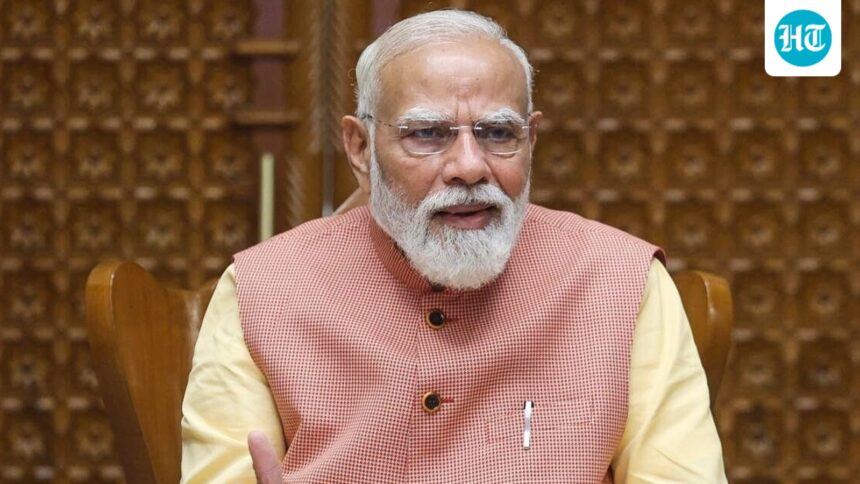
In a written message read by Union Commerce Minister Piyush Goyal during the signing ceremony in New Delhi, Modi, who was in West Bengal, said the agreement would combine New Zealand’s agricultural expertise with India’s development priorities. Modi was in Bengal.
“The Agricultural Productivity Partnership and Centers of Excellence combine New Zealand’s advanced agricultural expertise with India’s national priorities to drive transformative gains in productivity and infrastructure, while delivering meaningful benefits to our farmers and rural economies,” he said.
Read also | Signing of a free trade agreement between India and New Zealand: an investment of $20 billion, 5,000 entry visas and exemption from customs duties | Inside the historic deal
Goyal said India has fully protected the interests of local farmers and the dairy sector while selectively leveraging New Zealand’s strength in efficient agricultural practices.
Pointing to the cultivation of kiwifruit and Manuka honey, he said Indian farmers could benefit from technology transfer, improved pollination methods and modern beekeeping systems. “I have visited kiwi farms in New Zealand run by farmers from Punjab. They have perfected this technology to produce high-quality fruits in large quantities,” Goyal said.
He added that honey and beekeeping opportunities could particularly benefit farmers in Uttar Pradesh, West Bengal, Punjab, Bihar and Rajasthan.
New Zealand Trade Minister Todd Maclay described the agreement as one of the “highest quality” free trade agreements and said companies from both countries would look to jointly manufacture and export products to global markets. “I think you will see companies from New Zealand coming in and looking for partners in India,” he said. “Products from New Zealand and India mixed together could be an opportunity to sell to other countries. That’s how modern trade agreements work.”
Under the agreement, New Zealand pledged $20 billion in investments in agriculture, manufacturing, infrastructure, start-ups, innovation and emerging technologies.
Modi said the investment commitment will complement the ‘Make in India’ program and strengthen India’s role in global supply chains. “This will support the ecosystem of startups, entrepreneurs, innovators, women-led businesses, and MSMEs, revitalizing job creation and redefining innovation-led growth,” he said.
Goyal said the Indo-New Zealand agreement is India’s seventh free trade agreement in the past three-and-a-half years, with negotiations underway with the European Union and the United States. He said India now has or is seeking to implement trade arrangements covering approximately 65 to 70% of global GDP.
Negotiations with New Zealand began on March 16, 2025, and ended on December 22, 2025. Officials said the agreement is expected to enter into force later this year after it is ratified by the New Zealand Parliament.
The FTA is expected to boost labour-intensive sectors including textiles, clothing, leather, footwear, gems and jewellery, engineering goods and processed food through improved access to the New Zealand market. New Zealand has previously imposed tariffs of up to 10% on many Indian exports, including ceramics, carpets, cars and their components.
India is also working to secure duty-free access to inputs such as logs, coke and scrap metal, which could lower costs for manufacturers.
India has provided measured market access while protecting politically sensitive sectors, especially dairy products, officials said. India offered to liberalize customs duties on 70.03% of the tariff lines covering 95% of the value of bilateral trade, while it excluded 29.97% of the tariff lines.
Items kept on the exclusion list include dairy products such as milk, cream, whey, yoghurt and cheese; Most animal products other than sheep meat; Agricultural products including onions, chana, peas, maize and almonds; sugar; Artificial honey; animal, vegetable or microbial fats and oils; Weapons and ammunition; Gemstones and jewelry. Selected copper and aluminum products.
While 30% of the tariff lines will see immediate elimination of tariffs, including lumber, wool, sheep meat and raw hides, 35.6% will see tariffs phased out over three to 10 years on products such as petroleum oil, malt extract, vegetable oils, selected electrical and mechanical machinery and peptones.
Another 4.37% of products will face tariff cuts, including wine, medicines, polymers, aluminium, iron and steel. Another 0.06% falls within tariff quotas, including Manuka honey, apples, kiwifruit and albumins including milk albumin.
The separate Agricultural Productivity Partnership is a key pillar of the deal. They include centers of excellence, improved agricultural materials, farmer training, joint research and technical support in orchard management, post-harvest systems, supply chains and food safety.
Officials said projects dedicated to apple growers and sustainable beekeeping could help raise production and quality standards.