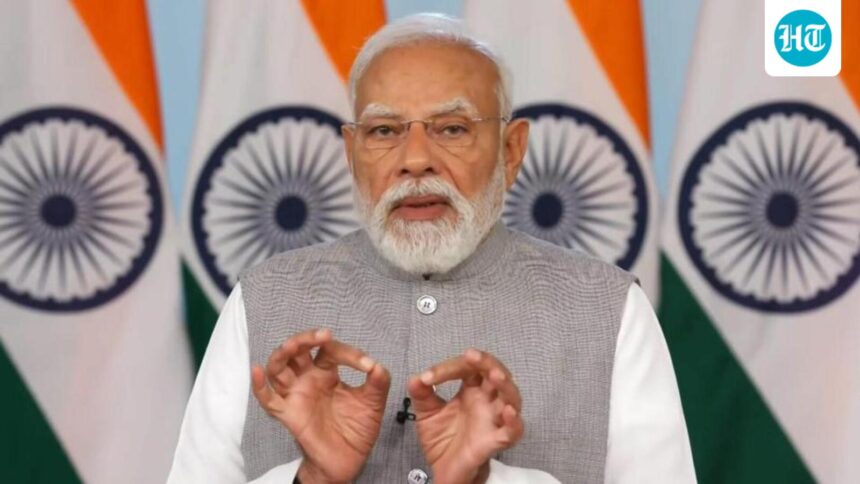
Prime Minister Narendra Modi, in his 133rd Mann Ki Baat address on Sunday, highlighted recent developments in India’s nuclear and renewable energy sectors, describing the 500 MW Prototype Fast Breeder Reactor (PFBR) at Kalpakkam in Tamil Nadu, which achieved first criticality on April 6, as a “historic milestone” for the country’s civil nuclear programme.

Criticality marks the beginning of a controlled fission chain reaction in the reactor core. Although the commercial operation of electricity production will take some time, it represents a step towards the successful operation of the second phase of India’s three-phase nuclear programme.
He said the reactor was built using indigenous technology and described breeder reactors as systems that can generate energy while also producing new fuel.
This comes on the back of the Shanti Bill 2025 – the sustainable harnessing and development of nuclear energy to transform India – which was passed by Parliament in December 2025. The bill represents a comprehensive reform of India’s nuclear energy laws. This law replaces old laws issued in 1962 and 2010 and opens nuclear energy to private and foreign participation. By streamlining licensing processes, strengthening regulatory structures, and enabling broader participation in nuclear infrastructure development under specific safeguards, the Shanti Law of 2025 creates the necessary institutional conditions to scale up advanced nuclear technologies through public and private sector participation.
On governance, PM Modi spoke about preparations for the 2027 Census, which will be conducted digitally. Citizens will have the option to self-count using the app before census takers visit households, he said, adding that more than one million households have already been covered in the initial listings.
“The 2027 Census has gone digital…You can enter your information yourself,” PM Modi said.
Talking about renewable energy, he said India’s installed wind power capacity has crossed 56 GW, with around 6 GW added in the last year. “India now ranks fourth globally in wind energy capacity,” he said, citing states like Gujarat, Tamil Nadu, Maharashtra and Rajasthan as major contributors.
He also pointed to India’s performance in the European Girls Maths Olympiad, where the country came in sixth place, and noted the growing global recognition of Indian cheese varieties following international awards.
Modi concluded his speech by recalling historical and cultural milestones, including the upcoming birth anniversary of Rabindranath Tagore and the legacy of the 1857 uprising, while urging citizens to actively participate in national initiatives such as the census.