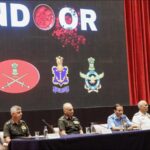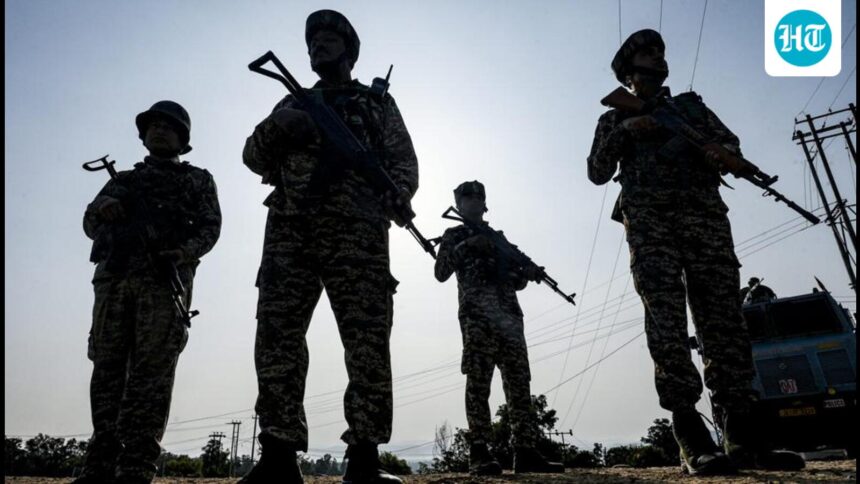
For 88 hours during Operation Sindoor, Pakistan launched wave after wave of drones and loitering munitions targeting airfields and airfields across India – from Srinagar and Jammu to Amritsar and Bhuj. Not a single runway, hangar, or airport building was hit. Pakistan targeted airfields and airports after Indian forces bombed nine terrorist camps and centres, killing at least 100 terrorists. Over the course of 88 hours, when India retaliated against Pakistan, it struck 13 Pakistani air bases and military facilities.

Senior government officials say the short, intense conflict offered security forces a glimpse into the future of warfare – where airports and air bases could become front-line targets in wars increasingly fought through drones and air strikes. During those four days, the government temporarily closed 32 airports to civilian air traffic at the height of the fighting.
Read also | Four Days in May: How the Sindoor Process Evolved
Since the May 2025 conflict, government agencies in India have spent the past year quietly overhauling airport security and air defense preparedness, installing anti-drone systems at all vulnerable airports, building specialized bunkers near airports, and creating synergy between India’s military and paramilitary forces to train security personnel for a new kind of warfare.
“When the fighting started, Pakistan sent armed drones targeting various airports starting from Srinagar and Jammu. The Indian security forces, army and nuclear suppliers group shot down those drones. Although the border areas of Jammu and Kashmir have civilian bunkers, we did not have bunkers near airports before. When the drones started hovering around the airports, the forces built temporary bunkers at these vulnerable airports to protect civilians as well as other people in the airport premises. Last year, such One of the security forces officers, who requested anonymity, said: “They were constructed in large numbers in specific locations for safety during war or air threats.”
Read also | No safe haven for terrorism: Army warns Pakistan on anniversary of Operation Sindoor
While there were reports that India may have lost some aircraft during the fighting – something senior military officials have not publicly denied – no Indian airport or air base suffered damage during the conflict. Over the past year, the government also released evidence of munitions intercepted near Srinagar and Jammu airports and photos of intact air bases that Pakistan claimed to have struck.
In June 2025, just two months after Operation Sindoor, the Indian Army organized specialized commando training in the hills of Jammu and Kashmir for personnel serving in the Indian security forces’ Quick Reaction Teams (QRTs). The CISF guards at least 71 airports and airports across the country. The Union Home Ministry has pushed for greater operational synergy between the army and paramilitary forces to ensure that airports are protected by personnel trained by the Indian Army for modern combat scenarios, officials familiar with the matter said.
“The first batch of 55 personnel was trained in the Valley (Srinagar). Since then, approximately 490 QRT commandos have undergone training in line with NSG standards. This was the first time that CISF commandos were trained in large numbers by the Army. QRT commandos were trained to deal with terrorist attacks and neutralize enemy drones using guns or jammers. Today, every airport has an anti-drone mechanism at its disposal, whether from Army, NSG or any other Central Armed Forces (CAPF),” the above-mentioned official said, adding that the CISF has also amended its rules and standard operating procedures (SOPs) for QRTs at airports.
A Central Security Force official, requesting anonymity, said that after Operation Sindoor, the force had reduced the maximum age of commandos to 35 years from the previous age of 45 years. It sought to make them more prepared for battle. “There have been small but important changes, such as the minimum age. It is now mandatory for every QRT commando to take the Battle Physical Efficiency Test (BPET) set by the NSG every month. Previously the test was conducted only once a year. QRT commandos must pass a night firing test, which was also not required before. They must all be certified in anti-drone warfare. Anyone you see in a QRT at the airport is a commando who has been trained by the best in the world,” the official said. “The country.” Adding that the Ministry of Interior is working to place all sensitive airports under the cover of CISF during the next few years. Currently 36 sensitive airports remain under the cover of the state police and not the authorized federal agency. One such vulnerable airfield in Aizawl, Mizoram, near the Indo-Myanmar border was allotted CISF cover in December last year. Darbhanga, in Bihar state near the Indo-Nepal border, will also get CISF protection starting this week.
Earlier this year, the CISF also commissioned a drone training center and counter-drone capability in Behror after getting approval from the Home Ministry. Officials said 4,493 counter-drone operators have already been certified through the institute.
“After Operation Sindoor, the Home Ministry wants to provide anti-drone cover to every vulnerable sector, not just airports, so nodal agencies have been appointed for each sector. The Civil Aviation Security Bureau will install the latest system at airports; the Border Security Forces are in charge of the border areas; and the CISF is handling critical installations. Each committee has already provided qualitative requirements and pilot guidance for the next generation anti-drone systems to be deployed across these sectors,” a second security forces official said.
On May 7, 2025 – hours after India launched Operation Sindoor – the Union Home Ministry carried out a massive mock exercise across 244 vulnerable areas to test the preparedness of civilians against air attacks. Sirens were sounded over government buildings in cities, and a number of northern and western border areas were activated to evaluate their effectiveness. Many of these warning systems, originally installed during previous decades of military tension, have not been used for years. Since that morning, exercises have been held regularly to prepare civilians in the event of another war. As part of the broader preparedness exercise, improved alarms and warning systems have since been installed in several government buildings and strategic locations.
Similar systems have also been quietly installed at civilian airports, but they serve a very different purpose there.
The second officer, who requested to remain anonymous, added: “Last year, horns were installed at many civilian (non-military) airports. We did not have these devices before.” “It is better that the siren never goes off, because if it does, it means an enemy drone is in the air; we are under attack and the forces must shoot it down.”