May 7, 2025: Two weeks have passed since the brutal killing of civilians by terrorists in Pahalgam in Jammu and Kashmir, and anger is boiling across India. While there was confusion about how India would respond, no one was able to say anything about the nature or timing of the response. Amid despair and anger at the loss of civilian lives in the valley, a message from the Indian Army appeared shortly after midnight, it was announced “Operation Sindoor”and military action against terrorists and terrorist infrastructure in Pakistan and Pakistan-occupied Kashmir.

What began as tackling and dismantling terrorism quickly turned into launching strikes on Pakistani military installations, in response to the neighbor’s first launch of drones targeting Indian military installations.
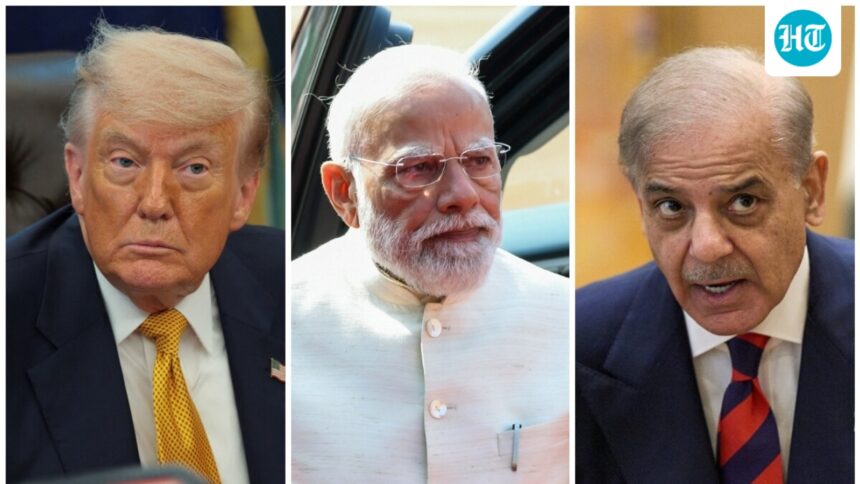
The next three days were very exciting for India, as it had to not only deal with the incoming drones, but also with the false narrative put out by Pakistan about India’s losses during the conflict. The United States quickly attracted attention as well, with President Donald Trump declaring a ceasefire in India and Pakistan on May 10. However, India has maintained its diplomatic stance throughout and to this day, denies any third-party interference.
Significant damage to Pakistan in Operation Sindoor
On April 22, 2025, tourists in the Baisaran Valley in Pahalgam in Jammu and Kashmir were surprised when terrorists stormed into forests and started shooting at them, killing 26 civilians. Fifteen days later, on May 7, India launched Operation Sindoor to retaliate for the attack, killing at least 100 terrorists in the process.
However, the operation was not limited to terrorist operations after Pakistan launched drones, targeting army installations in Jammu, Pathankot and Udhampur. Power outages were reported in parts of Punjab, including Pathankot, Hoshiarpur and Amritsar.
Indian forces were able to repel all the attacks, but in a befitting response also dealt a heavy blow to Pakistan’s military infrastructure, including the country’s frontline facilities such as the Murid and Nur Khan air bases. According to Air Chief Marshal A P Singh, Pakistan has also lost around 13 aircraft, including fighter jets such as US-made F-16s and Chinese-origin JF-17s, to India’s precision strikes.
Pakistan’s own goals in spreading fake news
Since the beginning of Operation Sindoor, several false narratives have appeared online claiming significant gains for Pakistan. Be it fake videos of the ‘successful’ Pakistani attack on Indian Army bases or the numerous claims made by the Pakistani leadership after the ceasefire, India has debunked all these arguments.
In some cases, this was a self-imposed goal for Pakistan.
During an attempt to float anti-India rhetoric in December, the Pakistani Foreign Minister said Ishaq Dar ended up admitting how Operation Sindoor had crippled the country’s military installations. He confirmed the Indian strikes on the Noor Khan Air Base in Chaklala in Rawalpindi and the extent of the damage to the military facility there. “Within 36 hours, at least 80 drones were dispatched. We were able to intercept 79 of the 80 drones. Only one drone damaged a military facility and personnel were also injured in the attack,” Dar said in a press conference.
How India and Prime Minister Modi tore Pakistan apart
Pakistan has on several occasions tried to claim victory during Operation Sindoor, an assertion which India has vehemently denied at every opportunity, including at the United Nations. India responded strongly to Shehbaz Sharif’s twisted account of the May conflict during his speech at the United Nations and criticized Pakistan for glorifying terrorism. “If the destroyed runways and burning hangars sound like a victory, as the Prime Minister claimed, then Pakistan is welcome to enjoy it,” Betal Gahlot, First Secretary at India’s Permanent Mission to the United Nations, said in September 2025.
Her statements came after Sharif falsely claimed “Unprovoked aggression” by India, and said civilians in Pakistan were also targeted. However, India has long maintained that its moves are only aimed at dismantling Pakistan’s terrorist infrastructure and have never attacked civilians.
India has long pointed to Pakistan’s role in harboring terrorism, an assertion also supported by Prime Minister Narendra Modi. He has always made it clear that India does not see terrorists and the government that supports them as two separate entities.
Months after the cessation of hostilities between the two sides, Prime Minister Modi criticized Pakistan, claiming that the border state should appeal to India to stop the action. “Pakistan has made a call… I have submitted a request before the Directorate General of Surveillance, ‘Bas karo… bahut maara (Stop it… You have beaten enough), now we do not have the strength to bear any more beating, please stop the attack’,” he added. He said during his Lok Sabha speech.
India demands the ceasefire announced by Trump
Pakistan’s claims were not the only ones that India dealt with after Operation Sindoor. The United States also intervened, with President Donald Trump saying he played a role in brokering a ceasefire between the two sides, a claim he has repeated countless times.
While Pakistan supports Trump in this assertion, India has denied any third-party mediation and continues to do so. “The record of what happened at that time was very clear and the ceasefire was something that was negotiated between the Directorate General of Observers of the two countries…” Minister of Foreign Affairs S Jaishankar said last year.
Trump even linked the truce to trade concessions, another allegation that India denied, saying the issue never came up in any discussion with the US during the military escalation in May.