Union Minister for Jal Shakti (Water Resources) C R Patel on Wednesday said that India is doing everything possible to ensure that “not a single drop” of Indus water flows into Pakistan, as the Indus Water Treaty remains suspended since last year.

He also said that under the directions of Prime Minister Narendra Modi, Home Minister Amit Shah is personally monitoring the matter.
“It is still in place, the treaty has remained pending. Since PM Modi took this decision, every effort is being made to ensure that not a single drop flows there. Under the directions of the Prime Minister, Home Minister Amit Shah is personally monitoring the matter and we are actively working on it,” Patel told news agency ANI while talking about the Indus Water Treaty.
He added: “I believe that the work is progressing according to a specific schedule, and the flow of the Indus River waters into Pakistan will stop, as I can say. It is certain – not a single drop of water will go away in the coming years; I can tell you that much…”
India suspended the treaty with Pakistan after the horrific terrorist attack that took place in Pahalgam, Kashmir, on April 22 last year, which left 26 people dead, most of them civilians.
What is the Indus Waters Treaty?
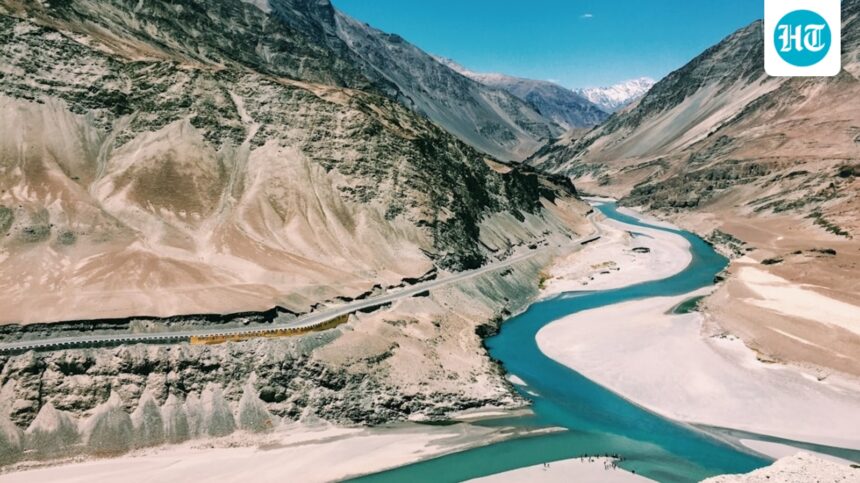
The Indus Water Treaty sets out a water-sharing and information-exchange mechanism between India and Pakistan for the use of water from the Indus River and its five tributaries: the Sutlej, Beas, Ravi, Jhelum and Chenab. The treaty was brokered by the World Bank, also a signatory, and was signed after negotiations lasting more than nine years following the first war over Kashmir.
It allocates water from the western rivers (Chenab, Jhelum and Indus) to Pakistan and the eastern rivers (Ravi, Beas and Sutlej) to India for unrestricted use. India is permitted to extract water from western rivers for certain non-consumer, agricultural, domestic, and hydroelectric uses.
India criticizes Pakistan for suppressing PKK protesters
India on Tuesday criticized Pakistan over reports of a violent crackdown on protesters in Pakistan-occupied Kashmir, and accused Islamabad of trying to hide its failures through a disinformation campaign.
Foreign Ministry spokesman Randhir Jaiswal, during a weekly press conference on Tuesday, said Pakistan was resorting to “fake news and videos” to divert attention from developments in the region.
“In this context we continue to see a pattern of fake news and videos emanating from Pakistan,” Jaiswal said. “It is a desperate attempt by Pakistan to cover up its failures and divert attention away from its human rights violations.”
He added: “There are reports of severe police brutality in Pakistan-occupied Kashmir, in which many protesters were killed and many injured. We hope that the international community will hold Pakistan accountable for its misdeeds and violations.”