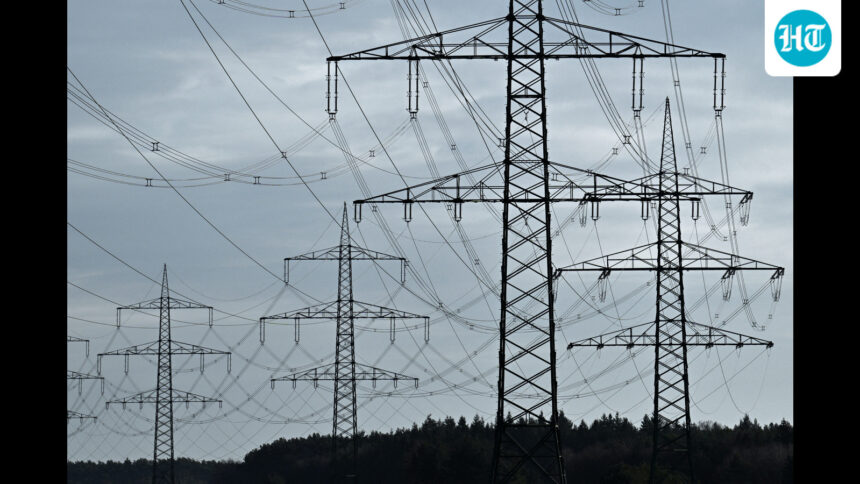
The Turkish-Australian co-presidency of COP 31 on Tuesday proposed raising electricity’s share of final global energy demand from just over 20% today to 35% by 2035, the main target of the action agenda launched at the Bonn climate meeting.

The “35 x 35” target is backed by analysis from the International Energy Agency (IEA) and the International Renewable Energy Agency (IRENA), and is designed to support the Paris Agreement and keep global warming to within 1.5°C above pre-industrial levels. The United Nations Climate Change Conference (COP31) is scheduled to be held in the Turkish city of Antalya next November.
The proposal comes as a spike in fuel prices due to the West Asian war and supply chain disruptions has renewed pressure on countries to accelerate the transition to clean electricity across buildings, transport and industry.
“The current global energy crisis is accelerating the world’s transition to the electrification era, amplifying key trends such as the emergence of artificial intelligence and growing energy demand from air conditioning, electric vehicles, industry and others,” said Fatih Birol, Executive Director of the International Energy Agency.
“IPCC assessments have consistently highlighted the electrification of the economy as a key tool for moving towards a low-carbon future. The crisis in West Asia has brought this strategy back into focus. Electrification of all sectors is arguably the most important strategy for enhancing energy security. The COP31 President’s call is thus not only crucial from a long-term decarbonisation perspective but from a near-term crisis management perspective as well,” said Vaibhav Chaturvedi, Senior Fellow at CEEW.
The president-designate of COP31, Murat Kurum, also announced the goal of halving global waste growth by 2035 and reducing the energy intensity of the building sector by at least 25% by 2035. The co-presidency commissioned the IEA to draft special reports outlining pathways to both goals.
“Electrification has already led to a global surge in clean energy, driving growth and jobs,” said UN Climate Chief Simon Steele. “Repowering the global economy with energy supplies is critical to breaking the world’s addiction to coal, oil and gas, reducing energy costs, and restoring energy security.”
The Union Environment Ministry delegation, which represents India at the Bonn meeting, is attending the sessions virtually, though some representatives from other departments are attending in person, according to people familiar with the matter.
China, speaking on behalf of the Like-Minded Developing Countries (LMDC), a bloc that includes India, said climate financing and addressing protectionist trade policies by developed countries would be key demands in Bonn and at the UN Climate Change Conference (COP31). The LMDC delegate noted that the current replenishment of GEF resources is the lowest in 16 years. He added: “Our main task here is to maintain the momentum of unity, solidarity and cooperation in addressing climate change,” calling for finding means of implementation to accompany mitigation commitments.
SB64 was inaugurated this week amid a fuel crisis and an approaching El Nino phenomenon expected to bring severe weather to parts of Asia, HT reported on Monday.