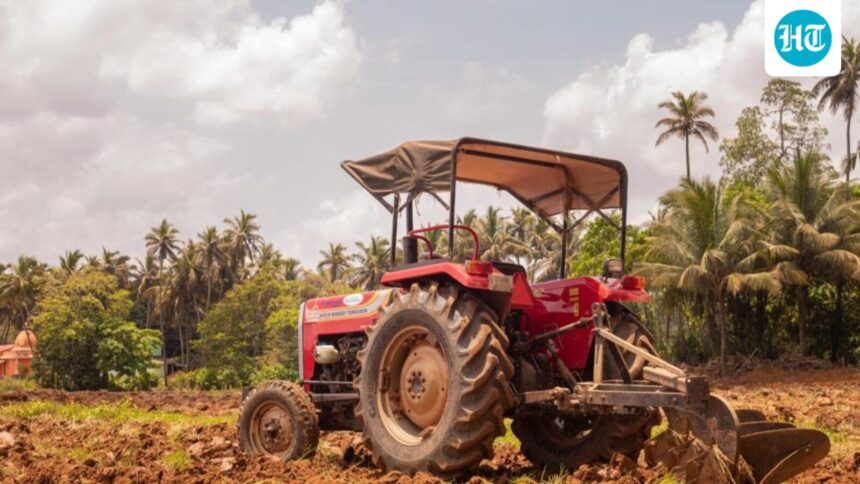
The center has proposed new emissions standards for tractors, harvesters, plows and construction equipment.

The Ministry of Road Transport and Highways (MoRTH) has proposed tightening Rule 115A of the Central Motor Vehicles Rules, 1989, by introducing TREM Stage V (Tractor Emissions Stage V) norms for agricultural machinery and enhancing CEV Stage V (Construction Equipment Vehicles Stage V) norms for construction equipment through a draft notification issued on Friday. The public can provide comments on the draft within the next 30 days.
In the sector of tractor engines from 56 to 560 kW, particulate matter limits will be reduced by 40%, effective October 1, 2026. For the first time, manufacturers in this sector will also have to control not only the weight of particles emitted but the number of particles emitted, a move that effectively pushes companies towards advanced emission control technologies.
Read also:Garbage trucks will be banned if dumping does not stop within a month: MIT advisor
The 37-56 kW category will see a similar tightening of 40%, despite having a longer runway. These engines will move to the stricter limit as of April 1, 2032.
The most dramatic change is proposed for smaller tractors in the 19-37 kW range. This sector will first move to the intermediate standard in 2028 and then, by April 1, 2032, it will move to the fifth stage border. Between the current phase and the final phase, particulate emissions in this category are set to fall by approximately 96%, representing one of the largest reductions across sectors.
Higher power engines above 560 kW will also be subject to Stage 5 standards from 1 October 2026, bringing them into a stricter regulatory grid.
“The draft TREM regulations take India part of the way towards global emissions standards but stop at the most crucial point. While tractors below 25 hp and above 75 hp will move to TREM V by 2026, bringing it in line with the EU and bypassing the US, the 25-50 hp segment, which makes up half the domestic market, will remain on the outdated standards until 2032,” said Aravind Harikumar, who leads the roads. Rugged. Decarbonization research in India for the International Council on Clean Transportation.
“This delay means India will continue to allow tractors that emit 20 to 40 times more particulate matter than those sold in the US and EU. Even the interim TREM IIIAA standard proposed for 2028 still allows particulate levels about 20 times higher than TREM V. This threatens to lock up highly polluting tractors for the next decade and undermine gains from cleaner vehicles and fuels elsewhere,” he added.
Construction equipment vehicles are already moving to CEV Stage V standards as of January 1, 2025 in several energy classes. These standards similarly require sharp reductions in particulate emissions and impose limits on particle counts in multiple sectors.
The draft explains that more stringent standards will apply to fuel types – including diesel (B7), compressed natural gas (CNG), CNG, liquefied natural gas (LNG), liquefied petroleum gas (LPG), hydrogen, ethanol blends such as ED95, flex-fuel options and up to 100% biodiesel blends. It also formally defines hydrogen-enriched compressed natural gas (HCNG), specifying the proportion of hydrogen and methane that can be used.
The government proposed a nine-month period to register vehicles manufactured before the new deadlines to facilitate the transition period.