New Delhi
New Book Chronicles 1945 INA Court MartialIn November 1945, the court-martial of three officers of the Indian National Army (INA), Colonel Prem Sahgal, Colonel Gurbaksh Singh Dhillon and Major-General Shah Nawaz Khan, began at the Red Fort in Delhi. The three men were convicted of “waging war against the King-Emperor” and at the end of the trial were sentenced to life imprisonment, but what followed was the precursor to the end of the British Empire in India.
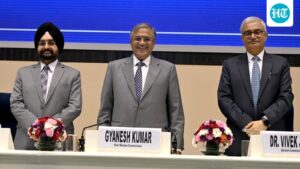
In his new book ‘The Trials That Shook Britain: How a Court Martial Hastened Acceptance of Indian Independence’, veteran journalist and Oxford University academic advisor Ashish Ray traces how the INA trials accelerated India’s march to independence. The book was launched on February 6 at the India International Center (IIC) in New Delhi.
Roy’s book arose out of a year-long thesis he wrote at Oxford. “In an earlier book, I mentioned as a one-liner that the INA trials could accelerate the freedom movement,” he told HT. Although he was initially unsure of finding sufficient evidence, he was invited by the head of Exeter College to investigate the link further. “Fortunately, I was able to find the answer I was looking for.”
“In our freedom struggle, the role played by the Indian National Army has not been sufficiently taught and highlighted,” remarked IIC Director KN Srivastava to open the discussion. The book describes how the British government’s decision to court-martial INA officers in 1945 was meant to set a precedent against imperial opposition, igniting mass political movements that united people across religious and regional lines. Ray shows how the INA was transformed into a symbol of resistance through trials that were previously censored from the Indian public. As the three men belonged to the Sikh, Muslim and Hindu communities, there was universal outrage and solidarity across religions.
More Read
Senior lawyer and Congress MP Abhishek Singhvi elaborated on the important role played by Bhulabhai Desai in leading the defense of the INA officers, describing how for the first time international law was invoked to question the actions of the British Empire. Singhvi highlighted how Desai’s arguments presented the INA soldiers not as traitors, but as soldiers of a provisional government struggling for India’s liberation.
Subashini Ali, CPI(M) leader and daughter of Colonel Prem Sahgal, recalled the personal and historical significance of the trial. He reflected on how the trials of INA members brought people of different political ideologies together in the post-independence years, and argued that the solidarity shown during the trials’ reunions led to India’s liberation from the British.