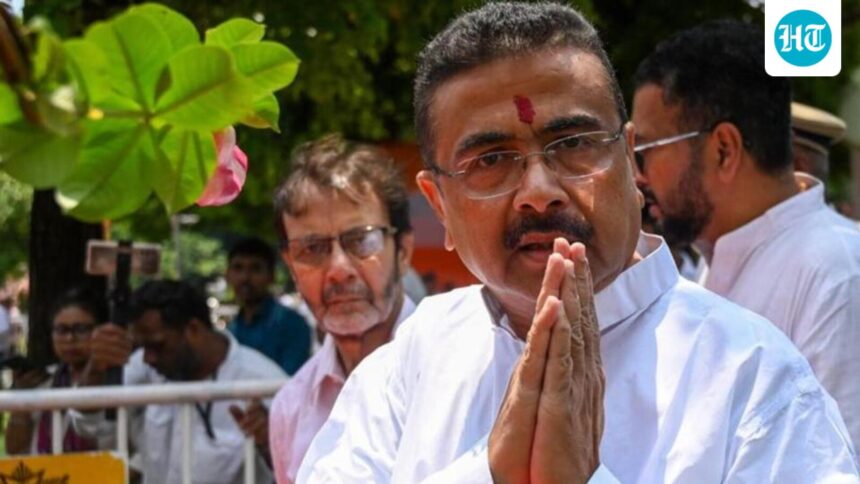
The new anti-crime law passed by the West Bengal Legislative Assembly will come into force from July 13, Chief Minister Suvendu Adhikari said on Friday.

“The governor has given his assent to the bill related to control of anti-social activities. The law will be implemented across the state from Monday,” Adhikari told reporters in Murshidabad district.
In June this year, the West Bengal Assembly passed two stringent anti-crime bills – the West Bengal Public Safety and Control of Anti-Social Activities Bill, 2026 and the West Bengal Maintenance of Public Order (Amendment) Bill, 2026.
While the West Bengal Public Safety and Control of Anti-Social Activities Bill, 2026 includes provisions for preventive detention for up to 12 months without trial, the West Bengal Maintenance of Public Order (Amendment) Bill, 2026 allows confiscation of the offender’s property for auctioning to compensate for losses.
They are modeled on laws implemented in some BJP-ruled states such as Uttar Pradesh, Gujarat, Maharashtra and Bihar to curb organized crime, extortion and public disorder, and have been specially drafted in light of incidents such as the 2025 Beldanga riots, which began during Muslim protests against the Waqf (Amendment) Act.
The Prime Minister also said that the police and district administrations have been directed to ensure the release of Hindu refugees, who came to India after crossing the Indo-Bangladesh border and are currently languishing in jails.
He added: “There are Hindu refugees in prisons. I have directed the district judge and the police to discuss the matter with the public prosecutor and release them.”
The police have also been directed to actively pursue cases related to crimes against women until the accused are convicted.
“We have directed the police to take strict action against those involved in crimes against women, including human trafficking cases in the border areas. There are many cases in which the lower courts have convicted the accused, but they have transferred the Supreme Court and the cases are pending. The district police and its administration have been directed to follow up the cases with the State Prosecutor and Additional Solicitor General until the accused are convicted,” he added.
The Prime Minister also directed the police to increase coordination with the border security forces so that more illegal immigrants can be deported.
“The police have been directed to have zero tolerance towards illegal immigrants. Only about 69 people have been sent across the border (from Murshidabad). The number is very small compared to several thousand such people living in the state. The police have been asked to increase their coordination with the Border Security Forces.”
The Border Security Forces need around 363 acres of land in Murshidabad to install a fence along the international border. The state government has handed over around 338 acres.
Erosion on the banks of the Ganges is a major problem in Murshidabad and Malda districts. Every year, the river devours hundreds of acres of fertile land, and thousands of people are forced to move inland from the river’s banks.
“We sent A $An offer of Rs 3,600 crore to the Center to address river erosion in Malda and Murshidabad. He said the state and the Center would share the expenses equally.
“There were major irregularities in government schemes in Murshidabad. The fake beneficiaries were listed using forged documents. At least 600 fake beneficiaries were detected in the Lakshmir Bhandar scheme, and another 3,500 fake beneficiaries were identified as receiving scholarships for minorities, among other schemes,” he added.