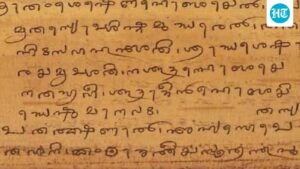
New Delhi: The new NCERT (National Council of Educational Research and Training) social science textbook for class 9, to be released in March, will focus on indigenous intellectual and cultural contributions in fields such as mathematics, philosophy, science and technology, medicine, architecture, agriculture, literature and art, according to the draft released on Thursday.
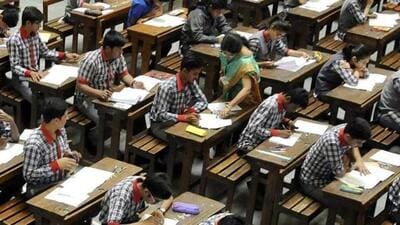
Students will also study the rise of the modern Indian nation, including the “History of the Rich Civilizations of the Indian Subcontinent”. (Representative photo)Students will learn about Indian philosophy, Ayurveda, yoga, the “22 srutis” of Indian music, horticulture, the use of herbs and spices, and etymology and how these have influenced the course of Indian history.
Students will also study the “rich civilizational history of the Indian subcontinent” including the early democratic traditions of various parts of ancient India, along with the rise of the modern Indian nation. Students are expected to “understand and analyze the social, cultural and political life of India over time as well as the underlying historical Indian ethos and philosophy of unity in diversity,” recognizing past and present challenges and efforts to address them. Students will be able to “discuss forms of discrimination, injustice, and discrimination” arising from internal and external forces, including colonialism, and examine movements toward equality, inclusion, justice, and harmony.
The new books, according to the draft syllabus, will emphasize inquiry-driven learning with a focus on key concepts of “Indian Knowledge Systems (IKS)”, “culturally rooted” perspectives and “lived reality”.
The National Council of Educational Research and Training (NCERT) has released the draft syllabus for languages, science, mathematics and social sciences to support teachers’ academic plans for the academic year 2026-27. The draft NCERT Class 9 syllabus states that the new curriculum for all 10 subjects will be skill-based and experiential, with curriculum, pedagogy and assessment guiding documents National Curriculum Framework for School Education (NCF-SE) 2023 and National Education Policy20 (National Education).
More Read

Navneet Sharma, a faculty in the Department of Education at the Central University of Himachal Pradesh (CUHP) in Dharamshala, said that the Indian Knowledge System (IKS) should be replaced by the indigenous knowledge system in the syllabus. “Indigenous knowledge includes tribal, Dalit, minority and women’s perspectives, and their narratives should be reflected in textbooks so that they are truly pan-Indian. There is no problem in teaching new government policies, but students should be encouraged to critically analyze policies, question them and understand how policy documents are made, rather than taken for granted.” He said