Madhya Pradesh has begun the process of implementing a Uniform Civil Code (UCC) by the end of the year on the lines of two other states ruled by the Bharatiya Janata Party (BJP), Uttarakhand and Gujarat, people familiar with the matter said on Wednesday.

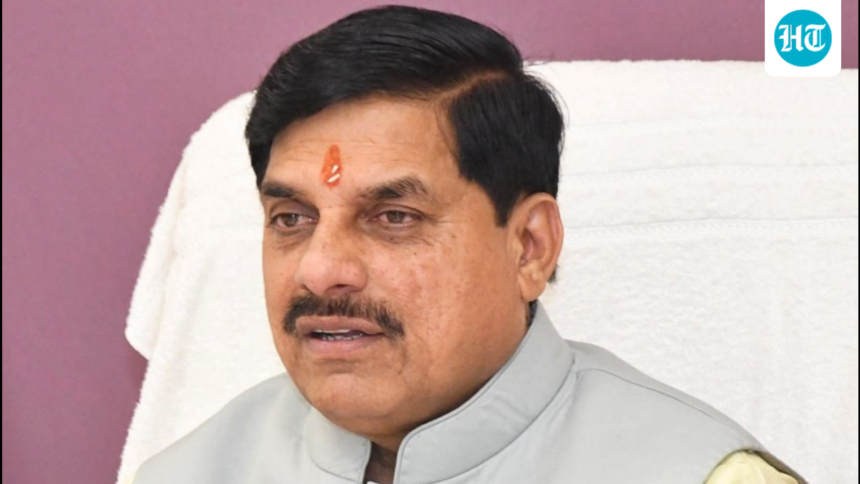
Chief Minister Mohan Yadav on Tuesday directed state home department officials to start the process of passing the UCC law by the end of 2026. He urged ministers to make suggestions on the issue while chairing a cabinet meeting, the people said.
In August 2024, Yadav indicated that his government is in no hurry to implement UCC, as each state has different circumstances.
Yadav on Tuesday confirmed that the BJP central leadership wanted Madhya Pradesh to go ahead with UCC, an official said. “The Home Office will prepare a draft, while ministers will be asked to study the challenges faced during this [UCC] “Implementation in Uttarakhand and Gujarat,” the officer said.
The ministry is expected to form a committee to draft the UCC bill. Retired Justice Ranjan Desai led the committees that drafted the UCC laws in Uttarakhand and Gujarat.
In December 2022, then Prime Minister Shivraj Singh Chouhan announced the formation of a committee to examine UCC’s implementation, but the plan never materialized.
A minister said that tribals would be exempted from UCC’s ambit in Madhya Pradesh, as is the case in Uttarakhand and Gujarat.
Last Friday, Federal Home Minister Amit Shah repeated the promise made by the Bharatiya Janata Party in the state of Assam, which is witnessing early elections, to introduce a uniform civil code across the country, and promised to keep the tribes outside its jurisdiction.
The UCC is a controversial and polarizing issue, and refers to a common set of laws relating to personal matters such as marriage, divorce, inheritance and succession for all. Article 44 of the Constitution, one of the directive principles of state policy, upholds UCC. But religion-based civil laws have governed personal matters since independence.
In February 2024, Uttarakhand became the first state in the country to pass the UCC Act. Gujarat followed suit last month.
The All India UCC is the third unfulfilled ideological promise of the BJP. The construction of a Ram temple in Ayodhya and abrogation of Jammu and Kashmir’s semi-autonomous status under Article 370 of the Constitution, the other two major ideological goals, have been achieved since the BJP came to power at the Center in 2014.
Madhya Pradesh Minister Vishvas Sarang welcomed the move to introduce UCC in the central Indian state, describing this unification as essential for the future of the present and future generations. “The law must be applied equally to all citizens, without discrimination based on sect or religion.”
Opposition Congress Party spokesman KK Mishra described the move as a diversionary tactic. “The BJP has come up with this to divert attention from the real issues when farmers, common men and youth are facing countless problems. This is an old tactic of the BJP… People don’t believe it.”