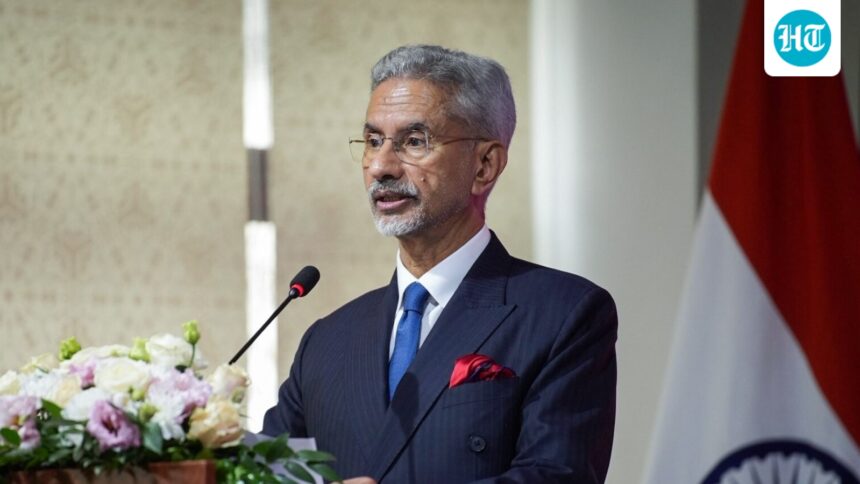
External Affairs Minister S. Jaishankar on Thursday said he had a telephone conversation with Iranian Foreign Minister Seyyed Abbas Araghchi amid the ongoing crisis in the Middle East.

Jaishankar spoke with his Iranian counterpart this afternoon by phone. He said in a post on the X website: “I had a phone call with Iranian Foreign Minister Seyed Abbas Araqchi this afternoon.
India offered its condolences on the death of Iranian Supreme Leader Ayatollah Ali Khamenei, and Foreign Minister Vikram Masri signed the book of condolences at the Iranian Embassy in New Delhi on Thursday.
Khamenei was killed in a joint US-Israeli air strike on February 28, an incident that plunged the West Asia region into war.
Read also India offers its condolences on the death of Khamenei, and Foreign Minister Vikram Al-Masry signs the book of condolences
Al-Masry visited the Iranian embassy and signed the condolence letter on behalf of the Government of India.
The Foreign Ministry also released a photo of the Foreign Minister’s conversation with Iranian envoy to India Mohamed Fathi.
India calls for stopping the escalation
Earlier on Tuesday, India called for dialogue and diplomacy to end the Iran-US conflict early, stressing the need to secure the interests of the nearly 10 million Indians living in West Asia and prevent disruption to trade and energy supply chains, with potentially “severe consequences” for the country’s economy.
Oil prices rose after Iranian forces effectively closed the Strait of Hormuz. Natural gas prices rose after Qatar Energy Company, one of the world’s largest exporters, halted production following attacks on its facilities. These developments exacerbated concerns in India, the world’s second-largest importer of crude oil, which meets about 85% of its needs through imports.
“In this backdrop, India strongly reiterates its call for dialogue and diplomacy. We clearly raise our voice in favor of an early end to the conflict. We have already lost many lives, and express our grief in this regard,” the Ministry of External Affairs said in a detailed statement, three days after a brief and tentative response to the developing situation.
The statement noted that there are approximately 10 million Indian citizens living and working in the Gulf region, and said: “Their safety and well-being are the highest priority. We cannot be immune to any development that negatively affects them.”
As India’s trade and energy supply chains pass through the region, the statement said any “major disruption has serious consequences for the Indian economy.” The statement noted the prominent role of Indian citizens in the global workforce while strongly opposing attacks on commercial shipping.
“Some Indian citizens have already lost their lives or gone missing as a result of such attacks in the past few days,” she added.