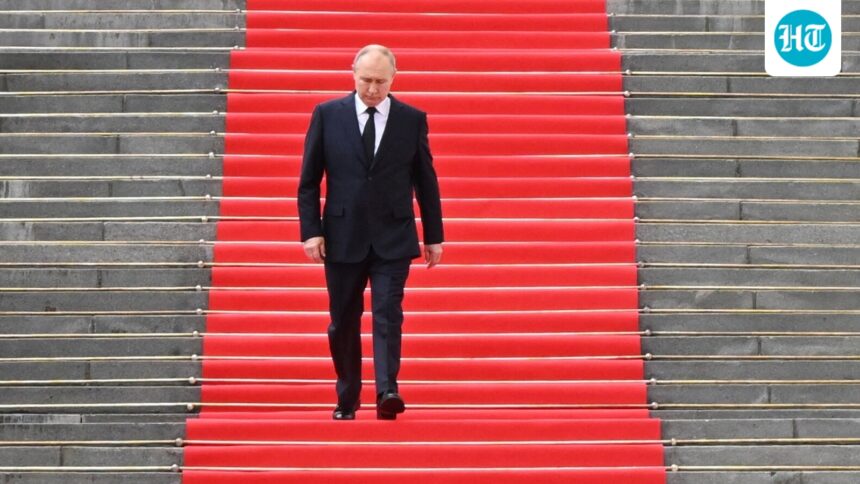
Russian President Vladimir Putin’s spokesman, Dmitry Peskov, summarized his country’s vague pragmatism as the US-Israeli war on Iran expands to include the oil-rich Arab world and engulf the global economy. “Maybe we should secure the benefits for ourselves wherever possible, no matter how cynical that may sound,” he said this week.

Like West Asia As Iran descends into chaos in the wake of US and Israeli strikes on Iran – and recent retaliation with missiles, drones, and oil crisis tactics – it is difficult to overlook this geopolitical irony.
Russia is said to be providing Iran with satellite imagery and drone targeting tactics to facilitate retaliation against US forces, bases and facilities in the region. The United Arab Emirates, Oman, Qatar, and other allies of America and Israel. At the same time, it is reaping huge financial gains from the war policy pursued by US President Donald Trump. This gives Moscow the important revenues that appear necessary to continue its ongoing invasion of Ukraine.
The give-and-take relations between Russia and Iran are also reciprocal, established during the Ukrainian conflict when Russia relied heavily on Iranian-made Shahed attack aircraft.
British Defense Secretary John Healey said: “No one would be surprised to believe that Putin’s hidden hand is behind some of Iran’s tactics and perhaps some of its capabilities as well.” He also noted that “Iran’s attack patterns bear the hallmarks of the way Russia attacks Ukraine.”
Read also | Iran sets three conditions to end the war with the United States and Israel
Expert observers believe Russia also shares sensitive knowledge about countering US-made weapons, such as Patriot and Atakum missiles, which it has faced on the Ukrainian battlefield.
“The lessons learned have been happening throughout the war in Ukraine, but now the repercussions are there,” said Andrea Kendall Taylor, a former senior US intelligence official. “We are seeing it happening now in real time, in a real situation.”
Trump’s ’80s Playlist’ and Putin’s Oil Windfall
The conflict has paralyzed shipping through the Strait of Hormuz, leading to what the International Energy Agency describes as “the largest oil supply disruption in history.”
President Trump had to respond to the resulting energy crisis Temporarily lift sanctions on Russian oil.
The US Treasury issued a 30-day waiver, valid until April 11, allowing the sale and delivery of Russian crude oil and petroleum products currently “stranded” at sea.
Treasury Secretary Scott Besent defended the measure, saying: “The temporary increase in oil prices is a short-term, temporary disruption that will result in enormous benefit to our nation and our economy over the long term.”
Russian officials say the exemption will affect nearly 100 million barrels of Russian crude, roughly the equivalent of one day’s global production.
Trump did It kept communication channels open with Putin, which angered America’s European partners, who view waiving oil sales as a way to finance Putin’s war in Ukraine. Trump spoke to Putin on March 9. “The Russians said they were not involved — that’s what they said, so we can take their word seriously,” US Special Envoy Steve Witkoff said in an interview.
One prominent analyst noted that Trump’s foreign policy agenda is like “an ’80s Spotify playlist, playing the same tunes four decades later” — dragging the world into chaos with it. “Among his old highlights: befriending Moscow, bombing Iran, belittling NATO, and making trade tariffs great again,” Mark Champion wrote in a Bloomberg op-ed on Friday.
Is China also helping Iran? This is another question being asked in American and global policy circles.
Senator Richard Blumenthal, of the opposition US Democratic Party, said earlier this week that Russia appears to be helping Tehran “actively and extensively, with intelligence and perhaps other means,” and added that “China may also be helping Iran.”
But Liu Bingyu, a spokesman for the Chinese embassy in Washington, said in a statement that he “opposes the baseless accusations” about Beijing’s involvement. He said that China is playing a “constructive role to reduce escalation and restore peace.”
Is there a “smertonomika” factor?
For Russia, the rise in oil prices, with Brent crude reaching $100 a barrel, is a lifeline to an economy increasingly heading toward all-out war. Economist Vladislav Inozemtsev called this phenomenon “smertonomika” or “economy of death.”
The Russian state currently directs approximately 40% of its budget to the war against Ukraine. In order to maintain the pace of recruitment, the Kremlin moved from mobilizing to offering exorbitant sums of money to volunteers. Reports indicated that the recruit who signs the first contract could receive a recruitment bonus in addition to a monthly salary nearly three times the national average.
“Despite not making much progress on the front lines, Putin wants to keep fighting. There is money for the war, and there will always be,” Spanish daily newspaper El Pais quoted economist Inozemtsev as saying.
Trump may take him at his word, but Putin also openly expressed “Unwavering support for Tehran,” Mojtaba congratulated Khamenei on his selection as the new supreme leader of Iran after his father was killed in the first hours of the US-Israeli bombing on February 28.
Russia regularly uses Iranian-made unidirectional attack drones to strike Ukrainian cities and energy infrastructure. Later, Iran provided Russia with the technology needed to begin its mass production of killer drones.
Iran on a large scale The use of relatively cheap drones in the conflict has put pressure on the US military and its Gulf allies, forcing them to use protective systems designed primarily to combat more advanced weapons.
The Russian paradox in India: a balancing act
The conflict has put India, the world’s third-largest oil importer, in a precarious position. With shipments through the Strait of Hormuz largely halted, New Delhi has been forced to quickly diversify its energy sources. Ship tracking data reveals that India’s imports of Russian crude rose to 1.5 million barrels per day in March, an increase of 50% from February.
Before the recent sanctions and unrest, India imported up to 2.1 million barrels per day of Russian oil in mid-2025, but that number fell to 1.1 million by January this year due to US sanctions against Russian companies.
In addition, Trump imposed 25% punitive tariffs on India – bringing the total US duties on Indian products to 50% – last August, which he later rescinded on the condition that India does not buy oil from Russia. Trump has offered more oil from the United States and Venezuela, whose resources the Americans claim to control after the takeover of President Nicolas Maduro, as alternatives. After Trump expanded his war strategy to include Iran, New Delhi was forced to quickly move away from its dependence on the Persian Gulf. And here Russia is back.
When the United States gave a 30-day deadlineAfter allowing Delhi to buy from Moscow, Prime Minister Narendra Modi had to face more difficult questions From Opposition Leader Rahul Gandhi on ‘selling India’s sovereignty’ to Trump.
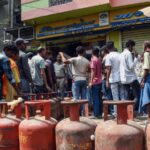
The crisis extends beyond crude oil. India faces a challenge regarding LPG. Nearly 80% to 90% of India’s LPG imports typically pass through the Strait of Hormuz, making the country’s domestic cooking gas supplies extremely vulnerable. Reports suggest that a prolonged disruption could push inflation higher, especially in states like Mizoram, Manipur and Punjab, where LPG carries a significant weight in the consumer price basket.
To reassure citizens and markets, Indian Oil Minister Hardeep Singh Puri has since said that the country ““From sources outside the Strait of Hormuz” has risen to nearly 70% of total crude oil imports, up from 55% before the current conflict began. He stressed that the government had taken steps to ensure that domestic supplies remained “fully protected” despite a global moment “the likes of which the world has never faced… in history.”
While Russia is benefiting from this, analysts warn that the situation remains a double-edged sword. If the conflict continues, it could lead to a deep global recession, which would ultimately reduce overall demand for oil and gas and hit the Russian economy hard.
“We are finding out in real time whether Trump, or the seven previous occupants of the Oval Office who did a cost-benefit analysis of going to war with Iran and decided not to go to war, were right,” geopolitical analyst Mark Champion wrote.