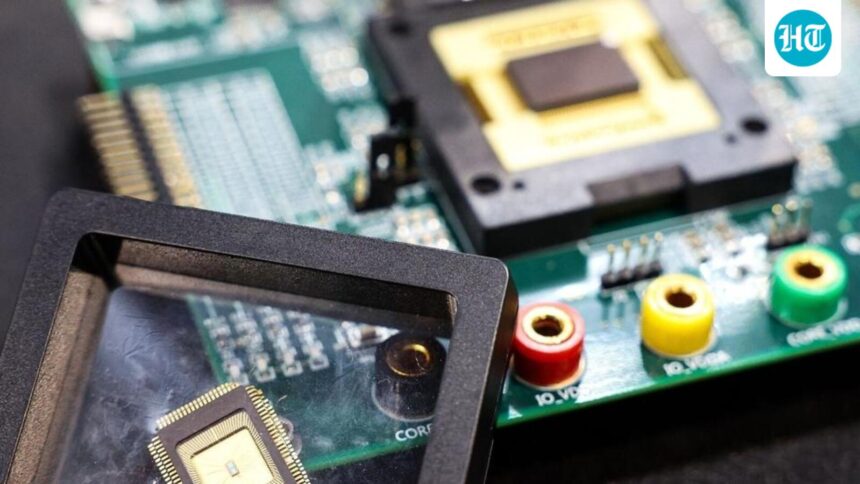
Indian Semiconductor (ISM) Mission expenditure is expected to exceed 2.0 $1 lakh crore, which is the amount requested by the IT Ministry from the government, officials familiar with the matter said. The second phase is expected to be announced by the end of April, with the ministry’s proposal currently undergoing inter-ministerial consultation.

The cost of the first phase of the mission was $76,000 Crores and attracted investments of approx $1.6 million crores. the $1 Crore requested by the Ministry of IT will be in addition to $Allocating Rs 76,000 crore in the first phase.
As of December 2025, 10 projects have been approved, four of which are expected to start producing chips this year across six states under the first phase. These include silicon manufacturing units, silicon carbide plants, advanced packaging and memory facilities, and specialized assembly and testing infrastructure.
“The second phase will include additional new funding, as funds allocated in the first phase have already been allocated to approved projects. $“Rs 76,000 crore will be disbursed when these projects are implemented,” said a senior IT Ministry official requesting anonymity.
ISM 2.0 is expected to focus more on strengthening India’s semiconductor design ecosystem, developing critical equipment and materials used in chip manufacturing, and building end-to-end Indian intellectual property across the semiconductor value chain. The next phase of the program will also focus on securing supply chains and creating a long-term roadmap for India to move towards advanced chip technologies such as 3nm and 2nm nodes.
India’s semiconductor manufacturing capabilities are currently limited to 180nm chips, which are produced at the government-run semiconductor laboratory in Mohali. These chips are typically used in sectors such as defence, aerospace and industrial electronics.
However, several new projects announced under the government’s semiconductor incentive program are aimed at manufacturing more advanced 28nm chips, including a manufacturing plant set up by Tata Electronics in partnership with Powerchip Semiconductor Manufacturing Corporation in Gujarat.
Globally, leading chipmakers such as Taiwan Semiconductor Manufacturing Company and Samsung Electronics are producing 3nm chips, highlighting a gap that India aims to bridge through initiatives like ISM.
The government also aims to attract global semiconductor players under ISM 2.0 as part of its broader goal of building Indian chip design companies that can eventually compete with global leaders like Advanced Micro Devices and Qualcomm, a vision recently expressed by IT Minister Ashwini Vaishnao.
In addition, under ISM 2.0, the government plans to encourage industry-led research and training centers to help develop new technologies and build a skilled workforce for the semiconductor sector. The government intends to support at least 50 non-manufacturable semiconductor companies under ISM 2.0 by expanding the Design Linked Incentive (DLI) scheme.