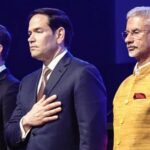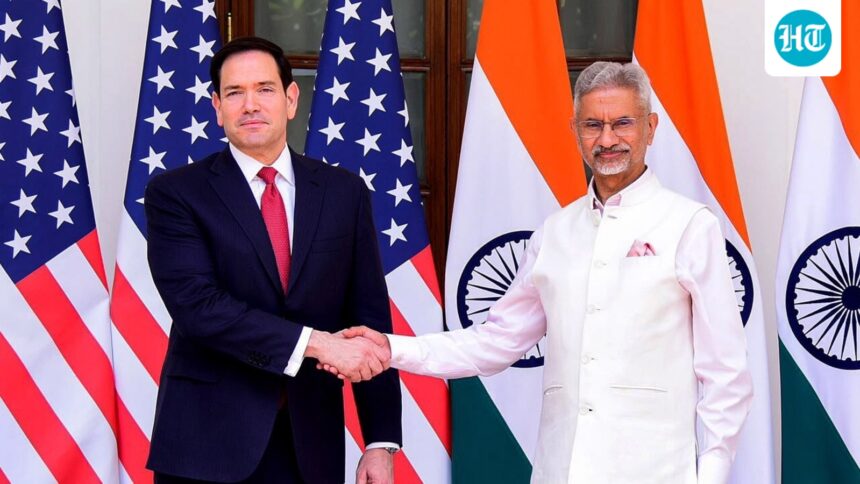
India and the United States on Sunday moved to put aside the rancor and tension that has characterized bilateral relations over the past year, as External Affairs Minister S Jaishankar and US Secretary of State Marco Rubio discussed ways to deepen cooperation in defence, energy, technology and critical minerals, while addressing the fallout from the conflict in West Asia.

The two leaders held talks at Hyderabad House, a day after Rubio arrived in India for a four-day visit that will also see him participate in the Quad foreign ministers’ meeting on May 26, which is expected to focus on the Indo-Pacific region. India has aggressively raised energy supply disruptions due to the US-Israel war with Iran and the closure of the Strait of Hormuz, people familiar with the matter said.
Jaishankar said the two sides reviewed cooperation within the framework of their comprehensive global strategic partnership, covering trade, energy, defence, security, vital minerals, artificial intelligence, nuclear energy, counter-terrorism and counter-narcotics cooperation and people-to-people relations.
Read also | India and the US discuss defense and energy cooperation amid conflict in West Asia
In a joint press conference, Jaishankar emphasized five points guiding New Delhi’s position in the talks: India calls for dialogue and diplomacy to resolve disputes, supports safe and unimpeded maritime trade, demands “strict respect for international law,” opposes “weaponization of market shares and resources,” and believes in reliable partnerships and resilient supply chains to eliminate risks to the global economy.
Rubio, in his first visit to India as Secretary of State, described India as “one of our most important strategic partners” and a “leading trading partner” and sought to dispel the impression that bilateral relations have lost momentum over the past year. “I think the relationship remains strong, and in fact, I think by the end of this administration, it will be stronger than it has ever been,” he said.
The two sides had frank discussions about trade, US immigration policies and energy supply disruptions caused by the conflict in West Asia, sparked by US and Israeli attacks on Iran in February, people familiar with the matter said on condition of anonymity. The issue of disruption to energy supplies due to the closure of the Strait of Hormuz came up in Rubio’s meeting with Prime Minister Narendra Modi on Saturday and his talks with Jaishankar on Sunday.
The Indian side said in these meetings that the closure of the Strait of Hormuz has removed 20% of energy supplies from the global market and cut off India’s access to nearly half of its crude oil supplies and several major suppliers of cooking gas, while supporting diplomatic efforts to end the conflict in West Asia.
Read also | ‘Don’t target India’: Marco Rubio clears air on green card, H-1B, student visa policy changes
Jaishankar said India is one of the very few countries that has strong relations with all parties involved in the West Asia conflict, including the United States, Israel and Iran, and has “genuine interests” in the region. He said: “For us, the challenge in this situation is how to maintain all these relationships, how to protect our shares, how to advance our interests, and we do not look at it as a zero-sum game.”
“Obviously, we want peace and stability in the region. Secondly, for us, the well-being of the diaspora is paramount. Thirdly, we want to see energy prices come down because we are a very large importer of energy and most of it comes from that region,” he said, referring to the 10 million Indians living in West Asia.
While outlining New Delhi’s approach, Jaishankar said India also supports safe and unhindered maritime trade through West Asia and wants to see markets open there. Rubio added that the US and India share the “strategic value” that no international waterway should be nationalized by any country.
Rubio insisted that the Trump administration’s focus is on ensuring that Iran “can never have a nuclear weapon” and opening the Strait of Hormuz, an international waterway that Tehran does not have. “The president has been clear about that. [Iran] “You will never have a nuclear weapon, and certainly not as long as Donald Trump is president of the United States.”
Noting progress in negotiations between the United States and Iran mediated by Pakistan, he said that “some significant progress” had been made in the past 48 hours “on the broad outlines that could ultimately, if successful, leave us with not only a completely open strait… without tariffs, and with addressing some of the things that support Iran’s nuclear weapons ambitions.”
“Clearly this will require full Iranian acceptance and compliance, and will require some future work on negotiating the details,” Rubio said. “I think there’s some good news on that front, but not definitive news on that front.”
Rubio sidestepped a question from Hizb ut-Tahrir about India’s concerns about the US administration’s renewed engagement with Pakistan’s military leadership, and said: “In terms of our relationships with other countries – we have relationships and we work at the tactical level, for example, and in many other ways with countries around the world. So does India. And that’s what responsible nation states do.”
“But I do not see that our relationship with any country in the world comes at the expense of our strategic alliance with India.”
Rubio said there is a “strong counter-terrorism alliance” between India and the US because both countries have suffered, directly and indirectly, due to global terrorist networks. Jaishankar acknowledged the extradition of Tahawar Rana, the main planner of the 2008 Mumbai attacks, from the United States, and said the two sides would intensify bilateral cooperation and in international forums against terrorism.
Looking at the Quad meeting on Tuesday, Jaishankar said it was important for cooperation between the four maritime democracies to continue because they are market economies and open societies that want to conduct business on the basis of international law and market practices. He added: “For us, especially in the Indo-Pacific region, I see the Quad gaining importance in the coming days.”