India and the European Union are gearing up for a series of high-level engagements in areas ranging from security to the Indo-Pacific and technology, as the two sides work to formally sign their free trade agreement by the end of this year, people familiar with the matter said.

The two sides are also coordinating on the evolving security situation resulting from the conflict in West Asia, including freedom of navigation and unhindered flow of trade, including potential cooperation to ensure the unhindered flow of maritime trade after taking necessary steps to end hostilities related to Iran, said the source, who requested anonymity.
The two sides are preparing for a series of high-level meetings, starting with a visit later this month by a delegation of 11 members of the European Parliament focusing on relations with India. There are also plans for bilateral consultations on the Indo-Pacific region in May and a Trade and Technology Council (TTC) meeting in late June, as well as visits to New Delhi by EU commissioners dealing with key aspects of the strategic agenda, the sources said.
The TTC was established in 2022 to oversee cooperation in trade, investment, resilient supply chains, digital and green technologies. The European Union has so far established such a body with only two countries – India and the United States.
The two sides are expected to begin negotiations on the Security of Information Agreement (SoIA) in the coming weeks, and resume talks on the Investment Protection Agreement and the Geographical Indications Agreement, the sources said. The two sides are looking forward to concluding the SoIA, which will facilitate the exchange of sensitive information and help advance cooperation in critical areas such as defense manufacturing, by the end of the year, the sources said.
The sources said that the two sides also held the first edition of their expanded dialogue on security and defense on the sidelines of the Raisina Dialogue in New Delhi, focusing on maritime security, cybersecurity and counter-terrorism.
In the case of a free trade agreement, the two sides are looking forward to completing various technical procedures such as legal clean-up and finalizing some issues so that the trade deal can be referred to the European Council for approval. After that, the FTA could be formally signed by the last quarter of the year, hopefully by November, the sources said.
The free trade agreement will then have to be approved by the European Parliament before it comes into force, with people saying this is expected to happen by January 2027.
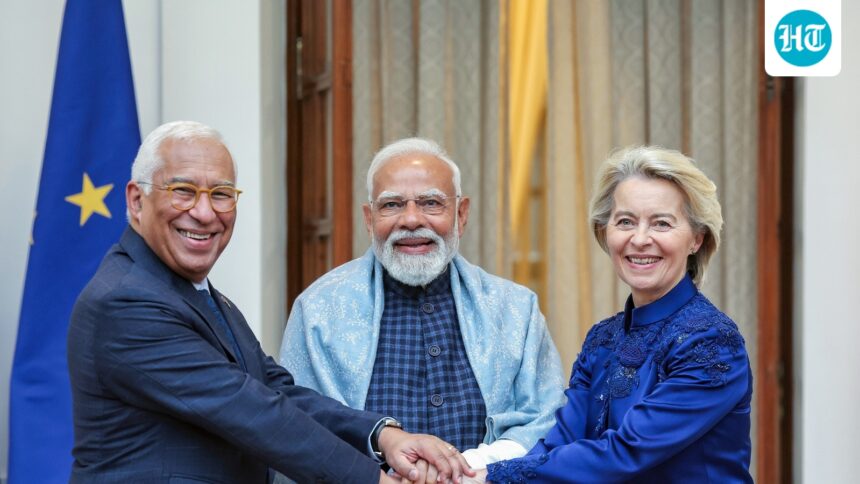
India and the European Union concluded negotiations on a free trade agreement – described as the “mother of all deals” – during a bilateral summit between Prime Minister Narendra Modi, European Council President Antonio Costa, and European Commission President Ursula von der Leyen in New Delhi on January 27. At the time, the two sides unveiled a vision of using trade to support a rules-based global order amid heightened global trade tensions.
People pointed to External Affairs Minister S Jaishankar’s recent participation in the EU Foreign Affairs Council meeting in Brussels and his bilateral interactions with EU Foreign and Security Policy Coordinator Kaja Kallas, Costa and von der Leyen as an example of the two sides maintaining the pace of their engagements and taking steps to implement quickly and at scale.
“The dynamics of the current geopolitical environment have made the partnership even more important, especially when it comes to factors like stability and predictability,” one of the people said.