One of the protesters was a 17-year-old girl who, before leaving her home on Monday morning, told her family that she was going to school.

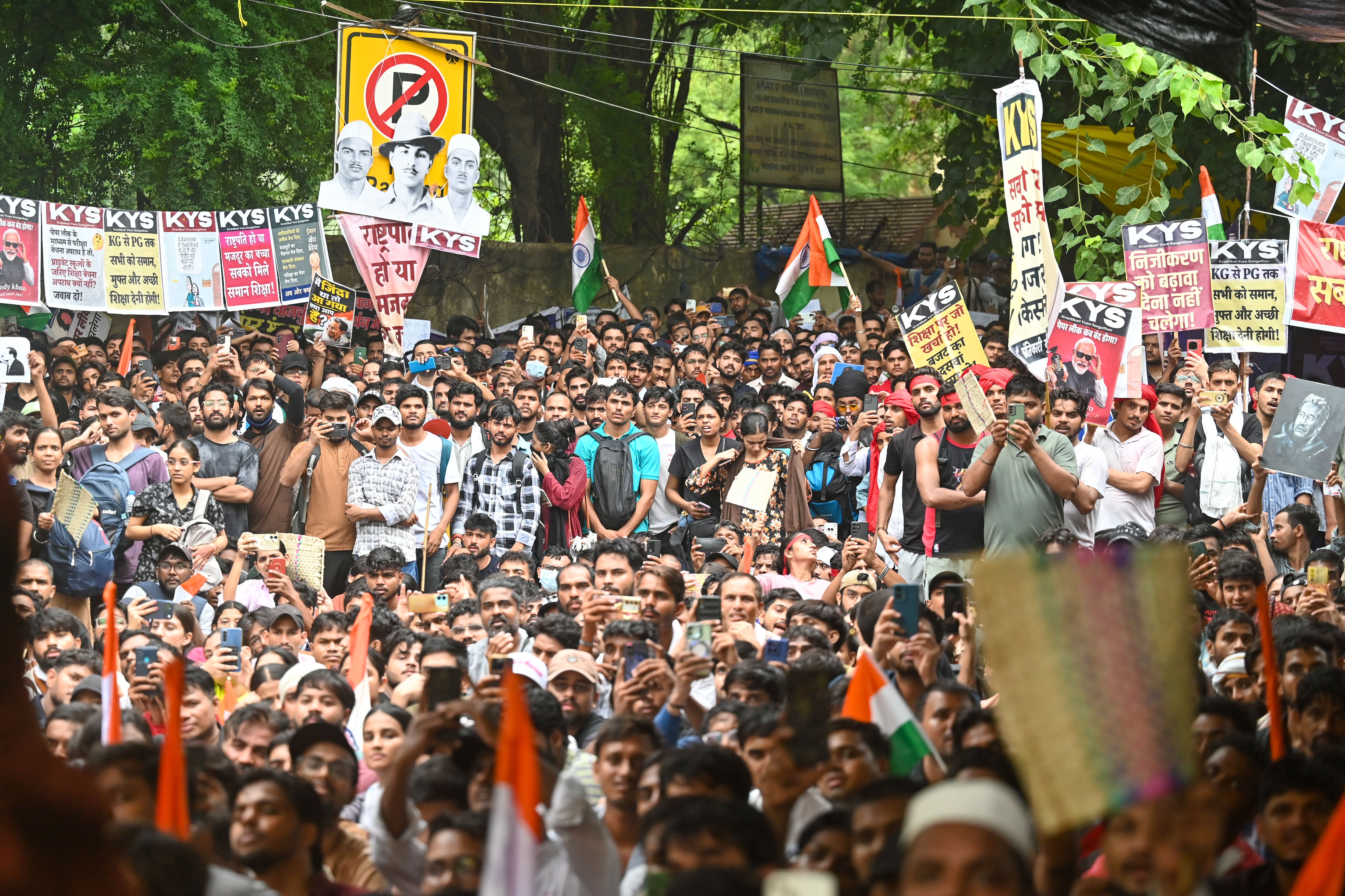
the The Cockroach Janta Party (CJP) called for a march from Jantar Mantar, where protesters have been camping for a month, to Parliament, attracting a huge response, with thousands descending on the designated protest site on Monday.
Among the large number of protesters were women, many of whom said they came after lying to their families.
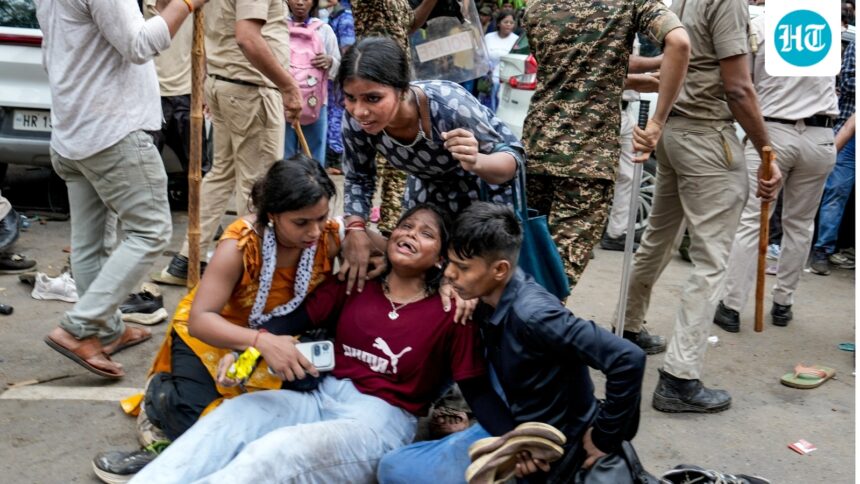
One of the protesters was a 17-year-old girl who, before leaving her home on Monday morning, told her family that she was going to school. Instead, she headed to central Delhi to join the protest march organized by the CJP to demand the government be held accountable over alleged examination irregularities.
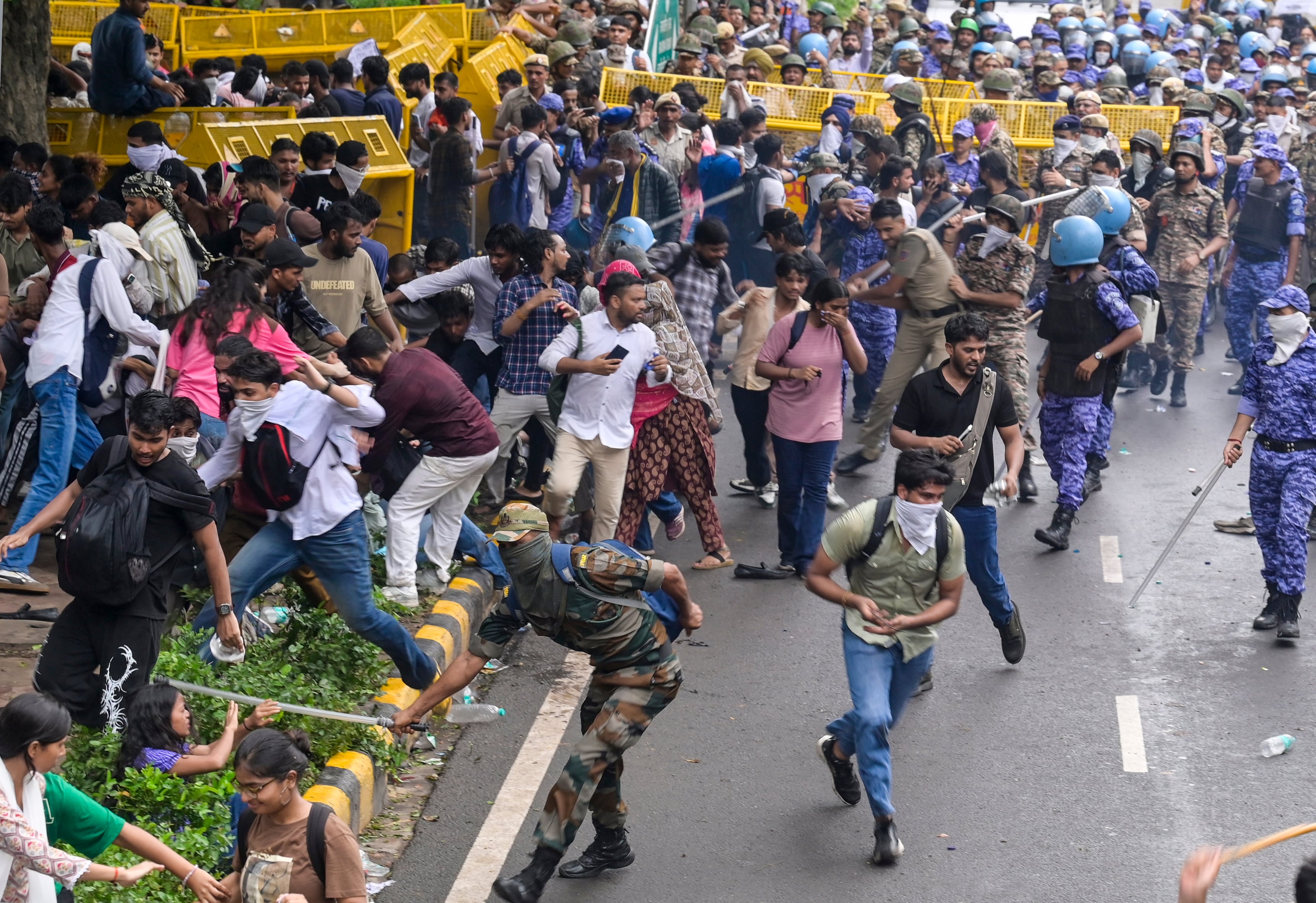
When she and other demonstrators tried to climb the barriers during the march towards Parliament, female police officers pulled her to the ground.
“We did not lie to our families and came here to be arrested and detained like criminals,” the girl from Delhi’s Badarpur told news agency PTI, showing bruises on her hand.
She claimed that she was pulled by her feet and held tightly by two policewomen.
The 17-year-old said she was angry not only at the alleged exam irregularities, but also at the lack of dialogue with the protesters.
“When it is election time, they come to our homes and ask for votes. But they did not even come to participate in a dialogue about the NEET paper leak,” she said. “We are only asking for dialogue. Aren’t we even allowed to organize a peaceful protest?” She added.
Preparedness in case of arrest
Some female demonstrators came prepared for the possibility of arrest or detention, and said they had been informed of their rights if that came to that.
“We all came here to protest peacefully. But we were also told about our rights if we are detained or arrested – the right to inform our families, have access to a lawyer and know the charges against us,” one female protester told PTI.
Women from several states, including Bihar, Maharashtra, Uttar Pradesh and Haryana, joined the protest. Many of them traveled to Delhi in groups or connected with other participants through WhatsApp groups and activist networks.
These networks helped them coordinate their travel, identify meeting points, and stay in touch during the protest.
Separate communication networks were provided for participants from the LGBT community, according to protesters.
“We all traveled together from Pune in an overnight bus. We connected with each other through a WhatsApp group and decided where we would meet after reaching Delhi. We were told to travel in groups, keep important phone numbers with us, and stay in touch with the group,” a 27-year-old woman identified as Poorva told PTI.
She said the groups also distributed information about what protesters can do if their rights are violated, including who to contact and how to document police actions.
These measures gained greater importance as the protest witnessed clashes with security forces and arrests at multiple locations in the New Delhi area.
“We will come again”
Twenty-year-old Kismat, who hails from Vaishali in Bihar, traveled alone overnight from the state capital Patna to the national capital Delhi to join the demonstration.
“I lied to my family and came here otherwise they would be worried about my safety,” she said.
After arriving in Delhi, Kismet was not alone. Pointing to a group of students from Faridabad, she said she had met them at Jantar Mantar and was walking with them.
She said: “Like cockroaches that have survived for millions of years, we will come back again and we will not lose hope no matter how the authorities or the police try to subdue us.”
Shobha, who joined the protest with her son and daughter, claimed that she saw male police personnel beating women during the encounter.
“The police themselves pushed the barricades, and when people came forward, they started beating them,” she said. “I saw male police officers beating a woman.”
Protest update
The demonstrators were arrested from several areas, including Mandi House, Patel Chowk, Janpath, Jantar Mantar and Parliament Street on Monday as security forces tried to prevent protesters from gathering and marching towards Parliament.
Security forces also used tear gas near Shastri Bhawan after protesters tried to breach the barricades.
Later in the evening, police attempted to break up the protest and even dismantled the stage at the site. The CJP said they would remain in place and the protest would continue despite the measure.

Follow the latest breaking news, key developments and agenda-setting stories from India and around the world with Hindustan Times Newsdesk. Operating around the clock, the bureau brings together experienced editors, reporters and correspondents to deliver fast, accurate and contextual reporting across topics affecting public policy, governance, business, society and international affairs. The HT Newsdesk covers politics, elections, government policy, economics, business, markets, science and technology, environment, law and order, infrastructure, education, climate issues and geopolitics, while closely tracking developments across countries, institutions and global capitals. The team also leads coverage of major breaking news events, policy announcements, court proceedings, natural disasters, public emergencies and significant international developments. Reports published by the News Desk are based on information gathered from reporters on the ground, official statements, government agencies, court records, regulatory files, recognized institutions and other official sources. Stories undergo editorial review and verification to ensure accuracy, fairness and appropriateness, and are updated as events develop and additional information becomes available. Whether covering a major policy decision in New Delhi, an economic policy shift affecting millions, a landmark court ruling or a major global event, the HT News Desk aims to provide readers with trusted, fact-based journalism that provides not only the latest developments but also the context and analysis needed to understand their wider implications.Read more