Speculations of rebellion within the Shiv Sena (UBT) gained momentum last week after Uddhav Thackeray held a meeting of Lok Sabha MPs. However, the unrest appears to have its roots in a 20-year-old murder case whose aftermath may have recently affected the Senate’s political narrative.

Six MPs – Sanjay Dina Patel, Nagesh Patel Ashtekar, Om Raje Nimbalkar, Bhausaheb Wakchor, Sanjay Deshmukh and Sanjay Jadhav – are expected to defect from the party and support its rival Sena, which is part of the NDA bloc.
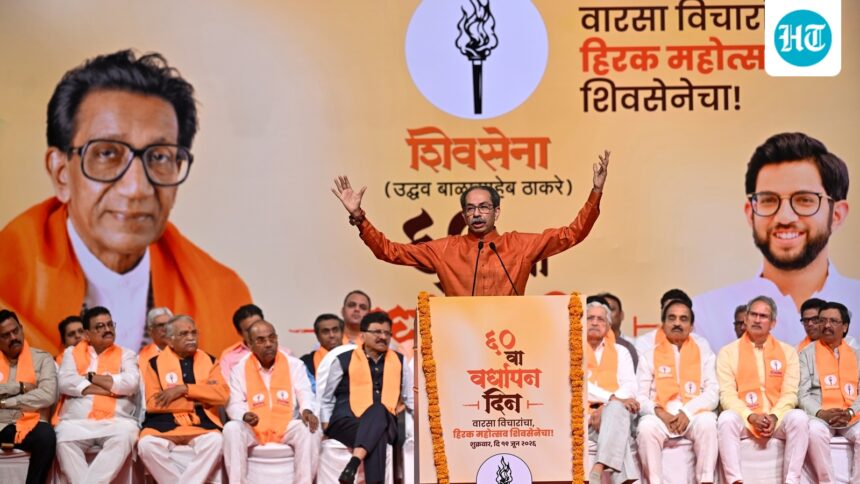
The clamor of rebellion became evident when the six MPs skipped the Sena-UBT event on Friday to mark the party’s 60th foundation day and Uddhav launched an all-out attack on the rebels. While developments over the past few days have brought to light the main event recalled which is the killing of Pawanrajhi Nepalkar in 2006.
Also read: ‘Apologise for defection, you will step down if you have no confidence’: Uddhav to Sena workers amid buzz of rebellion
Pawanraj Nimbalkar, the leader of the Congress party, happens to be the father of Om Raje Nimbalkar, one of the alleged rebel MPs. Raje is a Member of Parliament from Osmanabad (Dharashiv) in Marathwada region.
The murder of Pawanraj Nimbalkar and its political repercussions
Pawanraj Nimbalkar was killed on 3 June 2006 along with his driver, Samad Abdul Wahid Kazi, while driving from Pune to Mumbai. The case included several accused, including the victim’s cousin and former Maharashtra Home Minister Padmasinh Bajirao Patel.
Earlier on Saturday (June 20), all nine accused, including Patel, were acquitted by a special CBI court.
The murder case has been linked to Osmanabad politics in Marathwada and has dominated political discourse for the past 20 years.
Pawanraj Nimbalkar and Padmasinh Patel were first cousins and their families controlled politics in the region through cooperative bodies including the Terna Sugar Cooperative Society.
Read also: In the Sena split, a tale of a tiger, a wolf and a dog digging: How Shinde and Uddhav’s parties fight it out using biting metaphors
When Sharad Pawar founded the NCP in 1999 after separating from the Congress, Patel moved with him. Nimbalkar joined the Congress and the two contested the 1999 Lok Sabha elections against each other. Patel narrowly defeated his rival Nepalkar by 484 votes. The rivalry was not only evident in politics, but also extended to their businesses.
One of the major factors raised by the CBI investigating the case was the alleged fraud in funds collected after the Kargil war.
Padamsinh Patil, who was then a Maharashtra minister, was accused of misusing funds collected for the families of Kargil war martyrs. The CBI had said that the scam was exposed by anti-corruption activist Anna Hazare with information provided to it by Pawanraj Nimbalkar.
Twenty years later, a special CBI court on Saturday acquitted all nine accused in the case, including Patel. While the prosecution alleged that Patel and other accused were part of a conspiracy to eliminate Nepalkar, the court found the evidence insufficient to convict them.
How the murder case affected Sena’s rift
Days before the court delivered its verdict in the murder case, Sena UBT MP Sanjay Raut claimed that several inducements had been offered to the rebel MPs to engineer a second split in the party.
He went on to say that Om Rajae Nimbalkar was induced by a “favourable verdict” in his father Pawan Rajae Nimbalkar’s murder case to switch from Shiv Sena (UBT) to Shiv Sena.
Also Read: A look back at the Shiv Sena’s 60-year political journey: Bal Thackeray’s rise, Uddhav’s rise to power and then the split
Rebel Sena UBT MP Nimbalkar said he was leaving the Sena (UBT) to join the Eknath Shinde-led Shiv Sena “not driven by greed for money” but “for political survival to fight his father’s killer”.
“I joined politics 20 years ago to fight against those who killed my father; during those years I fought a legal and political battle against that family in Darashiv. I have no complaint against the Sena (UBT) chief, Uddhav Thackeray. I won the Lok Sabha elections by a huge margin against the strong and resourceful candidate of the rival family. We also retained our strength in the Assembly elections,” Nepalkar said, adding, “But the new government in Maharashtra blocked me at all levels.”
What Om Raje Nimbalkar said about Sena’s ‘split’
Om Raje Nimbalkar said he was shocked by the ruling and said he would appeal against the order in the Supreme Court.
“The verdict is unfortunate and has come as a shock to us. However, instead of commenting on the verdict, we prefer to approach the Supreme Court and continue fighting. We will use all available legal remedies to seek justice,” Nepalkar said.
Nimbalkar was struggling to convict all nine accused in the case. The court was initially scheduled to issue the ruling on May 14, but it was postponed to June 16. The ruling was finally issued on June 20.