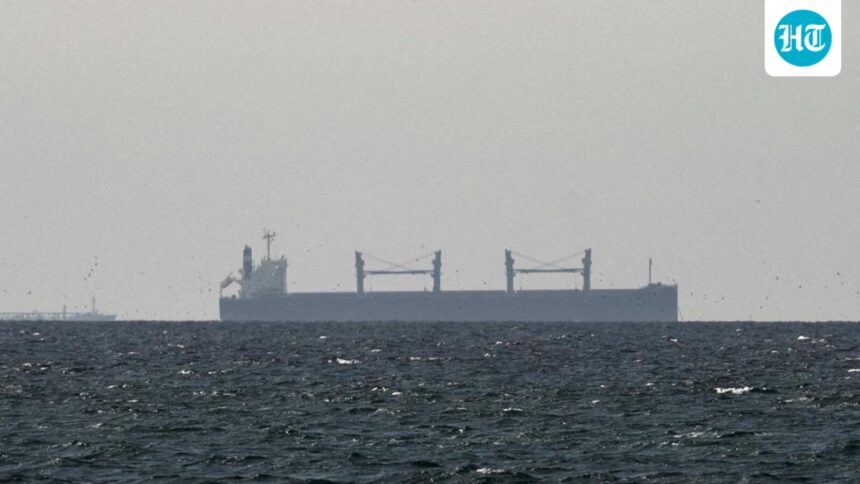
Global fossil fuel power generation fell in the first month (March) after the closure of the Strait of Hormuz as the US-Israeli attack on Iran escalated into a regional conflict and disrupted vital supply chains, the Helsinki-based non-profit think tank Research on Energy and Clean Air (CREA) said Wednesday. Increases in the use of solar and wind energy instead of coal have offset declines in gas-fired power generation.

In the United States and India, the growth of solar energy has been the largest driver of the decline in fossil power generation. Improving the operation of nuclear and hydroelectric power plants was the main driver in South Africa and Turkey. In the Netherlands and Germany, growth in wind power generation made the largest contribution, the analysis said.
CREA’s analysis covers 87% of global coal power and more than 60% of gas power generation based on countries providing near real-time data. Total fossil fuel power generation in countries with near-real-time data fell 1% year-on-year, with coal-fired power generation down and gas-fired power generation down 4%. The dataset covers the world’s largest energy markets, including China, the United States, the European Union, and India.
Seaborne coal transport volumes fell by 3%, to their lowest levels since 2021. “The data contradicts widespread expectations that coal power generation will rise in response to the crisis. The record buildup of solar and wind power in 2025 has helped reduce the need for fossil fuel power generation and mitigate the impact of the Hormuz shutdown,” the analysis said.
Outside of China, coal-fired power generation fell 3.5% and gas-fired power generation fell 4% in March in countries with real-time electricity data due to increases in solar (14%) and wind (8%) generation, CREA said. Hydropower generation increased by 2%, but this was offset by a decrease in nuclear power generation.
Coal power generation declined in India, the United States, the European Union, Turkey, and South Africa. In China, coal power generation increased by 2% in March, according to weekly surveys of the China Electricity Council. Generators on the coast have switched from gas to coal in response to rising prices.
Overall, total electricity generation growth in countries with data turned from negative in the January-February period to positive in March, indicating that the Hormuz crisis affected energy demand, the analysis said.
He added: “Highlighting the importance of the rapid expansion of clean energy to the global energy system, the solar and wind capacity added in 2025 alone generates twice the amount of electricity produced by all the liquefied natural gas transported through the Strait of Hormuz before the closure.”
In 2025, the world will add about 510 gigawatts of solar and 160 gigawatts of wind power, which will generate about 1,100 terawatt-hours per year, based on average usage factors calculated from Ember data.
India improved its ranking to third globally in installed renewable energy capacity, after China and the United States, according to Renewable Energy Statistics 2026. India achieved a non-fossil capacity addition of 55.3 GW during the financial year 2025-26.
China has the highest renewable energy capacity at 2,258.02 GW, followed by the United States with 467.92 GW and India with 250.52 GW. India is followed by Brazil with a capacity of 228.20 gigawatts, and Germany with a capacity of 199.92 gigawatts.
The government said in February that a record 52,537 MW of generating capacity (from all sources) was added in the 2025-2026 fiscal year (until January 2026). Of the total installed capacity, capacity based on non-fossil fuels now stands at 52.25%, according to the data. In 2025-26, out of the 52,537 MW added, 39,657 MW were added from renewables (75.48%). This includes 34,955 MW of solar energy and 4,613 MW of wind energy, representing the highest capacity addition ever in a single year, surpassing the previous record of 34,054 MW in the 2024-2025 financial year.
CREA pointed to clean energy policy announcements and investments from governments and utilities in response to the crisis. India has released the bidding pathway for issuance of tenders for procurement of 50 GW capacity annually by renewable energy implementing agencies from FY 2023-2024 to FY 2027-2028.
The French government will prepare a plan to electrify key sectors of the economy to reduce dependence on imported fossil fuels, suggesting that the measures could be financed from increased corporate tax revenues from fossil fuel companies. Türkiye pledged to invest $80 billion by 2035 to reach its goal of 120 gigawatts.
China has secured a $1.9 billion solar and storage project in Abu Dhabi, boosting the UAE’s clean energy goals, grid stability, and renewable capacity growth.