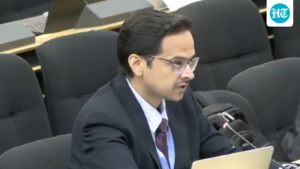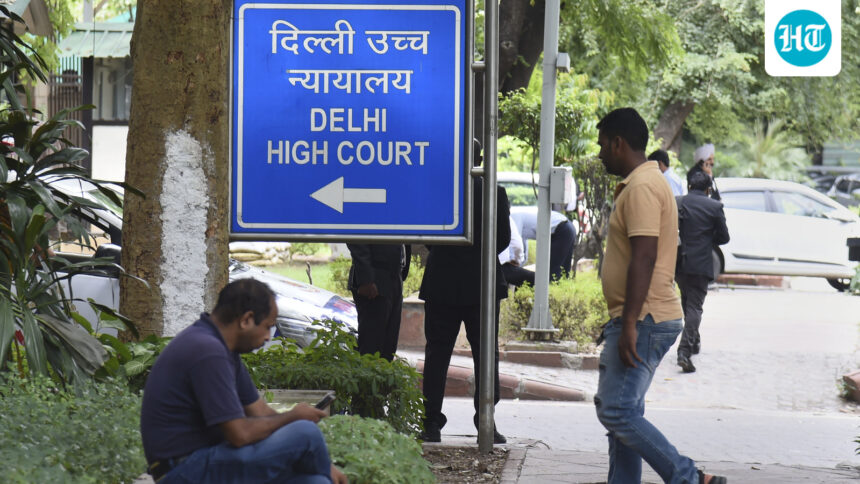
The Directorate of Education (DoE) on Friday defended its decision to introduce the constitution of School Level Fees Regulatory Committees (SLFRCs) and told the Delhi High Court that the timelines prescribed under the Delhi School Education (Transparency in Determination and Regulation of Fees) Act, 2025 are not “sacrosanct” and do not form part of the basic structure of the law.

The SLFRCs will be formed by individual schools to set fees for three semesters, starting from 2026-2027.
On February 1, the Education Ministry issued a notification directing all schools to form ELCs by February 10, instead of July 15, as stipulated under the law. The notification asks schools to constitute committees within 10 days and submit details of the proposed fee structure within 14 days of their formation.
Also Read: Menaka Guruswamy, TMC’s pick for Rajya Sabha, could become India’s first LGBTQ MP
A bench of Chief Justice D K Upadhyaya and Justice Tejas Karia reserved orders on the petitions filed by Minority Schools Forum, Action Committee for Recognized Unaided Private Schools, Delhi Public Schools Association and Rohini Education Society seeking stay of the decision and reform of the order for pronouncement on Saturday.
While appearing before the Ministry of Energy, Additional Solicitor General SV Raju and Advocate Zoheb Hossain maintained that the aim of the law is to prevent commercialization and profiteering, and the timelines specified can be amended as a means of achieving this aim.
“Dates are not sacred and do not constitute the basic structure of the law. The purpose of the law is to prevent commercialization and profiteering. To achieve this goal, dates can never be the basic structure. They are only a means to achieve the goal,” the law officer told the court.
Read also:
The filing was in response to the petitioners’ claim that the February 1 order was contrary to the law, which mandates the formation of committees by July 15, and that any such change can only be made through a legislative amendment and not by executive order.
On Thursday, the Delhi Public Schools Association confirmed that the law stipulates that at least one member of each committee must belong to the Scheduled Castes, Scheduled Tribes or socially and educationally backward classes. DPS’s lawyer said that complying with this requirement would force students and their families to disclose their social class, which is not usually collected at the admission stage.
The legal officer disputed this argument, asserting that the Dubai Police Department in its admission form itself included a caste column.
On February 16, the Ministry of Education defended the decision as a “one-time measure” to facilitate the implementation of a structured fee structure for the 2026-27 academic session starting on April 1.