Fears of LPG shortages amid supply disruptions due to the Iran-US war have led to black market sales, panic buying, and prompted government action.

As tensions refuse to subside in West Asia in the wake of the US-Israeli attack on Iran on February 28, and the retaliation that soon followed, the ripple effects are starting to trickle down to Indian families.

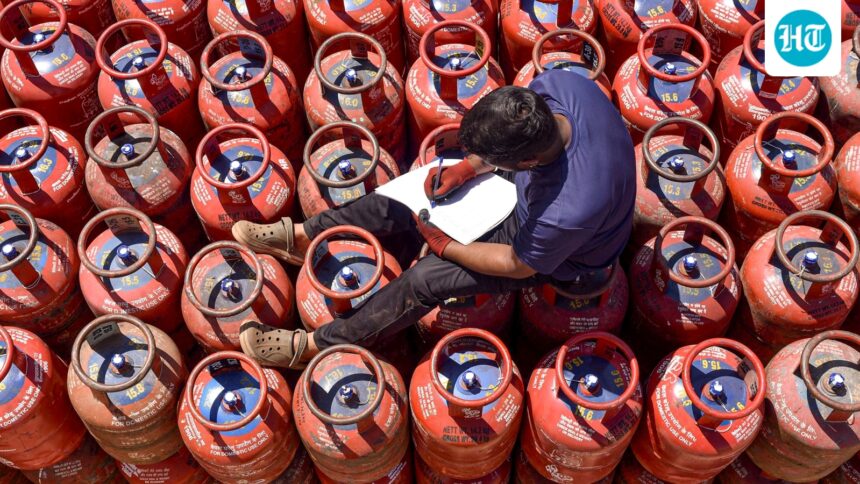
The disruption is most evident in the supply of liquefied petroleum gas (LPG), the cooking fuel used by more than 33 crore households across the country.
Government sources said that India obtains 70% of its crude oil supplies from sources other than the Strait of Hormuz, which is a narrow sea passage that connects the Arabian Gulf to global markets. But the strait turned into a narrow corridor after the closure announced by Iran after the United States and Israel attacked the country and assassinated their Supreme Leader, Ayatollah Ali Khamenei.
With the route now facing security risks and shipping disruptions, the supply chain that supplies cooking gas to Indian kitchens is under pressure.
What is the importance of the Strait of Hormuz?
The Strait of Hormuz carries approximately a fifth or 20% of global oil and gas trade, according to reports, making it one of the world’s most important energy routes.
Nearly half of India’s crude oil imports pass through the strait, while a significant share of LPG and LNG cargoes also travel on the same route.
India imports nearly 90 percent of its crude oil needs and a large portion of its gas needs. In fiscal year 2024-25, India’s crude oil imports increased by 4.2 per cent, reaching 242.4 million tonnes. The country’s dependence on imports also rose, reaching 89.1 percent in March 2025, compared to 88.6 percent the previous year, according to data reported on the Exportimportdata.in website.

India’s total gas consumption in 2024-25 was about 71.3 billion cubic meters (BCM) with 50.1 per cent dependence on import, according to an earlier HT report that cited data from the Petroleum Planning and Analysis Cell (PPAC). Experts say that the conflict in West Asia has disrupted about a third of total liquefied natural gas imports. The balance of India’s imports of liquefied natural gas comes from the United States, Russia and Australia.
Any slowdown or security threat in the strait could delay shipments, raise shipping costs and push up energy prices in importing countries, raising fears and panic at home.
India’s increasing dependence on LPG
LPG consumption in India has risen sharply over the past decade, as government programs have encouraged the clean cooking fuel in both rural and urban households.
According to central government data, mentioned in the CNBC report but not independently verified by Hindustantims.com:
-In 2016-17, India recorded 21.61 million tonnes of LPG consumption.
-2024-25: 31.32 million tons.
-2025-26: 30.86 million tons.
This represents an increase of 43 percent over ten years.
The supply chain behind the LPG cylinder
LPG is extracted during natural gas processing or crude oil refining. It is stored in specialized tanks and loaded onto LPG tankers. Many ships travel through the Strait of Hormuz before heading to India.
The shipments then reach ports like Mumbai, Kochi, Kandla and Visakhapatnam, after which the LPG is transported to factories and transferred into cylinders.
The cylinders are then transported to dealers and delivered to homes and businesses.
LPG prices rise in India
The pressure on the supply chain is beginning to be reflected in local prices. On March 7, LPG prices were raised by $60 across cities. In Delhi, a domestic cylinder now costs 14.2 kg $913, while the cost of a 19 kg commercial cylinder is approx $1.883 after rising more than 110?
Authorities have prioritized domestic gas supply to homes, forcing restaurants in cities like Bengaluru, Mumbai and Gurugram to make changes to their menus, reduce gas use and explore alternative cooking methods. Many restaurants have switched to using tandoors, electric stoves, or coal-based electric ovens.

The shortage has also pushed some companies toward the black market, where the cylinders are said to be sold $2,800- $3000 which is much higher than the official price.
Government actions so far
The Central government has introduced a mandatory gap of 25 days between bookings of LPG cylinders to manage supply. The Ministry of Petroleum and Natural Gas decided this to prevent hoarding and ensure that available cylinders are distributed more evenly to consumers.
Earlier, households could book refills after 21 days.
The government also took additional steps:
Refineries have been directed to increase LPG production by 10 percent. *Due to reprioritization, domestic LPG production has increased by 10 percent in the past few days. The shipment of LPG and LNG comes from different sources. “We expect some new shipments of LPG and LNG very soon,” government sources said on Tuesday, quoted by news agency ANI.
Domestic household supplies are prioritized over commercial or industrial demand.
India is also exploring additional LPG imports from countries like Algeria, Australia, Canada and Norway to diversify supplies.
Officials say this is a precautionary measure and that there is no immediate shortage of LPG.
Government sources said that oil marketing companies will talk to various restaurant associations to understand their problems related to LPG supply
“The government has constituted a 3-member committee comprising CEOs of IOC, HPCL and BPCL to hear their grievances. Their real requirements of commercial LPG will be met. This committee will also reprioritize supply as per the requirements,” government sources said.
*We were in crises earlier, but today we are not in any crises for petroleum products.. Indian refineries are operating at full capacity as they were working before the Iranian-Israeli conflict.. We get 70 percent of our supplies of crude oil from sources other than the Strait of Hormuz.
India entered this turmoil better prepared, they said, adding that it would recover better than other countries once the crises were over.