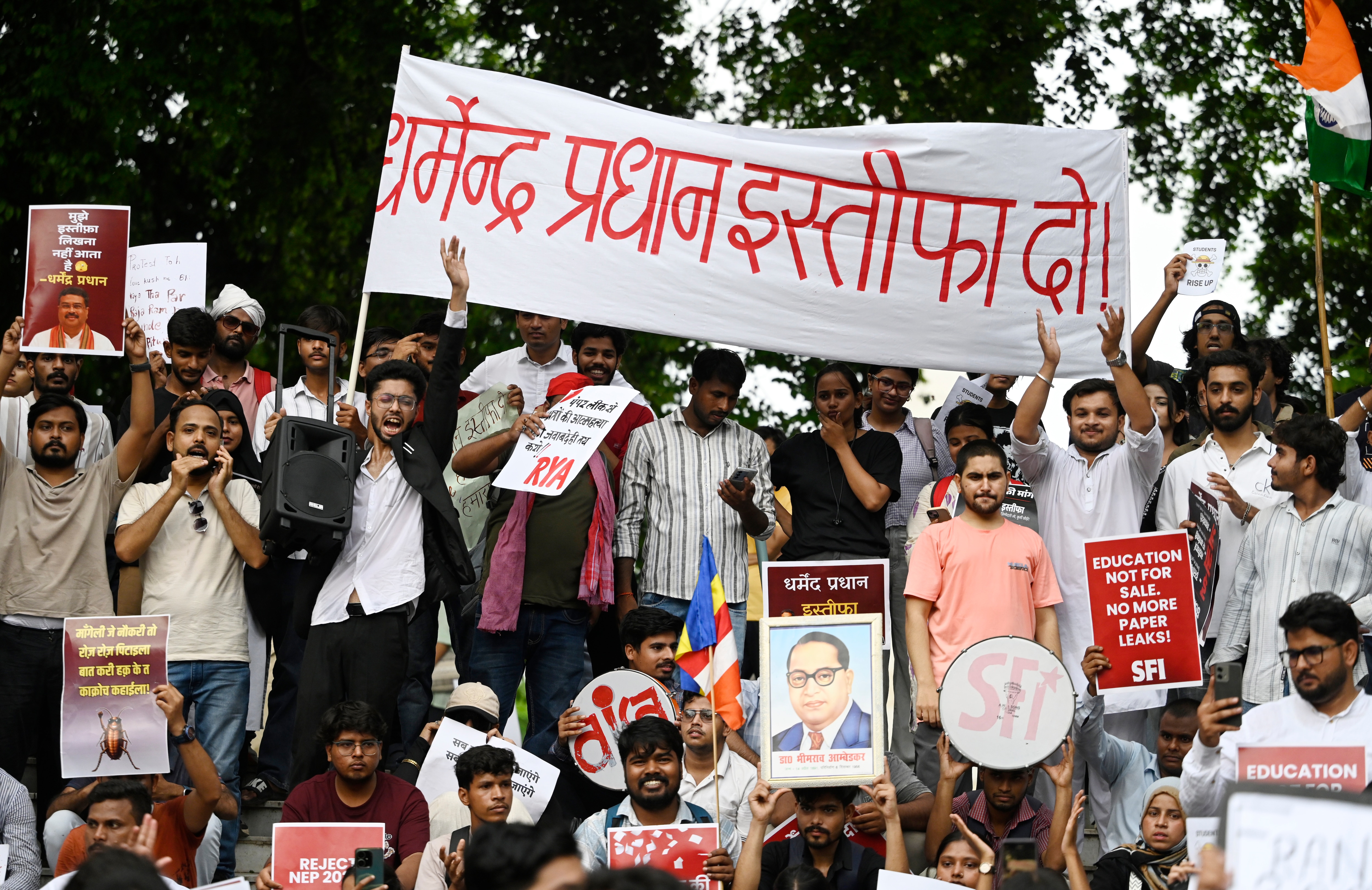
CJP and Cong insist on nothing less than Education Minister Dharmendra Pradhan’s resignation; The government seeks to confront and calm Al-Shabaab by changing the law.

In its reaction to the Cockroach Janta Party protests that have now been going on for nearly fifty days, the BJP-led NDA government has proposed significantly tightening India’s anti-leak law. The planned legislation seeks to double prison terms for many crimes, and increase fines of up to $10 crore, and timelines for investigations and trials.
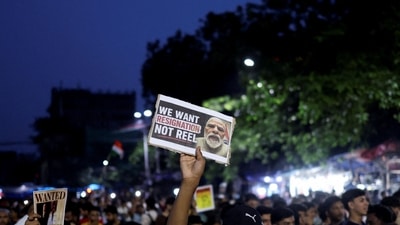
While the CJP and the Congress-led opposition succeeded in forcing Education Minister Dharmendra Pradhan to resign over NEET-UG paper leaks and other issues, the Center was already seeking to confront and pacify the Al-Shabaab movement through this legal framework plan. In a video message earlier this week, Prime Minister Narendra Modi said those who “play with the future of young people” will face strict action.
Why amend within two years?
There will also be special fast-track courts and special task forces to deal with organized examination fraud, according to a copy of the Public Examinations (Prevention of Unfair Means) Amendment Bill, 2026, which will be tabled in the Lok Sabha on Monday.
If passed, the bill would represent the first major reform to the 2024 law. The amendment significantly enhances penalties for individuals, service providers and organized fraud rings.
This also means that just two years after Parliament enacted the first law specifically against leaks, the government has acknowledged that leaks continue to undermine confidence in the country’s public examination system despite the enactment of this law.
While the 2024 Act primarily created a legal framework dedicated to criminalizing organized examination fraud, the amendment focuses on ensuring that investigations and prosecutions are completed within specific timelines while significantly increasing penalties.
The Statement of Purposes and Reasons accompanying the bill says the Public Examinations (Prevention of Unfair Means) Act, 2024, was enacted to prevent unfair means in public examinations and “to achieve greater transparency, fairness, credibility and inspire confidence in the public examination system”.
However, the report adds: “In recent years, there have been some incidents of question paper leakage and malpractices in examinations conducted by public examination authorities, which tend to affect the transparency and fairness of the public examination system.”
NEET leak link
The original Anti-Paper Leakage Act was not enacted as such in response to the NEET-UG leak class of 2024. This law became law in February 2024, months before the NEET-UG 2024 exam was held in May and allegations of paper leakage emerged.
However, the law technically came into force only on June 21, 2024, as the government faced mounting criticism over alleged irregularities in NEET-UG as well as the cancellation of UGC-NET.
The 2026 Bill is directly linked to this year’s NEET-UG leak, with the leak being a major reason for the ongoing protest at Jantar Mantar by the CJP, a satirical outfit that takes its name from a comment made by the Chief Justice of India in another context.
What are the proposed changes?
The draft law significantly enhances the penalties stipulated in the 2024 law, with different penalties for different categories of criminals.
- For individuals, It is proposed to increase the minimum prison term from three years to five years, while the maximum sentence will be doubled to 10 years. The maximum fine will also be increased five-fold $10 lakh to 50 lakh.
- For service providers Participation in conducting public examinations, the maximum fine will increase from $1 Crore to 5 Crores in case of crime. They would also face a longer period of blacklisting, with the maximum period proposed to be doubled to eight years.
- If the director or senior management or If the person responsible for the service provider is found guilty, the minimum prison sentence will now be five years, instead of three, while the fine will rise from $1 Crore to 5 Crores. The maximum imprisonment will remain 10 years.
- for organized crime In relation to examining authorities, service providers or other institutions, the minimum prison term will increase from five years to seven years, while the minimum fine will increase from $1 Crore L $10 Crores. The maximum sentence will remain 10 years.
Faster investigations and trials
Perhaps the most important shift in the amendment lies in the introduction of strict timetables.
The newly inserted Section 12A requires investigations to be completed within two months, regardless of whether they are conducted by the police, a central investigative agency or a special task force constituted by the Centre.
The bill also requires each state and union territory to appoint a special fast-track court to try crimes under the law. The proposed courts will conduct the proceedings on a daily basis and, except in cases where postponement is unavoidable and the reasons are recorded in writing, the trials will be completed within three months of the filing of the indictment.
Even pending cases will be transferred to these courts and completed within three months of transfer. The amendment also provides for the appointment of special public prosecutors for each such court.
Another significant change is the proposed power of the central government to constitute a special task force to investigate crimes under the law. At present, the Center may transfer investigations to a central investigative agency.
Appeals against judgments, judgments or orders of the Special Fast Track Court shall be brought before a subsidiary bench of the High Court, and shall be decided “so far as is practicable” within three months of their acceptance. Appeals against bail orders will also be allowed.
Get the latest India news, headlines and real-time updates from across the country. Stay up to date on politics, government policies, crime, weather and major national developments.