Air India Express expects to operate 50 to 60 aircraft over the next 12 to 18 months, with its fleet expansion plans remaining on track despite the delay, Air India’s president, Nipun Agarwal, said on Wednesday.
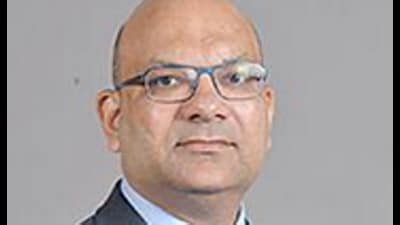
“Between now and the end of next year, we should have more than 50 aircraft, if not more,” Aggarwal said on the sidelines of a panel discussion attended by Haitham Ali Khamis, Director of the UAE Culture and Tourism Department, and Carsten Norland, Commercial Director of Abu Dhabi Airport in Abu Dhabi. “That was the plan, and that is still on track.”
Air India Express currently operates a fleet of more than 100 aircraft, compared to about 25 aircraft about three years ago. It launched three flights from Abu Dhabi to Navi Mumbai and Indore on July 15 and to Lucknow on July 16. The airline announced flights between Abu Dhabi and Guwahati from August. Air India Express operates over 500 daily flights with a fleet of over 100 aircraft.
Agarwal said the airline expects deliveries to accelerate. He added that it will also be one of the first operators of the Boeing 737 MAX 10, the largest model in the series designed to seat up to 230 passengers, once the aircraft receives certification. “Overall, with the demand we have, we should get 50 to 60 aircraft in the next 12 to 18 months,” Agarwal said.
The fleet expansion comes as Air India Express continues to consolidate and modernize its operations following the Tata group’s acquisition of Air India in 2022. The airline is aligning its fleet and products.
Agarwal admitted that the transformation faced setbacks due to factors beyond their control. “The industry has been through many challenges, and we have been exposed to many black swan events, which I don’t think anyone could have predicted when we started this transformation journey.”
He said supply chain disruptions, geopolitical developments and delays in aircraft deliveries affected the pace of the group’s turnaround. “Airline branding, fleet modernization, and investment in maintenance, repair and overhaul [Maintenance, Repair, and Operations]Training Academy, almost all of this is on track. What we have experienced is delays in deliveries, and delays in updating the fleet.
He added that they were exposed to external events that they could not have imagined. “…We are very optimistic. It may take a little longer, but we will get there,” Agarwal said.
As part of its fleet modernization programme, Air India Express expects to complete the alignment of its fleet of narrow-body aircraft by March next year. The modernization of Air India’s Dreamliner fleet is expected to be completed by the middle of next year. Aggarwal said the upgrade process for the Boeing 777 would take longer.
He added that Air India Express has restored about 90% of its operations in West Asia after the turmoil caused by the Iran-US conflict.
Indian airlines were forced to temporarily reroute and reduce their international services after parts of West Asian airspace were closed following the conflict earlier this year. They downsized parts of their network earlier this year after airspace closures. Higher fuel prices and longer flying times have also affected operations across the region.
Agarwal said demand for roads leading to the region remained strong throughout the period of unrest and operational restrictions. He added that passenger demand was the biggest challenge for the airline. “The biggest impact we have is in terms of our ability to fly to and from the region. We are limited by that only because the demand here is so strong. There is a large Indian diaspora.”
He said they are back to 90% in West Asia. “As long as we are able to operate, we will deploy capabilities, and we will operate.” Agarwal said that the airline is very optimistic in the West Asian and UAE market.
Air India Group is the largest airline in terms of international traffic from India. Nearly two-thirds of the group’s capacity and revenues come from international travel, nearly 50% of which comes from West Asia. “Two-thirds of this amount comes from the UAE market. So the UAE will constitute a quarter of our business as a group,” Agarwal said.
Norland said Indian traffic to Abu Dhabi is about seven million passengers. “That’s 24% of our traffic. Five million of them are what we call point-to-point. So, those are actually the people who stay here. Two million then use our airline network to continue out into the world and back again.”
This shows that India is a strong market, he said. “We have seen over the last two years that the number of passengers from India coming here is increasing by more than 20% every year,” Norland said.
Fuel prices remain another important factor affecting airline operations, although it is not the only consideration, Agarwal said. “If we can get back to the $90-$100 oil price range, I think the industry can sustain itself and operate very effectively.”
He said airlines have not been able to fully pass on higher fuel costs to passengers because of the price-sensitive nature of the industry. “Airline ticket prices are not at a level where we can recover the full impact of the oil price surge that we’ve seen. Airline ticket prices are higher, but they’re still not at a level where we can recover the full impact of the oil price, especially in the last quarter, because the oil price just went through the roof.”
He said they were now starting to withdraw. “Yields are still on the higher side, both globally and domestically. But we have to see how well these yields hold up in the future, because supply is also coming back. And when supply comes back, obviously yields start falling. So, it’s a very dynamic situation,” Agarwal said.
Aggarwal also said that the Air India group will restore all operations to pre-March levels unless there is any escalation or other surprises that they cannot foresee or forecast today.