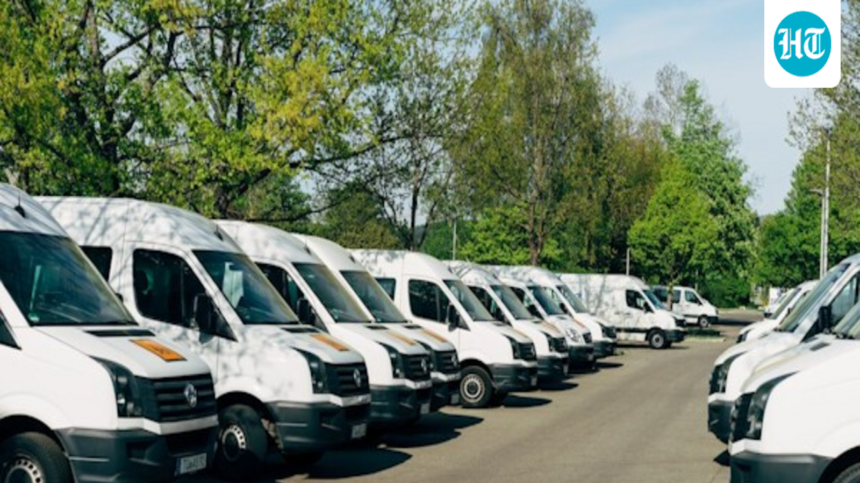
The Delhi government is exploring a plan to introduce seven-seater electric vans, on the routes of the Grameen SEWA network, to improve last-mile connectivity options in areas where conventional buses cannot operate, transport department officials said on Thursday.

According to the details shared, the plan is at a preliminary stage and the government plans to invite interested operators and electric vehicle (EV) manufacturers to suggest the type and model of vehicles suitable for the purpose.
Read also| Delhi CM Rekha Gupta launches EV support portal, inaugurates mango festival in Dilli Haat
“We are exploring an electric vehicle-based shared mobility model similar to Gramin Sewa for last-mile connectivity. The idea is to offer small electric cars that can operate comfortably in narrow lanes while providing affordable shared transportation.
An official said that the specifications of the vehicle have not been finalized yet and stakeholders will be able to suggest suitable models.
The vehicles may be operated by the government or government-approved private operators, the official said. The proposed vehicles will operate at lower fares than the current shared public transport service and will operate as a feeder service with multiple pick-up and drop-off points, rather than point-to-point taxis.
The service aims to bridge the connectivity gap between residential neighbourhoods, metro stations and major bus corridors, especially in unauthorized colonies, village clusters and densely populated areas with narrow roads.
“The electrification of paratransit is an important step as these services play a vital role in urban mobility, providing first-mile, last-mile and even main-mile connectivity in areas where traditional buses cannot operate efficiently,” said Amit Bhatt, President of the International Council on Clean Transport (ICCT) in India.
Introducing seven-seat electric trucks could expand access to affordable transportation while reducing local pollution.
The initiative is also expected to check the rapid spread of e-rickshaws across Delhi, by introducing a permit-based regulated feeding service to regulate the number of e-rickshaws and cap them, officials said.
However, this will require amendments to the current rules for commercial vehicle permits before the scheme can be implemented.
The proposal builds on the government’s broader efforts to boost last-mile connectivity. Delhi is expanding its fleet of electric feeder buses under the DEVi (Delhi EV Interconnector) program and has also proposed running smaller seven-metre electric buses for congested spaces.
It is also in line with the government’s recently notified Electric Vehicle Policy 2026, which seeks to accelerate the transition to electric mobility across public and commercial transport.