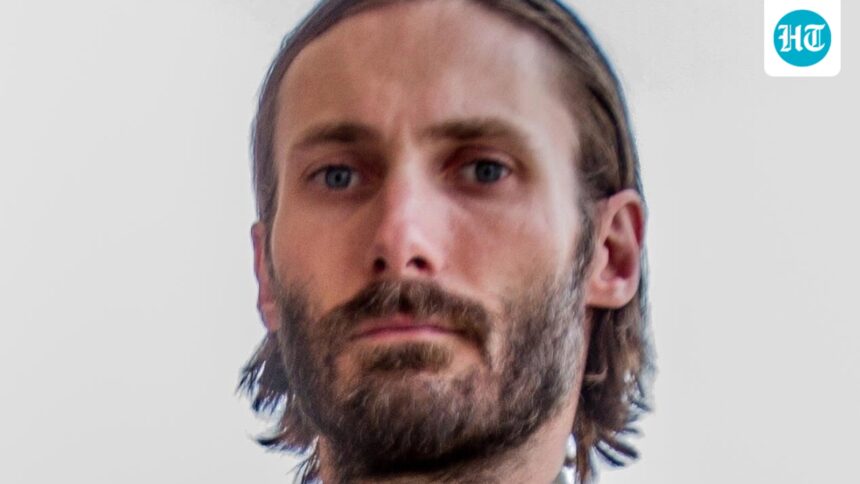
A Delhi court will next on July 21 hear a petition by US citizen Matthew Aaron VanDyke – an accused in the NIA case over an alleged terror plot targeting India involving armed ethnic groups in Myanmar – seeking permission to have an “American-style diet” in Tihar Jail in Delhi. He was unable to eat the “spicy, greasy and fried” foods served in prison, and went on a hunger strike for about 50 days, his lawyers told the court.

In the latest hearing, the National Investigation Agency (NIA) said it would not file a response to the application, while Tihar Jail authorities sought time to respond. Special Judge Prashant Sharma, who is hearing NIA cases in the Patiala House Courts in New Delhi, listed the matter for further hearing on July 21.
The application, filed by advocates Rohit Dhandrial and Rohit Gaur, seeks a continuous supply of soy milk, saying VanDyke, 45, lived largely on liquids during his hunger strike.
VanDyke says the prison diet affected health
In the application, VanDyke says he was unable to eat regular prison meals due to his eating habits and inability “to tolerate spicy, oily and fried food usually served in prison,” news agency PTI reported.
The application says the prolonged hunger strike has led to a significant deterioration in his physical condition, leaving him extremely weak and with his immunity significantly reduced, according to PTI. The petition also says his deteriorating condition was evident when he appeared in court, as he was unable to stand, appeared visibly weak and had great difficulty addressing the court. The appeal says prolonged lack of nutrition also affected VanDyke’s eyesight.
His lawyers stressed that his family was willing to bear the cost of any special dietary arrangement, and described the request as a request for “humanitarian reasons” only.
What the VanDyke Appeal seeks
The app seeks permission for items such as pasta, chicken, fish, olive oil and other foods that are compatible with his regular diet. He also reportedly requested permission to prepare his own meals using basic cooking equipment inside the prison.
This problem has appeared earlier as well. On July 3, when the court extended the judicial remand of Vandyke and the other accused until August 1, PTI quoted sources as saying that he was not eating prison food and was surviving on liquids, including juice and soy milk, and that the request seeking outside food would be transferred soon. VanDyke appeared in court in a wheelchair that day.
What is the case?
The NIA arrested VanDyke at Delhi airport on March 13, while six Ukrainian nationals were arrested on the same day at Delhi, Kolkata and Lucknow airports. The agency has registered a case under the Unlawful Activities (Prevention) Act (UAPA) as directed by the Union Home Ministry.
According to the agency, the accused entered India on tourist visas, traveled to Mizoram without the required permits and subsequently crossed into Myanmar, where they allegedly provided training on drone warfare, drone operations, assembly and jamming technology to ethnic armed groups based in Myanmar.
The NIA alleged that the activities formed part of a broader conspiracy affecting India’s national security.
The agency described the scope of the investigation as “very broad” and includes not only the commission of terrorist acts, but also “invitation, incitement and preparation for them.” The NIA also got an extension of the investigation period from 90 days to 180 days under the UAPA, telling the court that the case involved a “deep-rooted criminal conspiracy” with Indian and transnational links.
The agency said additional time is needed to analyze the seized electronic devices, examine financial transactions, trace funding sources and investigate the larger conspiracy. It also requested audio samples for all seven defendants for forensic examination by the Central Laboratory for Forensic Sciences. The defendants agreed to provide the samples, according to RIA Novosti.
Who is Matthew Aaron VanDyke?
Before his arrest in India, VanDyke was known internationally as an American documentary filmmaker, conflict zone volunteer and founder of Sons of Liberty International (SOLI), a US-based non-profit that says it trains local forces resisting authoritarian regimes.
VanDyke’s website says he was a motorcycle traveler who documented his travels across the Middle East and joined anti-Muammar Gaddafi rebels during the 2011 Libyan uprising, where he was captured and detained for several months before escaping. He later chronicled those experiences in the award-winning documentary “Point and Shoot.”
In the years that followed, VanDyke became involved in training volunteer forces in conflict zones, including Iraq and Ukraine, through SOLI. His activities have attracted praise and scrutiny. In a previous interview with the Hindustan Times, American pastor William Devlin, who has known VanDyke for years, said he told him that he was in Myanmar “training people,” although he said he did not know the details of this work.
Researchers who have studied SOLI have described it as an organization that operates in a space between a traditional humanitarian NGO and a private military organization, while SOLI has emphasized that it is not a mercenary group and works only with local partners.
Religion also featured prominently in VanDyke’s public persona, HT reported. He described himself as a devout Christian, and said his faith shaped his decision to join armed conflicts abroad. Rev. Devlin said VanDyke views his work as part of a moral duty to defend vulnerable communities. However, researchers caution against limiting his motivations solely to religion, saying his activities reflect a combination of ideological conviction, military training, and support for groups resisting authoritarian regimes. While VanDyke has publicly documented his work in Libya, Iraq and Ukraine, questions have previously been raised about the legal basis for some of his training activities abroad.
Regarding the NIA case, VanDyke’s responses so far have concerned procedural issues, as indictment is awaited.