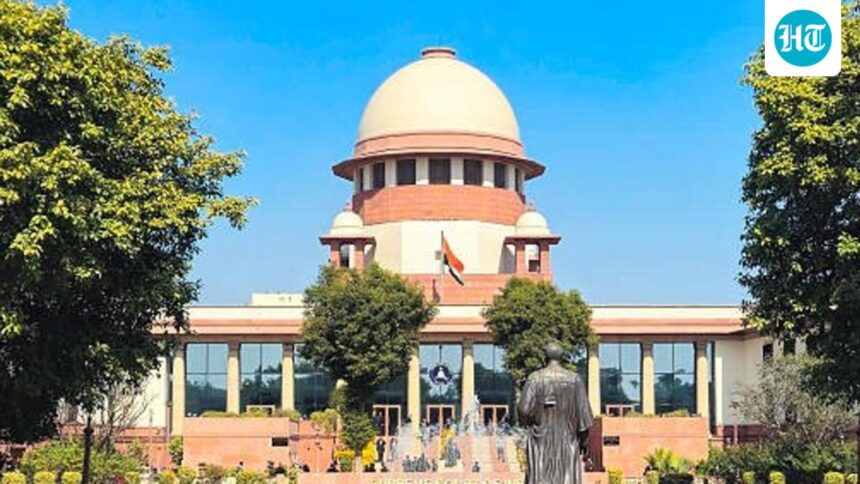
The Union government on Tuesday informed the Supreme Court that it is likely to introduce a new law governing the tenure and conditions of service of court chiefs and members during the ongoing monsoon session of Parliament, nearly eight months after the Supreme Court struck down key provisions of the Court Reforms Act, 2021, including a four-year tenure for members and a minimum joining age of 50 years.
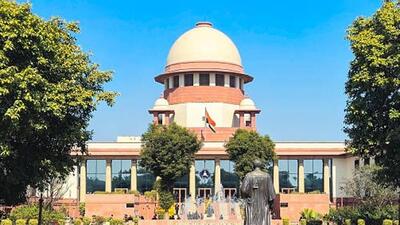
Attorney General R Venkataramani filed the application before a bench led by Chief Justice of India Surya Kant, which was hearing a batch of petitions relating to the functioning of district courts and continuity of members whose terms are expiring.
Appearing before the Centre, Venkataramani said the government was considering introducing a new bill to reform the court during the current session of Parliament. He said, “There is a new draft law on the horizon. We are in the final stages. The court reforms bill… we will try to push it through this session.”
However, the bench, also comprising Justices Joymalia Bagchi and Vipul M Pancholi, expressed surprise, noting that no such legislation appeared in the legislative agenda notified for the current session.
The court told the Attorney General: “We did not see this (the draft law) on the agenda of the current session.”
Read also: Supreme Court asks Railways to reconsider term ‘second class passengers’: ‘An insult to spirit of Constitution’
In response, Venkataramani said that the proposed legislation is likely to be introduced during the session.
The matter arose out of a set of petitions led by the Revenue Bar Association and the CAT Bar Association on continuity of functioning of the courts, extension of tenure of retiring members and implementation of structural reforms ordered by the Supreme Court.
Earlier this year, while dealing with the impending retirement of several members of the court, the Center informed the court that about 21 members were set to retire, raising concerns that multiple benches of the court could become non-functional unless interim arrangements were made.
Accepting the government’s request, the Supreme Court, on March 9, allowed the term of office of chiefs and members of the courts to be extended until September 8, 2026, or until they attain the maximum age stipulated under the Court Reforms Act, 2021, whichever is earlier. The court later clarified on May 19 that the same arrangement would apply to all courts where the term of office of any president, president, president or member expires before September 8, 2026, in order to avoid multiple proceedings.
During those sessions, the Attorney General assured the court that the government was working on an alternative legislative framework consistent with the Supreme Court’s previous directions and intended to introduce the legislation during the monsoon session. The court agreed to monitor the progress of the proposed law periodically while ensuring that the work of the court is not disrupted in the meantime.
The proposed legislation assumes significance in the backdrop of the Supreme Court’s November 19, 2025 judgment that struck down several provisions of the Court Reforms Act, 2021. A bench led by then Chief Justice Bhushan R Gavai held that Parliament had effectively re-enacted provisions previously struck down by the court, amounting to impermissible “legislative overreach”. The court held that the 2021 Act is a “mere restatement” of what was struck down in the Madras Bar Association (MBA-V) case in July 2021, without addressing any constitutional defects identified earlier.
The ruling declared unconstitutional the provisions stipulating a unified four-year term for court members, the minimum age for joining the court of 50 years, and aspects of the appointment process, considering that they undermine the independence of the judiciary and violate established constitutional principles.
A comparison of the Court Reforms Act, 2021 (which had previously been struck out), and the subsequent Act, which the Court affirmed at the time, revealed that Parliament “repeated verbatim” several provisions, including a minimum age for appointments of 50 years, a uniform term of four years with a maximum age of 70 and 67 years, the directive that search and selection committees submit a committee of two names for each vacancy, and the linkage between allowances and benefits. To equivalent civil servants.
In its ruling, the court also directed the Union government to establish the National Courts Commission as an institutional safeguard to ensure appointments and independent administration of the courts.
The court held that until Parliament enacts a new law consistent with the constitutional requirements and previous judicial declarations, the principles laid down in the Madras Bar Resolutions in 2020 and 2021 will continue to govern the appointments, tenure and conditions of service of members of the court.