Dear reader,

Yesterday a stranger entered our house. A tall man with a sunburnt face and heavy eyes takes off his cloak at the entrance and proceeds to enter, casually and matter-of-factly. Our dog barked when he first showed up, but now he’s calmed down too.
I’m about to head upstairs with my laptop and that “Yesterday” book everyone’s talking about. The story of Natalie, an influential businesswoman, who lives on a sprawling Midwestern-style farm, with a red barn, cows, and chickens, and makes a living selling farm produce such as mahogany tables, aprons, and raw milk. She has many followers online, but she also receives a lot of hate, from feminist activists who condemn her for being happy to have many children and spend her life doing housework.
At the beginning of the book, something drastic happens: her house is no longer her home. In many ways it’s the same, but it feels like she’s gone back to a time when she’s no longer in control. She suspects that there are outside forces manipulating things. She’s not sure.
Now, facing this stranger entering, I stepped forward and surrounded him with my body. There is nothing overtly threatening about him. It’s simply his confident appearance as he makes his entrance that gets on my nerves.
“And you?” I asked him, as softly as I could.
He gives a name, a strange name that I hear but don’t register and can’t remember now.
“This house is for sale,” he says. “I want to see it inside.”
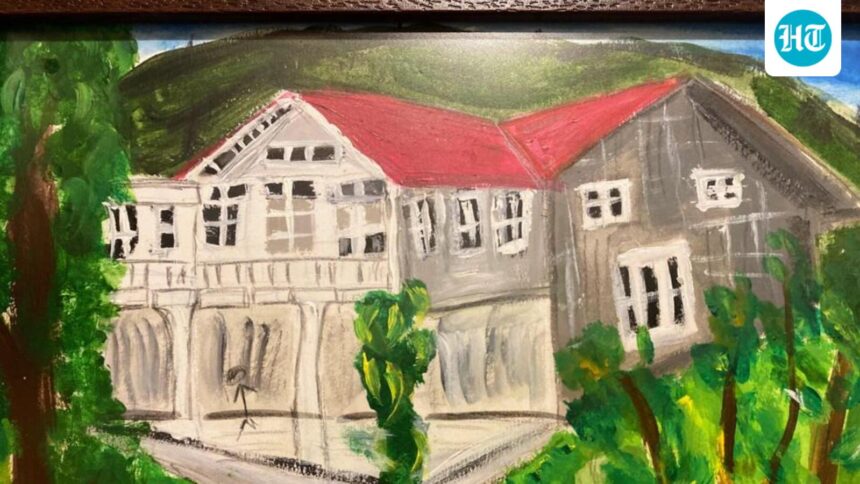
Suddenly, the world stopped. In front of me stands this stranger in the house my grandparents built, a beautiful one-story colonial of wood and stone, with a sprawling porch where my parents and siblings and cousins and aunts and uncles would gather for morning tea and breakfast, sunlight streaming through the deodar trees, surrounded by apple orchards where we played as little children, and later our own children played in much the same way, climbing the rocks and climbing the apple trees.
The uncles have been talking for a while about selling this house, which they probably call settling their affairs. But now this stranger, without any warning.
“I don’t know about your coming. Maybe you could see the place from outside,” I said, and continued to block access to the house with my body.
The stranger is standing. We have a moment of confrontation.
Behind me I see the Chowkidar’s wife, her eyes wide with worry. Selling the house would threaten her livelihood and potentially strip her of the shack in which she has lived most of her life.
The man walks away, closing the door behind him. When I went upstairs, I heard him talking loudly on the phone with someone – I don’t know who – saying something about the lady who blocked his way. My legs feel unstable, although I can’t say why.
Upstairs, I put the kettle on. From an old tin can, I pulled out an Earl Gray tea bag and steeped it in a cup of boiling water. I sit on the couch in the upstairs study room and try to go back to yesterday. Why do my chest feel heavy and tight?
In a storytelling course I teach, I use a quote to show students how quickly a narrative can change. A quote attributed to Leo Tolstoy says that there are only two plots in all literature:
A person goes on a trip.
A stranger comes to town.
And here the stranger comes to my house. Maybe this is the cue for me, as the protagonist, to leave the comfort of my family home and go out into the world. I’ve felt like this is going to happen for a while. I started building my own house. But being away is heartbreaking.
Later, lying in bed, tucked under my grandmother’s patchwork quilt, I return to the first pages of Yesterday’s Book, following Natalie the saleswoman as she moves back and forth through time, trying to understand the house that is hers but is not hers.
And like Natalie of yesteryear, I find myself in a house that feels both mine and not mine at the same time. The walls are the same, the view remains; But shared ownership is controversial, and shared ownership policies and market values are shrinking this space.
Natalie is trapped in a domestic loop, trying to regain control. However, I am forced out the front door. And maybe this is my story – the realization that no home is truly permanent, no matter how many generations it houses.
(Sonia Dutta Chowdhury is a Mumbai-based journalist and founder of Sonya’s Book Box, a personalized book service. For all questions on life and literature, email sonyasbookbox@gmail.com.)