Dear reader,
I’m angry. And upset. There are a million thoughts buzzing in my head. There is a red traffic light in front of me. Buses, cars and cars. Food delivery man squeezes his scooter through the gap between the car and the bus.
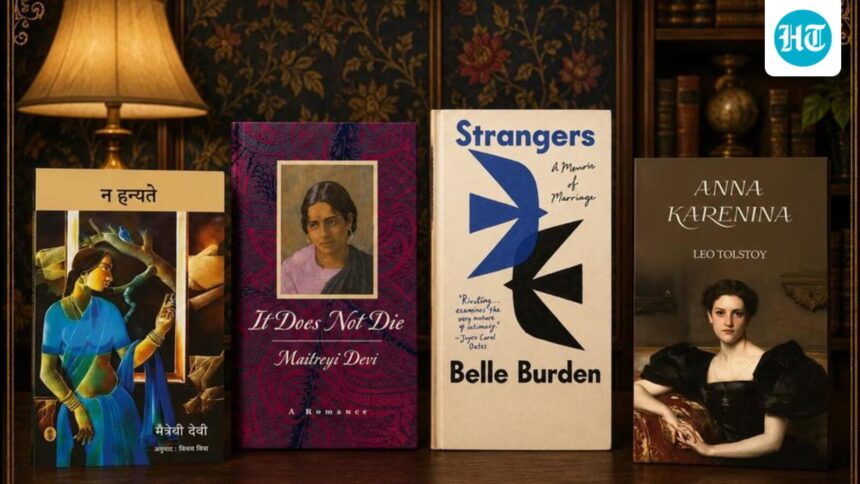
With me in the car is Prince Stepan Oblonsky. His affair with his children’s nanny has just been exposed in an incriminating letter. The family is in disarray due to his wife’s withdrawal. We see her in pain, terrified and distraught. We see him eating toast and coffee, his peaceful life slightly disrupted because he had to sleep in the library. By contrast, she didn’t sleep at all.
Just as Leo Tolstoy gives full marks for the skill with which he sets up this contrast, the man’s adultery as a “minor inconvenience” to his life, the woman’s adultery as an unpardonable crime, I get to the part that describes Daria, the wronged wife. I’m listening to the audiobook of Anna Karenina. He tells us that her once luxurious hair has become thin, and her face is worn out. We don’t get a similar description of Stepan – instead we hear that he is very well-liked and well-liked by everyone, not to mention that he has gambling debts and abuses his connections for his position. Traffic starts but I’m a century away in the Russian Empire.
That afternoon I sat in my home office. The rain has stopped, the sea air outside is heavy, and the palm trees are still. I have twenty tabs open on my computer – tickets to book, messages and emails to write, payments to make.
I find myself unable to process any of this.
Instead, I opened a tab titled Na Hanyate, She’s Not Dying. It is a book written by a Bengali woman, scholar, poet, and thinker. When she was a young girl, her father invited his Roman student to stay at their house, and the two fell in love and wanted to get married. But then the girl’s father found out. The father exiled the student from their home in Calcutta and married his daughter off to a man fourteen years her senior.
This is all sad, but well, that’s the kind of tragedy life often produces.
What makes it terrible is that the foreign student is writing a book eight years later, which is a thinly veiled fictional version of this love story; He uses our girl’s real name, Maitreyi Devi. In the book, titled “Maitri,” he wrote a version of their story so full of physical emotion that he was actually imprisoned for writing “pornography.” It is not surprising that the book became a bestseller. It has been translated from the original text written in Romanian into many other European languages including the French version La Nuit Bengali. The book was later made into a film starring Hugh Grant, Shabana Azmi and Supriya Pathak.
I read an English translation of this book called “Bengal Nights”. As I turn the pages, I find myself growing angrier and angrier at the book’s descriptions of Maitreyi Devi as a strange, sensual “creature” from the East.
Imagine Maitreyi Devi discovering this book. Years after it was published in various European languages, when I recognized some of its contents, I was shaken. There is no English version yet, but friends and acquaintances are translating it for her.
Maitreyi Devi feels compelled to set the record straight.
She is writing her own version, a novel called Na Hanyate, translated as Deathless, an account from the Bhagavad Gita of the immortal soul.
Her book, which won the Sahitya Akademi Award, makes me sad and angry.
XXXX
Maitreyi calls her fairy self Amrita. This Maitri/Amrita character speaks. She has thoughts and ideas, she is analytical and interrogates cultural assumptions and ideologies in a way that shows Mircea Eliade’s portrayal of them for what they are – deeply crude, sexist and racist.
Through her book passes the inspiring presence of Rabi Thakur and Rabindranath Tagore. Amrita/Maitri adores the poet and resorts to his ideas and advice for help, and Mircea Eliade feels extremely jealous.
I’m angry, not just at Mircea Eliade for his book, but at the entire ecosystem that allowed this to happen.
There is her mother who tries to help her daughter at first but cannot stand against her husband and ends up cheating on her daughter, and then later ends up cheating on herself. I blame her, but really how can I blame her?
The person I blame the most is Amrita’s father, the neglectful man who thoughtlessly brought his foreign student, Mircea Eliade, home to live with his family. He encouraged his daughter and the student to study Bengali and Sanskrit together and when they fell in love, he refused to let them marry due to culture, caste and morality, not to mention that he himself later abandoned his wife for a younger woman, thus breaking up his family.
I wake up this morning feeling heavy. Outside my window the trees are very still. A kite glides by. In the kitchen, I took the glass jar containing Divan coffee powder from the refrigerator and scooped three tablespoons into the coffee maker. Separately I heat the milk.
I have a busy day ahead of me. I have to write about the Future of Work, I have to get my reading list together and start reading, I have a complicated bank transfer pending, and a whole to-do list. But I can’t get Na Haniyat out of my head. What have others said about this book?
I discovered that the University of Chicago Press published Na Hanyate and the first English translation of Bengal Nights in 1994 as companion books. Critics saw it as “saying”. He also says that it is also a confrontation between sex, colonialism, and different ideas of love.
Then I discovered Gino Kamani’s article, “A Terrible Wound: The Untold Story Behind the Publication of Maitreyi Devi’s Book.” I explained exactly what was bothering me, noting that Eliade describes Maitreyi as “a caricature of a Tantric goddess, inexplicably transformed from virgin to sex queen in his unrealistic, self-absorbed fantasy.”
Kamani says: How brave was Matri Devi to travel to Chicago to confront Eliade, and publish her response to the story he had sold to the world for forty years. Kamani noted the criticism she received because of this. She quotes critics who have described Maitreyi Devi’s book as “self-absorbed”. “Her angry response was naive, somewhat Indian,” says Ian Buruma in a review titled “The Call of Indian Love,” New York Review of Books, September 22, 1994.
They described her as “rather Indian” with anger. “Self-absorbed.” Decades later, these words moved me. Has the ecosystem really changed?
Because men are still estranged from their social lives and second wives, while women are left resourceless with their ruined reputations and the exhausting work of single-parent families.
If you think this belongs only to history, consider Bill Bearden’s recent book The Outsiders. This bestselling memoir tells the story of a strong, well-connected woman and what happens to her marriage. Like Daria Alexandrovna from Anna Karenina, she is heiress to a fortune. However, overnight, she was surprised when her hedge fund manager husband abandoned her. If this could happen to her, what happens to everyone?
I sit with these thoughts for a long time. Na Haniyati – Don’t die. It remains alive in the heavy sea air, in the still trees, and in my reading of the novels “Na Haniyat” and “Ghurabaa,” the stories in which women tell their truths. I’ll go make myself a second cup of coffee. My day has started. I press the keys and get to work.
Sonia Dutta Chowdhury is a Mumbai-based journalist and founder of Sonya’s Book Box, a personalized book service. For all questions about life and literature, email sonyasbookbox@gmail.com.