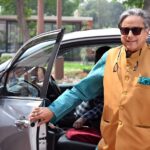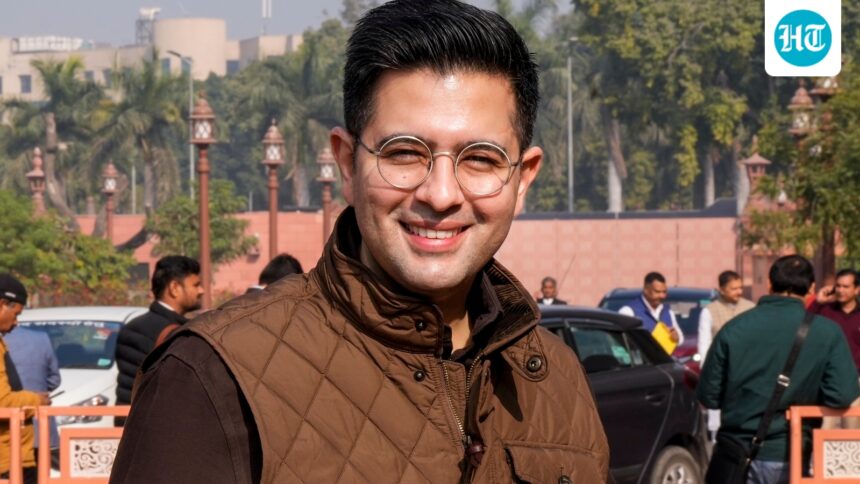
Raghav Chadha said he was “silenced” because he constantly raised issues that directly affect people’s daily lives. The AAP accuses him of focusing on “soft PR”.

Raghav Chadha, once seen as a confidant of Aam Aadmi Party president Arvind Kejriwal and a key figure in party affairs in Delhi and Punjab, now finds himself in the midst of an alleged internal conflict – asking: “Have I committed any crime?”

Shortly after his removal as deputy leader of the Rajya Sabha, Chadha said he had been “silenced”, as he was constantly raising issues that directly affected people’s daily lives, even if they were often ignored in political discourse.
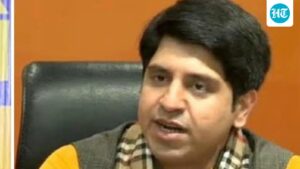
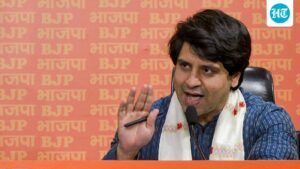
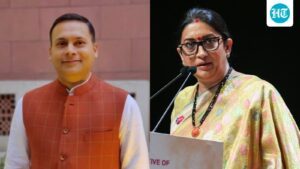
However, the RJD leadership hit back, accusing it of focusing on “soft PR” rather than raising hard-hitting political issues in Parliament due to Prime Minister Narendra Modi’s concerns. Delhi unit chief Saurabh Bharadwaj criticized Chadha for not dealing with the BJP-led Center strongly enough.
Here’s a look at the so-called “soft” issues like samosas that Raghav Chadha raised in Parliament recently.
1. Paternity leave and shared care
One of the issues Chadha raised in Parliament recently was the need for legal recognition of paternity leave.
“I have called in Parliament for paternity leave to be a legal right in India,” he said, adding that caregiving responsibilities should not fall solely on women.
“A father should not have to choose between caring for his newborn and keeping his job… nor should a mother go through childbirth and recovery without the support of her husband.”
He stressed that “providing care is a shared responsibility” and that laws must reflect this reality.
2. Traffic crisis in metro cities
Chadha also raised concerns about worsening traffic congestion in major cities.
“Traffic has turned our major cities into giant parking lots with people trapped inside,” he said, pointing to cities like Bengaluru, Mumbai, Delhi and Chennai. Commuters in these parts of the country spend “100 to 168 hours a year stuck in traffic,” he said.
“Every hour lost is an hour India cannot regain,” he added, calling for a “national mission to ease urban congestion” through better public transport, smarter traffic systems and a scientific parking policy.
3. 28-day monthly recharge and “use it or lose it” data.
Much of Chadha’s interventions focused on telecommunications practices, especially prepaid users.
“Telecom companies offer recharge plans with ‘daily data caps’. Any unused data expires at midnight, despite paying for it in full,” he said.
“You will be charged for 2GB. The remaining 0.5GB will be gone by the end of the day. No refunds. No replenishment. It’s just gone. This is not an accident. That’s the policy.” He asked why paid data was confiscated and demanded that unused data be transferred.
The AAP leader also pointed out what he called a “28-day ‘monthly’ recharge scam”.
“Telecom companies call their plans ‘monthly,’ but they only last for 28 days,” he said, noting that users actually pay for 13 recharges per year. He urged companies to align plans with 30-31 day cycles.
4. Menstrual health and dignity
Regarding social issues, Chadha highlighted gaps in health infrastructure related to menstruation.
“When a girl misses school because there is no pillow, no water, no trash can, no privacy, this is not her personal problem. This is a failure of our system,” he said.
“Menstrual health is not a favor…it is a matter of health, education, equality and dignity. Women do not need sympathy. Women need rights.”
5. Airport food and “Udan Yatri Cafés”
One of the terms used by AAP leaders to question Chadha on Friday over his silence against the Central government was “samosa” – an Indian snack. The AAP leaders were referring to raising concerns over expensive food at airports that Raghav Chadha had pointed out.
“Air travelers have long complained about the high cost of food at airports,” he said, while welcoming the Udan Yatri Café initiative launched by the government in the ongoing Budget session.
However, he pointed out two loopholes: the limited presence across airports and its placement outside security zones.
“Affordable food at airports should not be a luxury. Rather, it is an essential amenity for travellers,” he said.
Days later, the Ministry of Civil Aviation announced the expansion of Udan Yatri cafes.
On March 30, Chadha shared a video of himself visiting the Udaan Yatri café at Maharashtra Airport in Mumbai and having tea for just money. $10.
“I was flying to Delhi and wanted to have tea before the flight. I spoke to several travelers while I was there. They are all happy, they all say the same thing: easy on the pocket, good service, value for money. Affordable food at the airport is possible. This is proof of that,” he said.
6. The right to withdraw confidence and political accountability
Within the framework of broader political reform, Chad called for the “right to withdraw confidence.” “If voters can hire Nita, they should be able to fire Nita, too,” he said.
He said five years was too long to wait for accountability, and noted that many democracies already had impeachment mechanisms in place, while adding that safeguards would be necessary to prevent abuse.
7. Gig workers and the reality on the ground
Chadha has also spoken out for gig economy workers on multiple occasions, stressing “fair wages, humane working hours and basic guarantees.”
He even spent a day with one of the delivery workers to understand the challenges they face, support calls for better pay and benefits, and advocate for removing the pressures of ultra-fast delivery like 10-minute deliveries.

Priyanshu Priya is a journalist with nearly three years of newsroom experience, driven by a deep belief that stories, when told right, can shape conversations and hold power to account. Currently working as a Senior Content Producer at Hindustan Times, she writes on a wide range of issues, from Indian politics and public concerns in Delhi to global trade tensions and high-stakes crime stories. Priya joined HT at a pivotal moment, as Operation Sindoor was unfolding, and has since covered some of the most defining developments of recent times. Her reporting covers the Indian Airlines plane crash and the Pahalgam terror attack to India-US trade tensions, unrest in the Middle East, and key Assembly elections across the states. She thrives in the fast-paced world of breaking news. In 2025-26, it received the Q3 Award from Hindustan Times Digi Giorno for attracting more than 4 million page views in a single month. A graduate in English Journalism from the Indian Institute of Mass Communication (IIMC) and a Mass Media graduate from Patna Women’s College, Priya began her news career with the Zee News English team, where she extensively covered the 2024 Lok Sabha elections, along with the Delhi and Maharashtra Assembly elections. When she’s not tracking or writing the next big development, she relaxes by watching TV series and movies, reading books with strong heroines, and revisiting comforting offerings of the familiar ease they bring when life feels too stressful.Read more