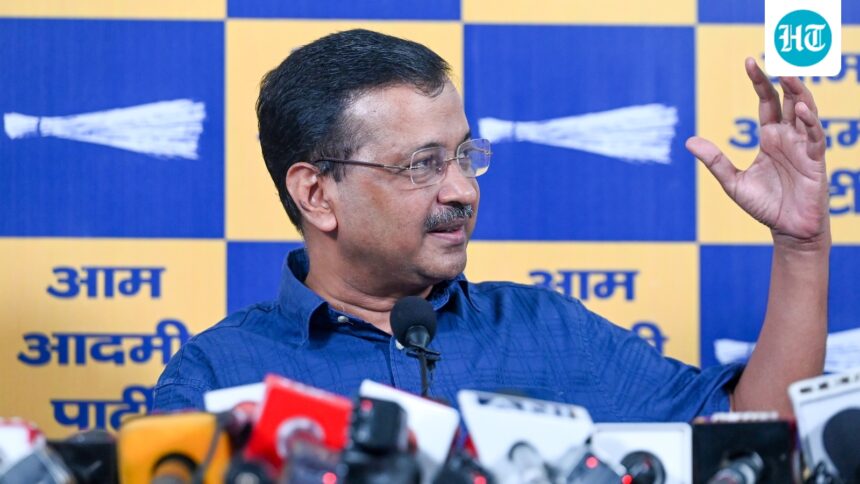
Aam Aadmi Party (AAP) national convener Arvind Kejriwal on Tuesday launched an online signature campaign against the rollout of E20 petrol, urging people to sign a petition addressed to the Prime Minister to get greater consumer choice in fuel options.
The campaign, hosted on StopE20petrol.com, calls for consumers to be given the option to choose between conventional gasoline and E10 and E20 fuels at gasoline pumps.
Announcing the initiative, Kejriwal alleged that the Center was using E20 petrol without proper preparation, and claimed that vehicle owners had raised concerns about lower fuel efficiency, engine performance and higher maintenance costs.
He said the government should allow consumers to decide what type of fuel they want to buy instead of offering only E20 gasoline. According to Kejriwal, people have demanded that petrol pumps continue to provide conventional petrol along with ethanol-blended variants.
The AAP leader also argued that E20 fuel has a lower energy content than conventional gasoline, resulting in lower mileage, while claiming its price has not been reduced to reflect the difference.
Kejriwal said party workers interacted with vehicle owners at petrol pumps and service centers over the past few days, where several people complained of reduced mileage and increased expenditure on service and repairs after using E20 petrol.
He claimed some consumers reported issues with fuel pumps, injectors and engine performance, although the center maintained that E20-compliant vehicles are designed to run on blended fuels.
Through the online campaign, AAP is seeking public support for a petition asking the Center to stop what it called the “forced implementation” of E20 gasoline until consumers are provided with alternatives.
The petition also demands that if E20 continues to be available, consumers should have the option to purchase conventional gasoline and that E20 fuel be priced lower than regular gasoline.
This campaign comes at a time when ethanol blending remains a key component of the Centre’s strategy to reduce crude oil imports and increase the use of locally produced biofuels.