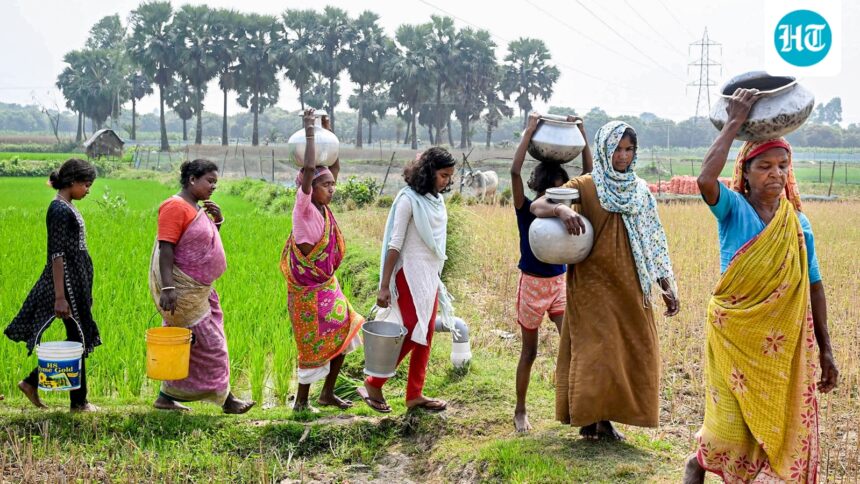
After being taken to the back, the men must wait their turn. At an election rally on the outskirts of Kolkata, in West Bengal, an all-female marching group leads the way. Women are at the forefront of the campaign for the state elections, which are being held in two phases on April 23 and 29. Winning the votes of women voters is also crucial in the three other states and the federal territory holding elections this month.

It wasn’t always this way. For decades, the female voter has been a minor figure in Indian politics. Before independent India’s first general elections, in 1951-52, nearly three million women were removed from the voter rolls because they had not registered under their names, but simply as “mothers” and “sisters” to male family members. Things have changed dramatically. Between 1962 and 2024, men’s turnout in national elections increased by only three percentage points. The percentage increased by about 20 percentage points for women.
In the last parliamentary elections that took place in India in 2024, the percentage of women who cast their votes compared to men increased slightly (65.8% of women compared to 65.6% of men). This has only happened once before. In one constituency in West Bengal, nearly 88% of eligible women expressed their opinion – an unimaginable rate in most Western countries. This partly reflects the gradual empowerment of women, who are more likely to vote when they have a job, education, and some degree of independence from parents and husbands. The biggest reason behind the recent jump in women’s voting share is the higher literacy rate among women, says a study by analysts at the State Bank of India.
All of this changes how elections are fought. Women voters may be guided by different considerations than men. Fewer than 10% of women in one national survey said they favored a candidate because of “ideology.” Men appear to be more likely to become angry than women over culture war issues, such as when politicians claim threats to Hinduism or claim there is a problem of “illegal infiltrators” from Muslim-majority Bangladesh.
Instead, the researchers found, women are more likely to win their support through tangible promises of well-being. The daily struggles in a male-dominated society gave women a “more specific survival instinct” than men, says Ruhi Tiwari in What Women Want, a book about women voters in India. If conditions for Indian women are improving, they are about half as likely as men to have paid jobs – and as a result, they are much less confident that they will always be able to make enough money to get by.
The battle for women voters helps explain a recent startling change in state-level politics: the rapid spread of government cash transfer schemes. At least 16 of India’s 28 states run direct cash transfer programs for which only women are eligible — up from just a few in 2022. The amounts these programs provide range from about 800 to 2,500 rupees ($11-27) per month. They use different criteria, such as age, income and marital status, to select beneficiaries. Increasingly, elections are fought over such programs.
West Bengal is a good place to watch this play. The women leading the march in Khurrada, a suburb of Kolkata, are supporting the incumbent chief minister: Mamata Banerjee of the Trinamool Congress (TMC). They wave banners advertising Lakshmir Bhandar, Banerjee’s flagship social welfare programme. This provides cash of Rs 1,500-1,700 per month to women between the ages of 25 and 60 who come from poor homes. They also talk about other local cash schemes targeting teenage girls, farmers and widows. It has proven difficult to shift the conversation to other election topics. What else would Shabriya Ghosh, 37, want to see from the state government? “More charts!” She beams.
This shift in Indian politics is attracting a great deal of controversy. Thoughtful cash transfer plans have real advantages. It can increase consumption, reduce poverty, improve women’s education, and discourage early marriage, among other benefits. Lakshmir Bhandar was commended in a 2023 report by Pratichi Trust, a Kolkata-based NGO that looks for ways to improve education, health and gender equality. More than 60% of the women surveyed believe that the program enhances their status within the family. 87% of participants said it allowed them to invest in dreams beyond just survival, such as training or entrepreneurship.
However, careful observers of Indian democracy are concerned about the spread of cash programmes. Much of it is random: it looks like vote-buying dressed up as women’s liberation. Just weeks before the Bihar state elections last November, India’s ruling Bharatiya Janata Party and its allies deposited Rs 10,000 into the accounts of 7.5 million women as part of a livelihood scheme. This was constitutionally questionable. Its electoral impact was not clear, but according to one estimate, it may have boosted the number of seats the coalition ultimately won by a fifth.
This raises concerns about costs. In the last fiscal year, authorities across India spent about 1.7 trillion rupees on unconditional cash transfer programmes, especially for women. About half of the states that implement cash transfer plans suffer from a revenue deficit. In the profligate state of West Bengal, government debt is 38% of the state’s gross domestic product, near a record level. Lakshmir Bhandar alone consumes 10% of its revenue. The BJP is currently campaigning on the basis of a promise to double the funds distributed under the scheme.
One big concern is that the cash transfer craze distracts from policies that might improve lives more sustainably. Depsita Dhar, who is running in the West Bengal state elections for India’s largest Communist Party, believes living standards should be raised through improved wages and working conditions, not through gifts from politicians who risk disappearing once they are removed from office.
India’s Ministry of Finance recently warned that cash programs risk crowding out investment in education and health care – two things that could significantly improve women’s conditions. Zad Mahmood, a political scientist in Kolkata, points out that one of several schemes in West Bengal gives girls money to keep them in education — but he says it does nothing to save them from dilapidated classrooms or bad teachers. Women voters in India have finally gained the attention of the political class. It is a shame that they are rarely offered the truly transformative policies they deserve.
Stay up to date with our India coverage by subscribing to our free weekly Essential India newsletter.