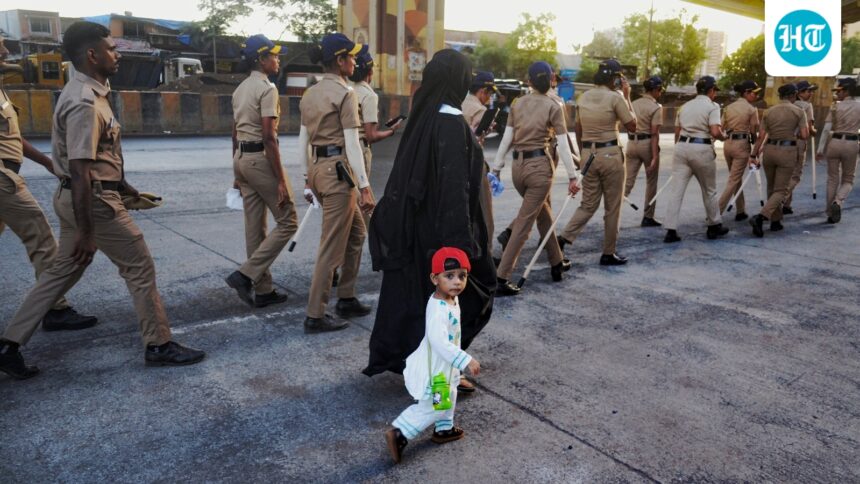
As Bakrid celebrations continued across the city, police authorities said extensive security arrangements had been made to ensure peace, law and order.

About 550 police personnel have been deployed across Mumbai, with patrols continuing in sensitive areas, Deputy Commissioner of Police (Mira Road) Rahul Chavan said.
“Police have been deployed in sensitive areas. At present, the Bakrid festival is being celebrated in a peaceful atmosphere. Social media is also being monitored,” DCP Chavan told ANI.
Officials said the deployment aims to maintain communal harmony and ensure the festival passes peacefully across the region.
BJP leader Kirit Somaiya alleged that illegal animal slaughter of Bakri Eid was happening at several locations in Mumbai, including Mankhurd, Deonar and Govandi, and urged the Brihanmumbai Municipal Corporation (BMC) and Mumbai Police to take necessary action.
In a post on X, Somaya claimed that sacrifices are being carried out in residential societies and residential complexes despite the availability of designated slaughter sites and licensed markets nearby.
“Dozens of illegal Qurbani katal places in Mankhurd, Deonar, Govandi…. in housing societies/complexes. Bakri Eid Qurbani despite markets/shops, Qurbani places (designated places) are available in nearby areas. BMC police must act,” Somiya posted.
Meanwhile, the Brihanmumbai Municipal Corporation has canceled the permission earlier granted to Bakri Eid Qurbani at Azad Nagar Building D-3, Satellite Garden Phase 2, on Aarey Bhaskar Road in Goregaon (East).
Eid al-Adha or Eid al-Bakrah, celebrated on May 28 this year, is an important Islamic festival also referred to as the “Feast of Sacrifice.” It is celebrated on the tenth day of Dhu al-Hijjah, the twelfth month of the Islamic lunar calendar, and marks the culmination of the annual Hajj season in Mecca.
The date of the festival changes every year because it follows the lunar calendar, which is about 11 days shorter than the Gregorian calendar. This results in the holiday moving earlier each year in the Western calendar cycle.
The festival is widely viewed as a time of joy, reflection and compassion, as people strengthen social bonds, forgive past injustices and engage in acts of charity and goodwill. It commemorates the Prophet Abraham’s willingness to sacrifice in obedience to God, symbolizing faith and devotion. (that I)