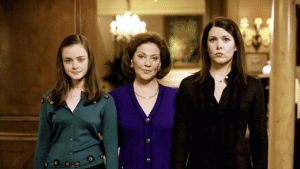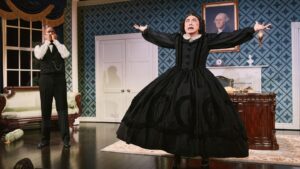
On February 25, 1995, NBC broadcast the opening show of what would become an annual ritual, the award-giving ritual of the Screen Actors Guild, with the honorees from both the film and television screens selected by the group’s 77,615 members. “For the first time, people who are in the trenches and making a living as actors will have the opportunity to express their appreciation for the outstanding work of their colleagues,” said a beaming Barry Gordon, president of SAG.
SAG has been late to jump on the awards bandwagon. The Screen Writers Guild had been handing out awards since 1949, and winners included John Huston and B. Traven for Best American Western for his film. Sierra Madre Treasure. The Directors Guild of America also began presenting annual awards in 1949, when Joseph L. Mankiewicz won Best Picture. Letter to three wives.
“We are the most humble and down-to-earth union,” Patrick Stewart explained with a straight face. But in fact, SAG members wore their union title with pride. It was more than just a visa required for a closed shop for big film and TV gigs, it was a valuable marker of professional identity.

When Tom Hanks won the Best Actor award for his role forrest gump That night, he posed not only with the statuette — a naked man with no mouth or genitals bearing the Greek masks of tragedy and comedy — but also with his SAG card.
From cynical self-effacement, the Screen Actors Guild has suddenly chosen self-effacement. On November 14, the guild announced that the main awards ceremony, scheduled to air on Netflix on March 1, 2026, would henceforth be known as the “SAG-AFTRA Actors Awards.” Downgrading from the network to Netflix may be a necessary concession to technology and market, but the decision to rebrand the SAG Awards, or rather cancel the branding, is judgmental and poor. Why lower the union’s protective shield and shine when unions like Tilly Norwood seek to undermine worker solidarity?
In announcing the name change, SAG-AFTRA explained the rationale. Since the trophy had always been called “The Actor,” “developing the name of the show to match the award itself made sense.” Moreover, an updated name will also help with presentation [the show] “To new global audiences”, which will presumably need a translation of the initials. PR dialogue insists – over and over again – that everything will “remain the same” – really, “just the way it is.” Basically, it’s not a big deal, so why make such a fuss?
It is likely that the founding generation of screen actors, who fought so hard and risked so much to create a trade union for the profession, would refuse to remove the name. Born in the depths of the Great Depression, SAG began as an act of self-preservation in response to demands from major Hollywood studios that the talent pool take a 50 percent pay cut. In March 1933, MGM president Louis B. Mayer, one of the area’s best actors, called a mass meeting of his employees’ “family” to tearfully plead with them to take a hit on the team’s behalf, or else MGM would face bankruptcy. Lionel Barrymore, who could be generous, was so impressed by Mayer’s play that he said he would cut his salary by 75 percent if necessary. Barrymore’s noble gesture did not inspire imitation. “It’s time for everyone to start a guild,” he advised Hollywood Reporter.

Everyone did. In 1933, Hollywood screenwriters, directors, and actors all came together (albeit separately) to form a united front against the front office. Each job description chose to call their organization “guild” rather than “union” to emphasize the craft skills needed to earn the degree. The union also seemed less blue-collar.
On October 8, 1933, more than 800 actors—stars and players alike—attended the first large-scale organizational meeting at the El Capitan Theater on Hollywood Boulevard. Eddie Cantor, star of stage, screen, popular radio and political savvy, chaired the meeting and was chosen as the first chairman. He called for the creation of a “100 percent effective organization” made up “of and by representatives alone.” The union will have one mission – to protect actors. “Some academy members say we will fail to form a union organization,” he said. “But we’re not wrong. We just want to be 100 percent represented in an organization that no one supports.”
Cantor was referring to the Academy of Motion Picture Arts and Sciences, which was founded in 1927 and is seen as a consortium whose main purpose is not so much to honor excellence in the motion picture arts as to maintain tight control over artists who want a bigger slice of the pie. 503 actors resigned from the actors branch of the Academy and immediately signed up for the new Screen Actors Guild (which soon abandoned the apostrophe). Cantor was willing to play hardball. “Don’t do it, let them make their own pictures,” he said to loud applause.
By then, studio bosses had backed away from tough pay cuts, but a new pickpocket arrived from Washington: the Motion Picture Industry Act, introduced under the authority of the National Recovery Act, the enabling legislation for Roosevelt’s New Deal. (The NRA is not to be confused with the Production Code Administration, a self-regulatory oversight agency created by the industry itself in 1934.) The frightening prospect of salary caps was on the table — and in 1933, dumping wealthy stars was popular public policy.
What really upset actors was that the NRA allowed producers to give themselves bonuses but threatened them with fines if they were too generous to the talent. “We regret the attempt to lay the sins of these financial pirates on the creative talent of the company,” SAG telegraphed to Franklin Roosevelt. Yes, Mae West was paid more than “the President, his Cabinet, the Senate, and Congress combined,” but she single-handedly managed to keep Paramount Pictures afloat and its employees off the bread lines. The NRA relented and the U.S. Supreme Court declared it unconstitutional in 1935.
The other existential threat to SAG in the 1930s came not from emperors or Federalists but from the mob. Having infiltrated labor unions—particularly the powerful International Alliance of Theatrical Stage Employees, whose pension fund has doubled into an ATM for IATSE president George E. Brown and on-site enforcer Willie Beoff – the union’s vaults became the next attractive bribe box. In 1939, Chicago School bandits attempted to interfere with SAG, claiming jurisdiction over… everyone Stage Hands – Not just stage hands, but anyone who works on the set, including actors.
SAG refused to be intimidated and advertised a realistic gangster melodrama. “It is a fight against the brazen attempt by George Brown and Willie Bove to swallow up the organized representatives of the personally owned and operated IATSE,” the union declared in an announcement in THR. He likened the blackmailed actors to the Nazis, recalling Neville Chamberlain in Munich (“We will not meet you under appeasement”) and the annexation of Austria (“Like Mr. Hitler, Mr. Brown – not content with being the leader of Stagehands International – says he will include the actors.”)

The resistance was led by MGM star and SAG president Robert Montgomery. “Without a doubt, Bob Montgomery is the hero of this story,” recalls song-and-dance man George Murphy, who himself served as president of SAG from 1944 to 1946. “He inspired the rest of us to stand up to the gangsters who threaten our industry.” In 1941, relying on evidence collected by the Bar Association, Brown and Peuve were convicted of racketeering and sentenced to eight and ten years in prison respectively.
Perhaps because SAG’s superstars had a feeling that only a lucky break kept them from being a face in the crowd, the guild kept a protective eye on names not listed in the credits. Extras, who are usually treated on set like live props, were in particular need of protection. “The extra has always been an incidental factor “—to be used when there is work for him, like any migrant field worker,” one producer quipped in a widely quoted remark that angered the rules. SAG insisted on fair pay ($7.50 to $15.00 per day in 1934) and a promotion to “player of the day” status ($25) if an extra spoke a line of dialogue or did something.
SAG has taken other proactive measures. In 1939, alarmed by reports that employees of Central Casting, the agency founded in 1926 to direct extras in studio crowd scenes, were taking bribes, favoring relatives, and extorting sexual favors from extras and day players, SAG hired former FBI agents to investigate the agency. Three powerful agents – Joan Crawford, James Cagney, and John Garfield – are assigned the task of monitoring the investigation.
The result was a radical change in central leadership of the cast, the adoption of strict rules against nepotism, and supervision by an in-office SAG representative “with the goal of reducing nepotism.” (The classification of screen extras as card-carrying members of SAG was actually a vexing internal issue for the union. In 1945, extras created their own union, the Screen Extras Guild, which disbanded in 1992, when SAG absorbed its duties and membership.)

Throughout the politically charged 1930s, when the Screen Writers Guild membership seemed as interested in the Spanish Civil War as in the rules of allocating credit for screenwriting, SAG essentially avoided partisan activity. In classic union fashion, the union kept its eyes on basic issues such as overtime, lunch breaks, and sick days. The non-circumstantial causes that SAG supported were irreplaceable — donations to the Red Cross or benefits to the March of Dimes crusade against polio. Individual actors may lend their names to a Popular Front group or appear at a political fundraiser, but SAG As a condition SAG has stayed away from controversy.
During World War II, SAG saw its ranks depleted as Hollywood actors were auditioned for new roles in uniform. By the end of 1942, the union estimated that more than half of its members were serving in the armed forces. She patriotically rejected any hint of celebrity privilege. When Brigadier General Louis B. Hershey, head of the Selective Service System, granted draft deferrals to some “essential employees” in the motion picture industry, and the Screen Actors Guild voted unanimously to exclude the actors from consideration. “The Screen Actors Guild did not participate in the motion picture industry classification request specifically for the draft,” the decision read. “She believes actors and everyone else in the motion picture industry should be subject to the same draft rules as the rest of the country.” “No actor is irreplaceable, regardless of his value as a major figure and studio commercial property,” SAG stressed.
In the post-war period, the government’s advisory group hoped to continue to avoid politics, but politics had other ideas. In October 1947, the union was dragged into the spotlight by the House Committee on Un-American Activities. Two former SAG presidents, George Murphy and Robert Montgomery, and the current president, Ronald Reagan, were called and testified as friendly witnesses (meaning that they agreed that HUAC had the right to investigate Hollywood but vehemently denied that the industry was a bastion of communism). All three made excellent impressions and went on to respectable careers in politics: Murphy as US Senator from California (1965-1971), Montgomery as a media advisor to Dwight Eisenhower (he convinced Eisenhower to advertise on the new medium of television in his first presidential campaign in 1952), and Reagan, whom you know.
However, SAG’s performance during the blacklist era represents the darkest chapter in its history. It did not abolish the blacklist—that was the work of the Motion Picture Association of America, which issued its infamous Waldorf Statement on November 25, 1947, which obligated studios to fire known communists and deny work to anyone who refused to work as a communist—but it facilitated and normalized the operation of the blacklist. In 1948, SAG members voted to approve an anti-communist loyalty oath for union officers and in 1953 imposed the same on union membership. As president of SAG, Reagan served on the board of the Motion Picture Industry Council, a kind of clearinghouse “to allow those accused of subversive associations to explain their relationships.”
Actors unwilling to explain or retract “subversive affiliations” were not protected by the union. In 1951, when actress Gail Sondergaard petitioned SAG to support her intention to challenge HUAC, the union rejected her request. “The union, as a labor union, would fight any secret blacklist instituted by any group of employers,” she claimed, but was quick to add: “On the other hand, if any actor by his actions outside of union activities has so offended the American public that he has made himself unsalable at the box office, the union cannot force any employer to hire him.” The world was too dangerous a place for red-blooded American actors to engage in “dialectical jousting.” That is, if Sondergaard or any other actor refused to cooperate with HUAC, they were on their own.

Looking back, Hollywood historians have given harsh judgment on what David F. Kennedy said. Brendel in his 1988 study. The Politics of Glamor: Ideology and Democracy in the Screen Actors Guildcalls for “the union’s cooperation with HUAC, and its acceptance of the gray and black lists.” However, as Brendel noted, the guild was dealt a bad hand with no good cards to play. In 1951, when actor Larry Parks, a star Jolson’s story (1946) and Jolson sings again (1949), recanted his past communism in his testimony before HUAC, “SAG gave him a clean slate,” but he was too toxic to be rehabilitated. In the end, it was the studios, not the union, that hired and fired.
SAG’s other postwar crisis was a matter of dollars and cents. When studios started selling their back-1948 catalogs to television, the film owners made a fortune, and the actors made nothing (just ask the Three Stooges). Increasingly—and even to this day—SAG has devoted its energies to winning for its members a slice of the revenue streams opened up by new technologies, what union negotiators call “fair compensation.”
Jurisdictional disputes with the American Federation of Television and Radio Artists, which represented over-the-air performers in broadcast media, complicated matters. An actor working on two screens — live television in New York and film in Hollywood — had to belong to two unions and pay two sets of dues. The issue was resolved in 2012, when the two unions merged, with SAG retaining billing for the annual awards ceremony, but advertising and stationery saying “SAG-AFTRA ONE UNION.”
Although it was like getting blood from a stone, SAG eventually secured the remaining payments for network shows and movies that aired on television, usually on a sliding scale depending on whether the show was rebroadcast in prime time or syndicated. However, it was not until 1974 that SAG reached a landmark deal guaranteeing payments “in perpetuity” for reruns of films and television shows. Actors were no longer providing “useful performances for stations and advertisers,” as SAG Executive Secretary Chester L. Midgen. Any surrender by the owners came after hard bargaining and, on three occasions, after strikes: in 1960 (via television), 2000 (commercials), and 2023 (live broadcast).
Unfortunately, the cash windfall is left over from network television (just ask the cast friends) did not flow from other remaining flows. The financial rewards accumulated from streaming and downloading were miserly. On the means of a To socialize, representatives enjoy posting photos of remaining payments for amounts less than the postage required to mail a check.
Today, SAG faces challenges as pressing as any in its history from a new breed of financial hackers and mercenary human and artificial intelligence. Removing the guild mark from the awards ceremony is a decision that, as Eddie Cantor might say, seems ridiculous.