It was 1983, and a 26-year-old producer named Brian Grazer was sitting across from the most feared man in Hollywood.
Ray Stark had a competing mermaid movie loaded with Warren Beatty and Jessica Lange, direction by Herbert Ross, and screenwriting by Robert Towne. Grazer had a whirlwind fairytale at Disney – the studio whose most recent live-action release was his Gusa flop about a goal-kicking mule — and a leading man whose cross-dressing sitcom has just been cancelled.
Stark’s message was simple.
“He threatened to crush me,” Grazer says. “I have nothing. Nothing.” They will “kill me”.
Then came the offer: 5 percent of the first dollar gross if you kill Disney splash. But Disney said no, and… splash It opened on March 9, 1984. It became a Top 10 hit, made Tom Hanks an overnight movie star, invented the Touchstone label, opened March as a release window, created Imagine Entertainment and gave the English language a new girl’s name: Madison.
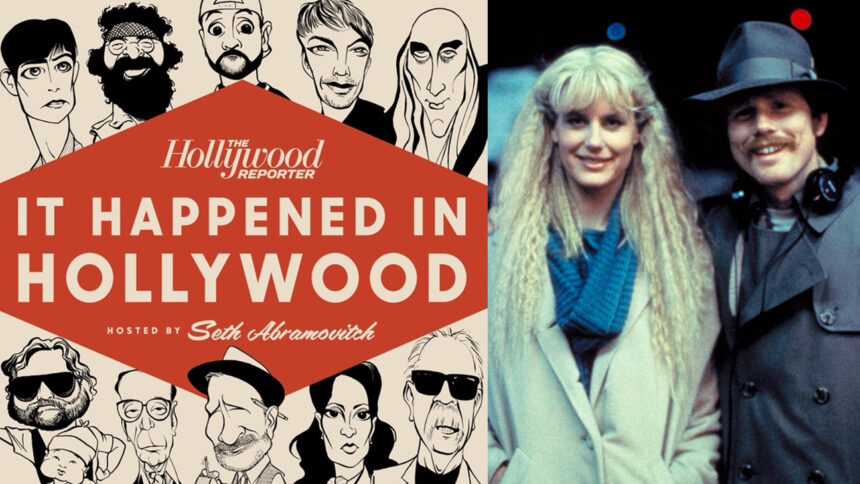
sit with It happened in HollywoodGrazer and Ron Howard show how one of the decade’s greatest sleeper films almost never existed—and how close it repeatedly came to disappearing.
The original is quite Grazer: When he was 25, while making a TV movie on Zuma Beach, he discovered “the hottest girl at USC, literally,” who never gave him the time of day. Then someone whispered: This is the product. “Seconds later, she asked me out,” he recalls.
This was followed by a presentation to newly interested women. Grazer found it obvious, if annoying. Did they admire him for who he was – or for what he could do for them? He went home and wrote down, literally, the traits of the person he might actually love.
“I became that mermaid,” he says.
The script circulated through United Artists and Warner Bros. And in almost every studio in town. No one wants to touch her. Not with Beatty running around and the powerful Stark looming. The executives didn’t say no, they just disappeared.
Eventually, the project came to Disney — a move that seemed at the time like a step down. This was pre-Renaissance Disney. Howard wasn’t convinced.
“This is really what the minor leagues are,” he remembers thinking.
But Disney was keen, on one condition: The mermaid would need a bikini top.
“That was a no-no,” Howard says. What followed was a surreal presentation before Disney’s seven-person board of directors, as Grazer found himself explaining the mermaid’s reasoning to Chairman Card Walker. The compromise – long hair, body stockings, no explicit nudity – made them cross the line.
Then Stark called. When the bribe didn’t arrive, pressure turned to Disney Chairman Ron Miller, Walt Disney’s son-in-law and, as Grazer described him, a “tough guy.”
His response, per Grazer: “We do it anyway. Fuck you.”
Now they had a green light, and a race. Howard, get down Night shiftpromised that he would beat Ross in theaters. He remembers telling them: “I’m 26 years old. He won’t hit me.”
“You said you’d be like a grunting soldier climbing under barbed wire,” Grazer recalls more clearly.
Howard shrugs. “Yes, I probably did.”
But Ross’s film was never realized. splash an act.
The casting process followed the same pattern: almost everyone said no. John Travolta has died. Richard Dreyfus died. Others declined without meetings. One agent reportedly quipped that his client would “never act in a movie with Ron Howard and Tom Hanks.”
Tom Hanks, at that point, wasn’t Tom Hanks. He auditioned for the role of the brother – that of John Candy – after advice from writer Lowell Ganz. “He was full of wit,” Howard says. After the test, Howard and Grazer looked at each other. “Could he be the leader?” They both wondered. Grazer came in and sold it.
As for the mermaid, Daryl Hannah really made an impression Blade Runner. Then she came in and said that she spent her childhood practicing underwater breathing with a garden hose. “I’ve dreamed of being a mermaid my whole life,” she told them, and gave her the role.
She also had a custom tail that took hours to remove, swam without a mask and outperformed professional “mermaids” in test tanks. Bathroom breaks were not an option.
The shooting itself was controllable chaos. The East River Jump required that stunt performers be inoculated against typhus. (“Then, you could get typhus,” notes Howard.) At the Statue of Liberty, they had to turn around before the first ferry arrived. Howard had a fever of 102 degrees. They did 63 setups before 7:45 a.m

Then there’s the lobster scene. Hannah, a strict vegetarian, was handed a fake lobster stuffed with cheese and potatoes. It didn’t work. Howard demonstrated by biting into a real paw. Hannah tried it once, and she screamed and dropped it. Then I did it again; This is what happened in the movie.
By the time the exhibitors saw it splashthe reaction turned immediately. (“They all wanted it,” says Grazer.) The film opened in March — a dead zone at the time — and became a Top 10 hit. Disney created Touchstone for its release. March has become viable. The high-concept comedy got a new blueprint. The name “Madison”, which was pulled from a Manhattan street sign, has become one of the most popular baby names in America.
The closest Grazer came to quitting was not Stark. It’s been a slow buildup of rejection. “I felt very embarrassed,” he says, recalling how people would avoid him at social events, fearing he would try to sell them on “The Mermaid Movie.”
What kept him going, improbably, was Steven Spielberg – who did at He’s been put into transition, as star Henry Thomas explained in another recent episode of It happened in Hollywoodwhose current season takes a closer look at the magical films of the 1980s.
“I thought this guy was made Jaws and Raiders. “I can’t take this personally,” Grazer says.
Howard’s memory of the photo shoot is almost the opposite of struggling to get there.
“It was one of the least stressful films I’ve ever made,” he says. “Once we got the ball rolling, it was working.”
The full episode of It happened in Hollywood With Brian Grazer and Ron Howard, it’s available now on Apple Podcasts, Spotify, and wherever you get your podcasts. splash It is streaming on Disney+.