Logo text
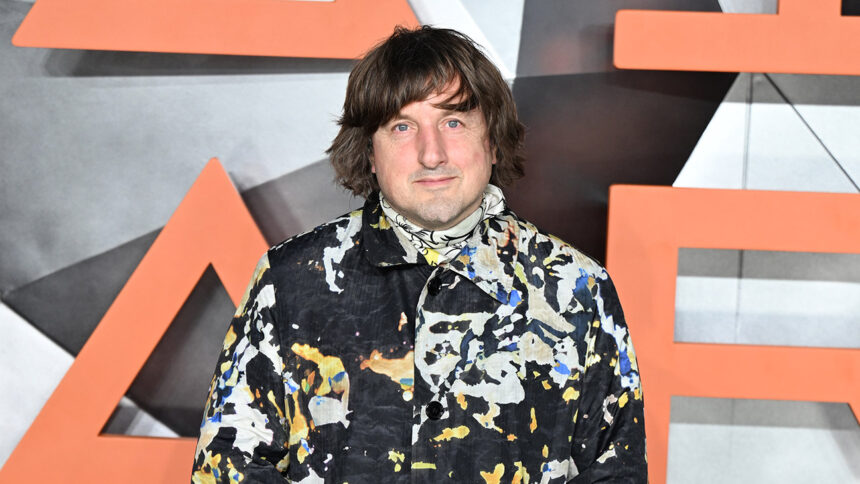
When directors Phil Lord and Chris Miller first approached Daniel Pemberton Hail Mary projectThe conversation started with woodcuts. Not figuratively – literally. The directing duo had the idea that the entire film could be scored on a single percussion instrument. Pemberton loved the spirit of it. He also told them, in his trademark directness, that he probably couldn’t handle a two-and-a-half-hour movie.
This exchange says something about how this creative partnership works. And why he continues to achieve results.
Andy Weir has already proven that his brand of deep, meticulously researched human sci-fi can fill a movie theater. MartianHis debut novel, adapted by director Ridley Scott in 2015 with Matt Damon, has grossed more than $630 million worldwide and received seven Academy Award nominations. when Hail Mary project It was still in manuscript form, Ryan Gosling moved quickly, securing the rights for Weir to star in and produce the sci-fi film adaptation.
Lord and Miller, the creative duo behind it Lego moviethe Jump Street Franchise and Spider verse Films, came on board to direct while Drew Goddard, who wrote Martian The script returned to adapt Weir’s latest work.
Hail Mary project Gosling follows the role of Ryland Grace, a science teacher shown in the film’s opening scenes addressing his students about the rapidly growing solar drainage crisis, and crosses paths with the same teacher aboard a spacecraft light-years from Earth with no recollection of how he got there. where Martian The narrative tension is divided between a stranded astronaut and the team seeking to reach him. Hail Mary project He turns this structure inward, with Grace’s returning memory acting as mission control, gradually assembling the dangers around him. Sandra Holler stars as Eva Strutt, the international project manager who put Grace on board in the first place, while James Ortiz supervised the puppeteering of the alien Rocky, and also provided the voice.
Pemberton has been no stranger to Lourdes and Miller, having scored both goals in 2018 Spider-Man: Into the Spider-Verse And 2023 Through the spider verse For the duo as producers. He has also scored their genre-hopping Apple TV+ series The after party. but Hail Mary project The pull of gravity led Pemberton to delve deeper into the process than in their previous collaboration. Pemberton moved to Los Angeles, where he wrote alongside the editing suite while Lord and Miller refined their story over and over again.
Pemberton spoke with a composer who has never stayed in one genre long enough to be identified with it Hollywood Reporter To discuss the unexpected sonic building blocks of the score, an eight-minute cue containing every musical idea in the film, and what to expect when it transitions from scoring the saviors of the universe to scoring the goals. Masters of the universe.
Your working relationship with Phil Lord and Chris Miller has covered a lot of ground Spider verse films, The after partyAnd more. But this is the first feature they brought you to register. How did those early conversations go?
I got involved very early on, reading the script and writing the ideas that were played out with Ryan (Gosling). Making the score feel very organic through the prism of space meant finding ways to connect the audience to the Earth and humanity. We recruited a group of school children at Abbey Road Studios and recorded them clapping, stamping their feet, slapping things, etc. We also used sounds and manipulated some of them electronically, trying to emulate the film’s “make it up as you go along” ethos. Ryland Grace’s improvisational planet-saving techniques are kind of how she tried to score.
The chorus almost felt like you were creating your own language, and communication is an important aspect of the film. What exactly do we hear there?
We did a lot of experimentation early on with vocals and vocal ideas. For some of them, we built very unusual types of electronic instruments that gave me the ability to express in a way that was completely unique and had never really been done. I like to combine synthetic sounds with real sounds. I wanted something to connect Ryland and Rocky.
Since Rocky is from this other planet and his communication is different, I wanted an intact world that subconsciously connects you to this other being and shows how important communication is between them. And how communication between all of us is so important in terms of communication. There’s something called the crystal basset, which is this old instrument from the ’40s and ’50s, all made of glass, that’s played with water. That’s a big part of the result. We were trying to create this orchestra that wasn’t a traditional orchestra.

I think of Ryland Grace’s previous mission, with his memories intact and his cowardly approach to life, in contrast to the Ryland we initially meet in space, with missing memories and a remarkable ability to roll up his sleeves. Thematically, how did you use music to separate these two versions of him?
Ryland changes, you know, through the movie. When Rocky starts arriving, this part of the score arrives as well. So Rocky, in the same way that he brings his personality and outlook to the story, he also brings a different vocal outlook and melodic outlook. Once they start communicating, the score actually starts going in a new direction, more of these unusual sounds. Early in the film, those voices are there, but they are few, and then they come back to life after that first contact. We call it the “cat and mouse sequence,” which is the part where Rocky tries to send the message to Ryland.
Ryland and Rocky’s journey into the upper atmosphere as part of their mission has an intensity that sticks with the audience. When you’re tasked with writing a concept that deals with so much emotional pressure and tension, while balancing sound design and effects, how do you find the balance?
You’re talking about a “fishing trip.” This is a huge piece. This film is eight minutes long, and is quite different from the rest of the film in some ways, in its dramatic intensity. This is a great example of our intentions in the film, because that reference starts with one piece of wood.
There is nothing else at the beginning of that signal, just a single piece of wood being struck over and over again. From that single block of wood, he builds and builds and never stops. The idea behind this is that it traps the audience in this tension. And maybe the audience doesn’t realize it, but they need to release that sequence and we never give it to them, which makes it very intense. This cue contains every musical idea I put into this movie. It has children’s percussion instruments, it has electric cellos, it has crystal baskets, it has glass harmonicas, it has orchestras, it has millions of strange percussion pieces.
This score has it all.
I used to joke that this movie’s score had every sound except the kitchen sink, but we actually have that in this movie. One of the earliest sounds I made was a sharp click. I was near a friend’s very nice, big house in the country, and the pipes were very old and very squeaky. I said, “Oh my God, that is the most amazing and unusual sound.” I wanted to create a language that was very organic and aquatic, so I sampled it and turned it into an instrument, because of the organic and unstable nature of that sound.
Was there a particular cue that you kept messing with as the pieces developed?
I don’t think I’ve ever been in a movie where we’ve revisited more sequences than in this movie. We revisited every sequence in the film. I’ve been in this movie for a very long time. I ended up living in Tahrir pretty much. I went to Los Angeles and was writing next to the newsroom for a long time, because it allowed us to push every idea and boundary to see what would work and what wouldn’t. One of my favorite bits, and one that I’ve always felt very protective of, is when Ryland turns on the Astropage collector during the spacewalk. He presses the button and then goes to the stars all red. I thought it was K That’s a beautiful visual sequence. I was like, “You’ve got to let me do something for this, because this is going to be a very powerful cinematic moment in IMAX.”
Do you think this is the most challenging outcome of your career, even if it is acting? Spider verse Production?
It’s definitely the most challenging and complex score I think I’ve ever done. It’s interesting when you have a film that’s about language and communication, and the ambition in scoring is also to create a new process with different tools and different techniques.
This involves a huge amount of experimentation, a huge amount of failure, and a huge amount of discovering strange nuggets of gold. At one point, I was very keen to try to do a lot of work on steel drums, because I wanted things that were very organic, and a metal that reflected a spaceship. It worked, but only to a certain level. There are a lot of tests and things that have been overlooked, but from all of those tests we were finding a little nugget of gold. This gold will be placed in the pile and become part of the score writing style.
When Ryland discovers it may not be a one-way trip, the emotion on his face plays with such intensity amidst the calm, and then you marry that to the score. Can you talk about the arc of this scene?
When I’m scoring a film, if there’s an option to try to make people cry, I focus on that moment and spend a lot of time trying to figure out how to achieve maximum effectiveness. It’s really cool to see how emotions can be pulled from an audience. You can just turn the volume up or down a little. You can make these small adjustments and they can make a big difference.
Is originality your north star when looking at potential projects?
Wait till you see Masters of the universewhich is great too. It will really surprise people. I’ve just finished this at the moment, and even though it’s an IP, the director, Travis Knight, was great and we’ve got something really fun going. I think it evokes the maximum enjoyment you can have at the cinema.