Logo text
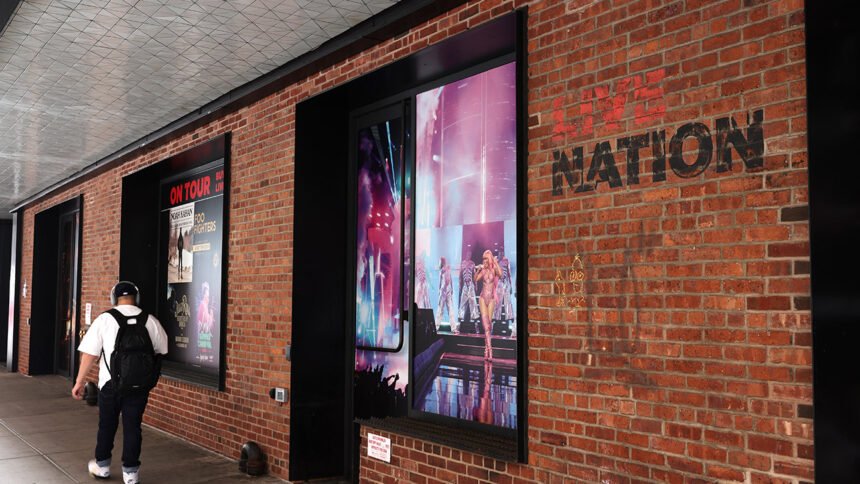
When the Justice Department began its antitrust trial against Live Nation on Tuesday, the specter of a potential settlement hung over the proceedings, as it did with Taylor Swift.
The Justice Department and 40 state attorneys general sued the company in 2024, accusing the company, which owns Ticketmaster, of using its positions as the nation’s largest concert promoter, ticket seller and venue owner to undermine competition. Since then, Live Nation has unsuccessfully tried to dismiss the lawsuit that was filed under the Biden administration. But there was a sense that the company could reach a settlement with the Justice Department now under Donald Trump.
This argument was strengthened with the resignation of Assistant Attorney General for the Department of Justice, Gail Slater, in February, amid reports that major companies were cozying up to the administration and going above and beyond its head to strike deals with senior members of the Department of Justice.
However, a 12-person jury was selected Monday, and opening arguments proceeded in Manhattan federal court Tuesday morning, amid lingering questions about whether it could all be upended by a last-minute deal.
“This case is about power. The power of a monopolist to control competition,” said David Dahlquist, a Justice Department lawyer, adding that “today’s concert industry is broken.”
Before the trial began, Live Nation won its bid to narrow the scope of the trial after U.S. District Judge Arun Subramanian agreed to dismiss claims that the company had a monopoly on concert promotions and bookings. The company has yet to defend itself against allegations that it pressures venues into signing exclusive ticket deals and makes artists use its concert promotion services to perform at Live Nation amphitheaters.
In his op-ed, Dahlquist explained that Live Nation has a monopoly on this part of the industry (with the Justice Department estimating 86 percent of prime concert tickets at major concert venues and a significant share of the amphitheater market) and uses this power to force venues to use Live Nation as a promoter and Ticketmaster as a ticket agent or face Live Nation retaliation by pulling shows from their venues. John Abbamondi, former CEO of BSE Global, which owns Brooklyn’s Barclays Center and briefly left Ticketmaster for SeatGeek, is expected to testify to that effect later Tuesday.
Additionally, the Department of Justice alleges that Live Nation prevented competition by purchasing related companies in the market and securing venues with exclusive multi-year contracts.
In turn, Live Nation attorney David Marriott, who portrays the company as “all about bringing joy to people’s lives” through live music, pushes back on what he sees as the Justice Department’s selective calculations of market share, arguing that there is more competition than ever in the ticket market, and that the company also does not act as a promoter for all major artists, particularly since it does not act as a promoter for the Swift Eras tour, among other artists.
However, Swift remains an ongoing issue for Live Nation, as site outages and long waits on Ticketmaster surfaced while tickets were being sold for the Eras Tour again during its trial. In its editorial, the Department of Justice claimed they had letters from Live Nation saying the system was “held together with duct tape,” following Swift’s ticketing issues.
Marriott admitted there was a “problem” with Swift’s sale, but there is a larger context to the “duct tape” comment, and that no other company could have handled the rush for tickets, which represents the largest single sale by an artist ever.
As for retaliation against venues that don’t work with them, Marriott has argued that long-term exclusive contracts work in a venue’s favor because they provide money upfront and a superior ticketing experience.
“Saying you’re better is not a threat,” Marriott argued, standing in front of the expected testimony from Abamondi, as well as a recorded phone call he had with Abamondi about switching to SeatGeek.
Twenty-five of the states that are part of the Justice Department’s lawsuit are also seeking damages from Live Nation, alleging that Ticketmaster was overcharging fans.
As the rather complex antitrust case is being tried before a 12-person jury, each side has taken pains to explain the process, and provide a visual explanation, of how an artist works with promoters and others to book a tour, and who benefits.
Witnesses on the list include Live Nation CEO Michael Rapinoe, who is expected to testify this week, as well as other company executives, promoters, venue owners and competing services. Fans will also be called to testify on behalf of Live Nations, as will Drake’s manager Adel Nour. Kid Rock is one of the artists expected to testify.
The Justice Department’s proposed remedy is to break up Live Nation and Ticketmaster, more than a decade after the merger was approved in 2010. The government also hopes to lower ticket prices by separating the two entities.
As the scope of the trial narrowed, Live Nation considered a breakup of the two companies unlikely, with Dan Wall, Live Nation’s executive vice president of corporate and regulatory affairs, saying at the time that “there is no potential basis for a breakup of Live Nation and Ticketmaster.” Wall is also expected to testify as part of the trial.