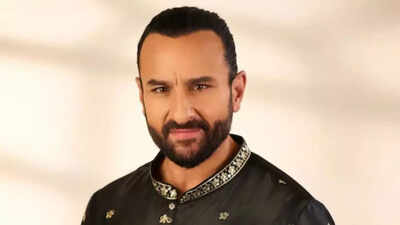
Pay parity is often something that many celebrities discuss. Many actresses have often spoken about not getting the same pay as their male counterparts. In a recent interview, Saif Ali Khan and Kunal Kemmu also shared their insights on the topic. The two actors believe that while they certainly advocate for equal pay, there is some math involved and it all depends on the actor’s ability to attract audiences to the theaters.
They also noted that things are improving now. Saif, who appeared with Kunal on Soha Ali Khan’s show, said: “If actors are of equal status, they should get the same amount. But I also feel that economics works in a certain way. If you put people in seats in the theatre, you get paid accordingly. Everyone understands that relationship.” He added: “It is not that you deserve to be paid more or less just because you are of a certain gender.
It’s actually a very balanced economic system where people are clear that this person is a big star because he fills the theaters. “They know their value, they charge that price and they get their money.”Meanwhile, Kunal explained the ‘mathematics’ behind how salaries are calculated in the industry, pointing out that in the past distributors could estimate a film’s recovery based on the stars attached to the project. “There’s math to that.
That’s the sports part, not whether the movie works or not is a different thing. Earlier, distributors knew that if I had this representative, I could sell an area for a certain amount of money and that became part of the recovery.He further explained that a film’s overall budget—including production and marketing costs—is often planned around the revenue a particular star can generate. “When you get a star who can bring in a certain amount of money, his wages are calculated based on that.
But, of course, some stars are now being paid such exorbitant sums that it becomes lopsided – the actor takes home more than the film itself.Kunal also pointed out that discussions around equal pay could change dramatically if women-led films consistently matched the box office success of male-led films like ‘Paathan’ or ‘Jawan’. “If you were in a country where audiences go and support a woman-led action film the way they support something like ‘Pathaan’ or ‘Jawan’, there wouldn’t be any conversation about it.
It will happen automatically.
“Recalling his experience in Golmaal, Kunal said that pay differences between actors are common even within the same project. “When we did Golmaal, there were Kareena and five other actors. I’m sure Ajay got paid more than her, and she got paid more than all of us. We were all on the poster, but that didn’t matter. The film was about the couple.”He added that the final decision on remuneration ultimately rests with the producers, who determine payments based on what the project can afford.
“If I’m making a movie, I decide what to pay myself. But if I’m making a movie with five other people, I’ll do the math and say I can only pay you this amount.”Drawing a comparison with Hollywood, Kunal pointed out that star power affects salaries around the world. “If I’m going to film Mission: Impossible, I’m going to pay Tom Cruise to do it. I can’t pay an actress, even one.”
Meryl Streep
This kind of money, because the fans come to see it. “That’s the nature of the job.”Saif also spoke about how the industry has changed over the decades. He stated that female stars from previous eras, including his mother Sharmila Tagore and the late Sridevi, were very popular but were not paid the same as their male counterparts. “There was a time in the 1970s when big film stars like our mother Sharmila and later Sridevi were incredibly popular,” he said. “Audiences loved seeing Dharam ji with Zeenat Aman, but they were not paid anywhere near the same amount.
“According to Saif, the situation has gradually begun to change in recent years. “Now there is more equality. If people say they like actors like Ananya Panday or Kareena Kapoor, they get paid more. The world is balancing out. Earlier, the patriarchy was much stronger than it is now.”