Logo text
[ThefollowingstorycontainsspoilersforSeason2oftheHBOMaxseries[ThefollowingstorycontainsspoilersfromtheseasontwofinaleofHBOMax’s the house“9:00 p.m.”]
the house The season 2 finale conversation between Sean Hatosy’s Dr. Jack Abbott and Noah Wyle’s Dr. Michael “Robbie” Rubinavitch about their mental health struggles isn’t the first time the two best friends and fellow treating doctors have talked about suicide.
In fact, the theme comes up just minutes into the series’ first episode when Robbie finds Abbott on the roof and jokes that jumping on his shift would be “rude.” Later in the first season, it is Robbie who goes up to the roof as Abbott tries to reassure him while Robbie cries and talks about how he let himself and his employees down.
Although both Ruby and Abbott walked out of the hospital together at the end of Season 1, it was that moment that planted the seeds for Ruby’s suicidal thoughts in Wyle’s mind in Season 2.
“What happens if Abbott doesn’t come back? If Abbott doesn’t come out and talk to Robbie at the end of Season 1? Where does that scene end? How does Robbie get off that roof? He was there closer to the edge than Abbott was that morning,” says Wyle. “I think that’s where the flirtation with the idea of leaving again came from.”
Hence, charting Ruby’s dark mental health journey in Season 2 just involves “responsible storytelling,” says Wyle.
He adds: “If the person everyone looks to for help and guidance is the person in the biggest problem, who do they turn to?” “And who could show such weakness to him that he might not work out everything, especially when everyone views him as an authority and a competent leader? So who helps the assistants seemed like a really good topic. Doctors don’t make good patients seemed like another good topic, and that kind of isolation in leadership positions, feeling like you have to wear a double mask, was an interesting thing to explore.”
With the American College of Emergency Physicians reporting that approximately 300 to 400 physicians die annually by suicide, and the American Medical Association noting that “physicians are at greater risk for suicide and suicidal ideation than the general population,” Weill admits that “this is not statistically an anomaly; it is actually very common.”
The team behind the house Wyle recalls getting a sobering reminder of that midway through the season, sharing that he learned from a friend of one of their managers that someone like Dr. Roby at his hospital, “who contributed to everyone getting COVID and was a really amazing character,” came home one night and shot himself.
Weil and house The cast recorded a message to the hospital staff saying they were thinking of them, and the experience heightened the importance of the story they were telling.
“It emphasized for me how tragic it was [it] “It would be like that if Robbie went through this,” says Wale, and finds himself thinking, “We need to really explore this. We really need to take this all the way to the buttons to scream our comment.”
However, Wyle says filming it was “a rather uncomfortable void to occupy every day, 12 hours a day, from the same emotional place you left the day before.”
He says it involved “meticulous brushwork” to slowly reveal Robbie’s state of mind throughout the season.
“You really want to make sure you’re not allowing too little or too much,” he says. “And you definitely don’t want it to seem like it’s becoming gratuitous. That was my big fear. You can’t show too much in all these episodes, because that gets away with professionalism. It becomes a bit like, ‘OK, that’s enough already’ for a very sophisticated, jaded, thoughtful audience member.”
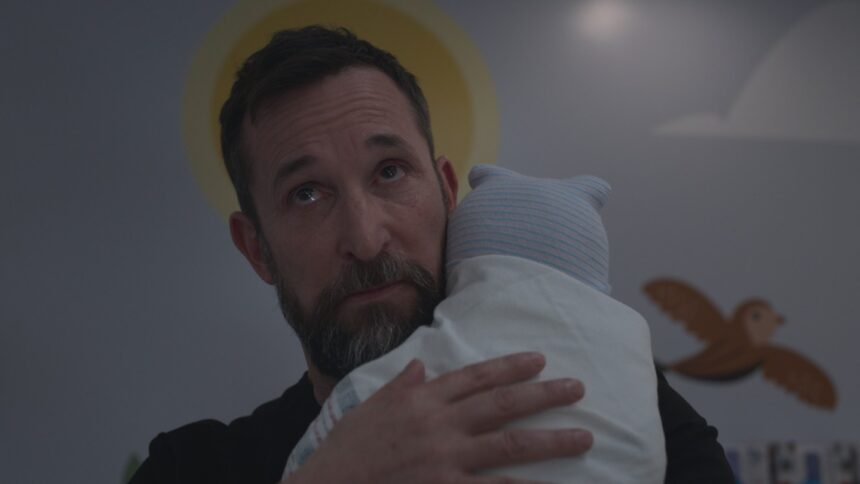
As for the significance of that final scene with baby Jane Doe, Wyle says that it was not only “appropriate” to end the season with his character on that “innocent, abandoned life,” but it also gives Robbie the opportunity “to be able to tell a dark secret to someone who he can’t repeat, who can’t answer it, in a room that’s almost hallowed ground for that kind of emotion.”
“This is the room where all of Ruby’s ghosts are, most of them anyway,” Wyle says of the place where he collapsed in Season 1 and watched Dr. Adamson die during the COVID-19 pandemic.
Looking ahead to Season 3, Wyle is hesitant to share too many details, partly because he “don’t know yet,” as the show’s writers, led by showrunner R. Scott Gemmell, are still plotting out the storylines.
But it does offer some mild speculation about where Robbie will go next.
“Knowing that if he wanted to see more cool stuff and make people like him, he was going to have to meet this universe halfway,” Wyle says. “How we do that is what we are playing with now.”
As for whether Robbie will go on his planned motorcycle trip and how long his vacation will last (three months or just a few days), “that’s all up for discussion,” Weil says.
Regarding the writers’ approach to storytelling, Wyle says they try to keep the focus relatively narrow and centered around the characters.
“As this show continues to expand larger and larger in its reception, resisting the temptation to expand larger and larger in its narrative is almost like a mantra that we keep repeating in the room, which is that this is about a very small community treating a very small community, which is a much larger problem in population,” he says. “But the more specific and focused we keep our narratives as what you’ll find in this arena and what these characters will find in their lives, the more accurate we can be. It feels more authentic to start with what’s already in our environment and then work outward.”