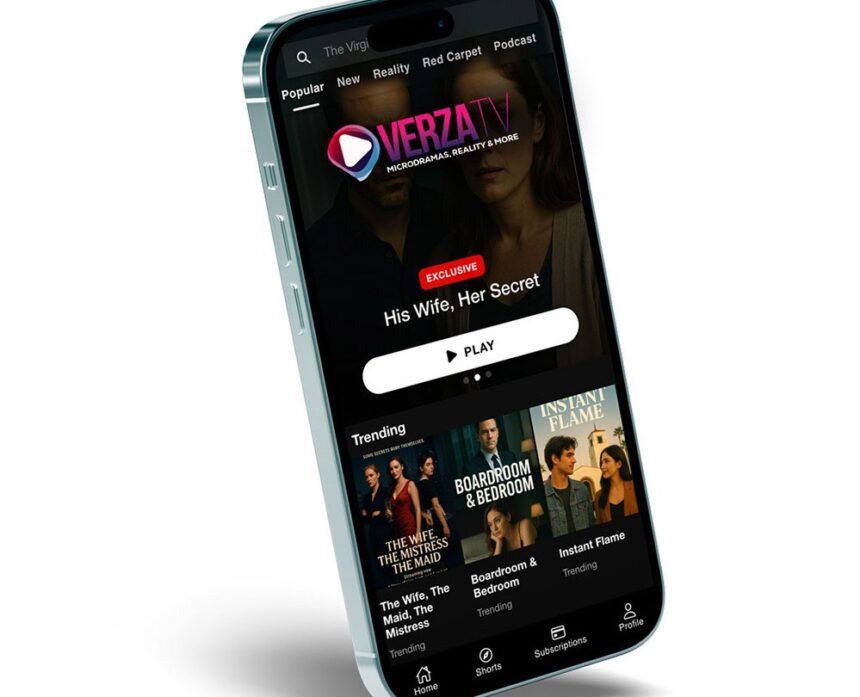
Alan Mruvka’s vertical video platform Verza TV is already moving beyond verticals. This doesn’t mean leaving the shorts format in portrait mode.
Verza TV, founded by the co-founder of E! Entertainment TV, just launched in December. Today, we have what the company internally calls “Verza 2.0,” which includes horizontal videos and a complete shift to user-generated content, Hollywood Reporter I’ve learned. So, yeah, YouTube + YouTube Shorts, basically, on a much smaller level. (To be fair, compared to YouTube, even Netflix is on a much smaller scale.) Verza TV positions itself as a “next-generation digital theater,” and says this shift will make the mobile-first platform scalable.
At launch, Verza licensed 80 Singapore-produced drama mini-series from an international distribution company. It was an odd choice for a US-based small drama platform (at the time of the announcement, at least).
“Verza is built on the idea that the future of entertainment will be mobile, immersive and accessible,” Mrovka said in a statement. “By evolving into a creator-driven ecosystem, we are empowering the next generation of storytellers while maintaining the premium quality that audiences expect. We are building the digital theater for the next generation.”
There’s that slogan again. Mruvka presents the Verza 2.0 at the NAB Show in Las Vegas.
Verza says the addition of traditional horizontal formats on the platform is a “first for the small drama category.” Going fully user-generated content will not impact production quality, Verza says, and creators will be able to check their monetization statistics in real-time.
Vertical videos, colloquially called “mini-dramas” (although sometimes comedic), are the latest trend in Hollywood, although most of the content comes from China (or Ukraine, in the case of Holywater). Time will tell if this trend is more than just a fad.
Right now, the space is crowded. There are the big companies like ReelShort and DramaBox, as well as startups from Hollywood veterans including MicroCo and GammaTime.
Microdramas are usually cheap dramas dubbed and cut into segments of approximately 60 seconds, although details can vary by platform. These mobile apps tend to offer the first few “episodes” for free, hoping to hook the viewer, and then charge the user to finish the story.