The spirit of Vaclav Havel and Jiri Bartoska lives on at the Karlovy Vary International Film Festival (KVIFF), and attendees of the 60th edition of the Czech festival will feel a sense of continuity and legacy, a reminder of the festival’s long history, along with the innovations and updates that the team always seeks to add regularly when it makes sense.
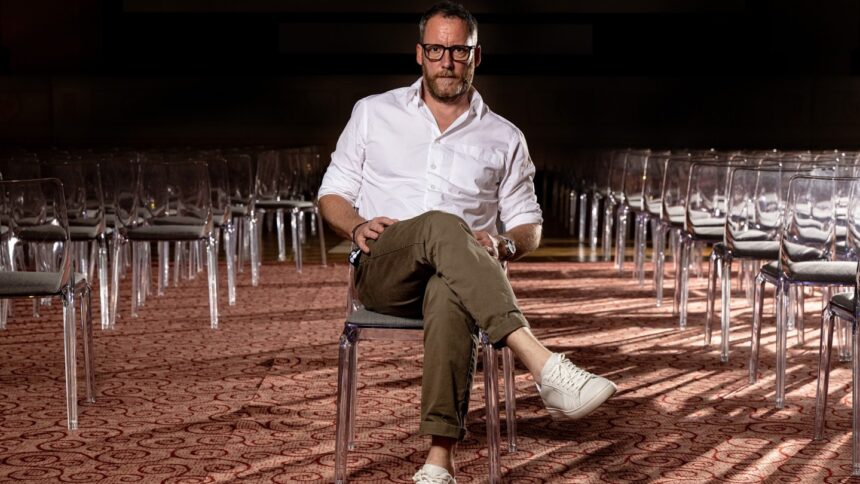
In fact, Krzysztof Mucha, who joined the festival team in 1997, became its CEO in 2004 and added the role of chairman of the KVIFF Group, and says for him and his colleagues, it’s all about connecting the past with the future. This combination of looking at history and paving the way for the future will also be a major theme of this year’s double anniversary edition of KVIFF, given that the festival was launched 80 years ago.
In fact, Karlovy Vary, one of the oldest film festivals in the world, was part of the so-called “first wave” of post-war European film festivals. Its first edition was held in 1946 as a non-competitive event featuring 13 events, including international participation, organized by the spa towns of Marianske Lázne and Karlovy Vary during the first half of August.
Organizers highlighted earlier this year that this first edition was actually held “before the inaugural editions of the festivals in Cannes and Locarno”. The event was initially called the Czechoslovak Film Festival, and the first edition was actually held in Marianske Lázne; then in Marianske Lázne and Karlovy Vary; And then only in Karlovy Vary.
The Venice Film Festival is older, having been founded in 1932 and renewed in 1946, with its first post-war edition following the inaugural edition of KVIFF.
This long history, with all its ups and downs, is what Karlovy Vary will highlight on its double anniversary. Two main figures have long been seen as ambassadors of the festival. They are Bartoska, the festival’s longtime president, who died last May after being the public face of KVIFF for more than three decades, and Havel, the author and former dissident turned Czech president, who died in 2011 but was a major force behind KVIFF’s scenes.
“For this year’s anniversary, we wanted to reference a few moments from the history of the festival, so there will be a big street fair, like last year when we held an exhibition of Mr. Bartoska’s photographs,” says Mucha. “So we will show the history of the festival, starting from 1946 until today. And also 2026 is Havel’s year, because he will be 90 this year. So we also want to remind people that Vaclav Havel was one of our big supporters, so there will be a small display of his photos.”
On the importance of the politician and actor turned KVIFF festival president, says Mucha THR: “Havel was one of the key people in the new era of the festival, because Mr. Bartoska brought Miloš Forman to the festival, and Havel was a friend of Mr. Bartoska. In those days, everyone was interested in meeting Vaclav Havel.”
The story goes like this: Havel would tell people from the film world interested in meeting him that he would be in Karlovy Vary in July, and that they had to come there if they really wanted to meet him. “It was the best support we could have ever had,” Mucha recalls. “When I went to the United States, I was the one who prepared the invitation letters. I went to Mr. Havel’s office, and he was using these colored pencils, green and red, and he was writing: ‘We will see each other in Karlovy Vary.’ So I was using these invitation letters, and that really helped me.
The two famous names and their close relationship were pivotal when KVIFF fell on hard times. In 1993, the new Czech Republic government withdrew financial support for many cultural events to focus on achieving financial independence, putting KVIFF at risk. After a backlash, the Ministry of Culture called on a group of influential citizens to chart a path forward. Bartoska and veteran film journalist Eva Zauralova worked with the ministry, the city of Karlovy Vary and the historic Grand Hotel Pub, which later became the inspiration for a Wes Anderson film. Grand Budapest HotelTo establish the Karlovy Vary Film Festival Foundation.
In 1995, Bartoska became the festival’s president, and Zhuralova its program director (a position she held until her death in 2022). The International Federation of Producers’ Associations then revoked the festival’s Category A status and moved it to the new Golden Golem Festival in Prague. But Havel succeeded. He declined to attend the Prague event, instead appearing at KVIFF’s opening night. From there, KVIFF evolved into today’s haven for movie fans and celebrities.
But KVIFF’s history also extends far beyond Bartoska and Havel: “We are very proud to be the second oldest film festival in the world,” says Mucha. THR. “It’s only a few days, because Locarno and Cannes were out two days after us, but this is very important for us.”
The fact that this year marks the 60th edition of KVIFF in its 80th year tends to confuse people. The reason was that during the period of the Soviet Union and the Eastern Bloc, the political leadership wanted to hold a high-profile film festival in Moscow, but they also realized that a festival already existed in Karlovy Vary. “So they decided to have semi-annual events, held every two years in Karlovy Vary and in Moscow,” Mucha explains.
An interesting thing happened when Bartoska died last year. “A lot of people came up to us and asked us if he was the founder of the festival, and we realized that even in this country, not many people know about this amazing history of the festival and that it started in 1946,” Mucha says. “So we said, well, we have to remind people of this and that they should be proud of something like this.”
This year’s KVIFF lineup announcement also led to a name check on one of the festival’s founders, longtime programming director AM Brousil, who focused early on non-European cinema, opening up selections outside the region in which the festival is held. Karlovy Vary proudly stressed that its anniversary program is characterized by “extraordinary geographical diversity”.
This is exactly where the past and future connect to keep KVIFF, its audience and attendees energized. “We have a film festival that survived the ugly,” Mucha concludes [decades under Soviet domination 1948-1989] In this country. “Our festival has a rich history, and we can and should be proud of it.”