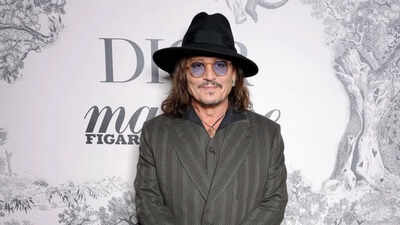
Johnny Depp says his lifelong fascination with human behavior contributed to shaping the unconventional roles he chose throughout his career. (Instagram)
Johnny Depp knows how to make an impression that will last forever. At CinemaCon in April 2026, the room debuted footage of Ebenezer: A Christmas Carol, directed by Ti West and scheduled for release on November 13, 2026.
Depp, who plays Ebenezer Scrooge, is described as completely unrecognizable, buried under layers of aging make-up, completely transformed into a terrifying and vulgar Victorian miser. It’s the most famous role he’s played in nearly a decade, and by all early accounts, he’s completely disappeared into it. He also stars in the thriller “Day Drinker” alongside Penélope Cruz, scheduled for release later in 2026. As talk grows about his return, a line he made years ago in an interview has never fully explained it.Today’s quote reads, “People say I make strange choices, but they’re not strange to me. My illness is that I’m fascinated by human behavior, by what’s beneath the surface, by the worlds inside people.”
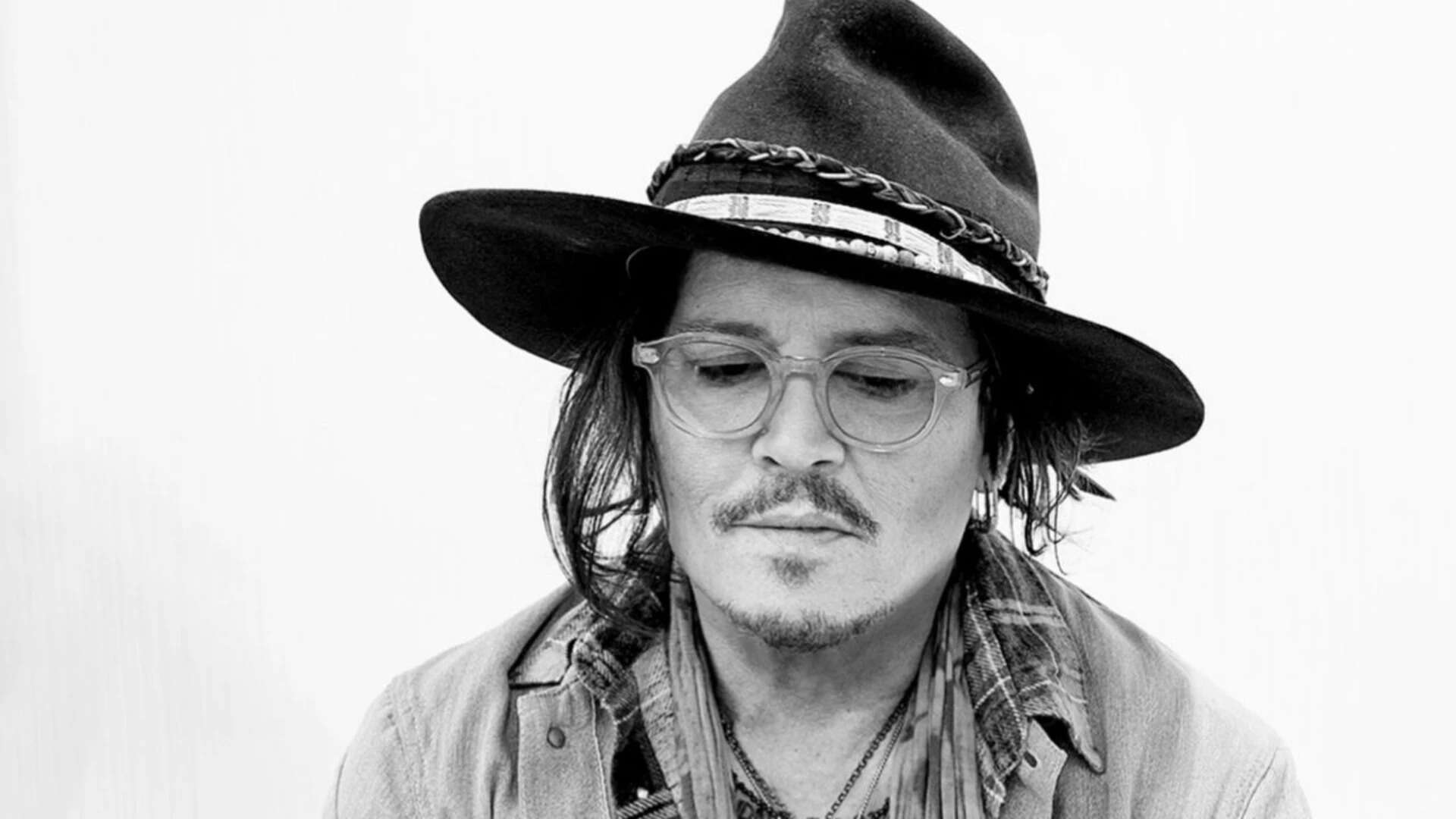
Depp’s portrayal of Captain Jack Sparrow transformed the Pirates of the Caribbean franchise and became one of cinema’s most iconic characters. (Instagram)
Meaning of Johnny Depp’s quote of the day
Johnny Depp made the statement during an interview with Vanity Fair magazine, while reflecting on his unconventional approach to his acting career. The interview was not a defensive moment. It was an explanation.
The word he chose to frame, illness, is the most interesting thing about the quote.He did not say passion. Curiosity did not diminish. He said illness. The distinction is important. Passion is something you choose to pursue. Illness is something that chooses you. It’s involuntary. It is foundational. It’s the thing that works in you whether you let it or not, the compulsion that pulls you toward certain rooms, certain people, certain questions, regardless of whether those rooms are comfortable or those questions have easy answers.
By describing his fascination with human behavior as a disease, Depp describes something that was never a professional option. It has always been a calling. And not nice.
Now, at a point in his career where the easy choice would be to play a safe, legible role and prove to Hollywood that he’s credible and uncomplicated, he has chosen instead to hide under layers of makeup to become one of literary literature’s most psychologically complex characters. A man is defined by what is beneath his surface. A man whose inner life has been hidden for decades beneath cruelty and coldness is the subject of the entire story.
It is, in the way Depp can imagine, absolutely the right decision.
The beginning of Johnny Depp’s life
John Christopher Depp II was born on June 9, 1963 in Owensboro, Kentucky, the youngest of four children, and moved around a lot throughout his childhood as his family moved to Florida, according to IMDb. His parents divorced when he was 15, a period he describes as destabilizing, and he dropped out of high school at 16 to pursue music, forming a band called The Kids that eventually moved to Los Angeles in search of a recording deal.
The deal never came. What came instead was acting, initially as a gig, when his then-girlfriend introduced him to her agent, who suggested he try it.

Johnny Depp has moved beyond his early television success to build a career defined by bold and unconventional performances. Image credit (Instagram)
He made his film debut in Wes Craven’s 1984 film “A Nightmare on Elm Street,” followed by his success as the lead of the TV series “21 Jump Street,” which ran from 1987 to 1990 and made him a teen idol in a way he described as deeply uncomfortable. He has often spoken of his determination to break away from that image as quickly as possible, which is precisely the drive that led him to Tim Burton and the beginning of one of the most distinguished actor-director partnerships in American cinema.
Johnny Depp’s legacy: Characters that no one else will play
“Edward Scissorhands,” “Ed Wood,” “Fear and Loathing in Las Vegas,” “Donnie Brasco,” “Sleepy Hollow,” “Blow,” “Finding Neverland” (which received an Oscar nomination), “Charlie and the Chocolate Factory,” “Sweeney Todd: The Demon Barber of Fleet Street” (which received his third Oscar nomination), and of course the five “pirates.” From the Caribbean films, his portrayal of Captain Jack Sparrow has become one of the most beloved and widely imitated characters in modern cinema.
Each of them was a choice that conventional Hollywood logic at the time said was risky, bizarre, or simply wrong. Each of them was a choice that proved, once again, that the illness he described in the Vanity Fair interview was not a burden. It was always the engine.At 62 years old, he’s preparing to release the film that may define the next chapter of a career that has already defied every conventional form a profession is supposed to take. And the man who said his illness was his fascination with what was beneath the surface chose a character whose entire story revolved around exactly that for his return. What is under. What was hidden. What can still, even in the end, be replaced.