World premiere of the family drama Cupping It will be a bittersweet moment for Iranian writer and director Nader Siwar (witness, No end, Sleep). After all, the film was produced and edited by his old friend and creative collaborator Jaafar Panahi. The duo co-wrote the Palme d’Or at Cannes 2025 It was just an accidentbut only Cyvar will be able to travel to attend the world premiere of his film Cupping In the main Crystal Globe competition at the 60th Karlovy Vary International Film Festival (KVIFF) on Wednesday, July 8.
Sefar left Iran for Berlin in the middle of filming incidentto prepare Cupping His first film made entirely outside the country. Karlovy Vary had hoped to welcome Panahi to the film delegation, but the director returned to Iran after the incident. incident Oscar campaign. Recently, the Iranian authorities confiscated his passport, and he faces another prison sentence in Iran, after he was convicted of “propaganda against the regime.”
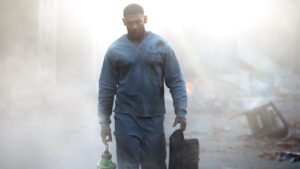
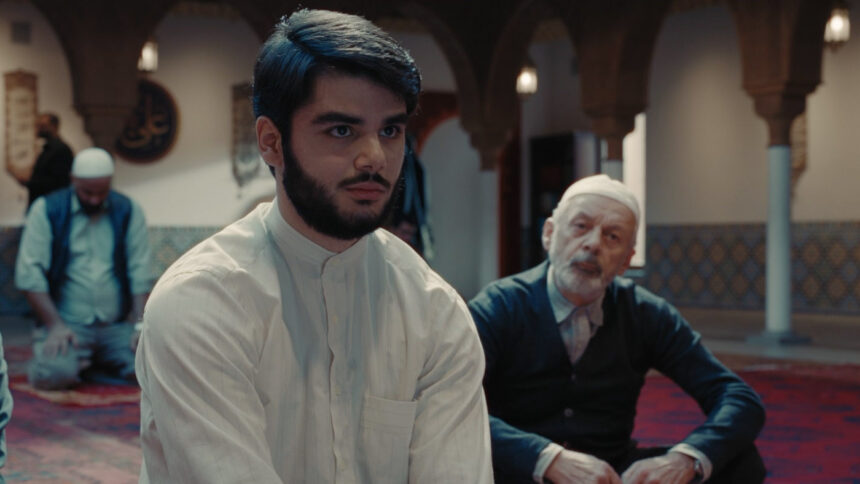
in Cuppingmulti-hyphenate Kida Khader Ramadan plays Mourad, who struggles to protect his younger brother Karam (Gael Jim Ilhan) when he discovers that the little brother is gay. Soon, long-buried secrets threaten to tear apart his devout Muslim family and their life in Berlin. Nicolette Krebitz, Aziz Kapcourt, Moritz Bleibtreu and Nastasja Kinski also participate in the film.
Cupping is an ancient therapeutic practice also known as wet cupping, which is designed to draw small amounts of blood from the body to relieve pain and remove toxins.

Ahead of the film’s world premiere, Sivar spoke to THRexpressed by a translator, expressed the inspiration for CuppingAnd how his personal journey plays a role in the film, where he talks to Panahi every day and why everyone needs cupping.
In fact, the idea that people can control their minds is the core of the film. “I think we have to address issues that are like the wall we have built around ourselves,” Cyvar says of the film’s inspiration. “Without it, we cannot change any political issues. It is like ‘dirty’ blood at the back of our bodies, as we see in Cupping. If we don’t get rid of it, if we don’t treat it, nothing will change!
Cupping It represents a change from the director’s more outwardly focused activity. “My previous three films were about social issues and people’s goals,” he says. THR. “But for this film, I stopped thinking about that and instead thought about the roots of these problems. In fact, this film is like my story in the present.”
In fact, his personal journey and experience reflect the themes explored Cupping. “Moving to Berlin helped me think about myself and my inner feelings…” says Sayfar. “When I moved from Iran to Berlin after 50 years of my life, I suddenly realized that all those wrong beliefs that I had – collapsed in one night. I suddenly realized that I was wasting my energy on such wrong and rigid beliefs.”

Such as his position on the relationship between Iran and Iraq. “In the 1980s, in Iran, we thought we had an eight-year war with Iraq, and we thought if we went to that war and fought, it would be the right thing, and we should die for our beliefs,” Sefar recalls.
He continues, “I was a child, and I believed that strongly.” “I really wished I would grow up quickly to go to war and become a martyr. Just imagine what it was like when I later realized that all that war was because of some people’s political gains?! Imagine how I felt. Where was God? Where was heaven?”
He adds that the fear of questioning one’s beliefs is as much an obstacle to change as propaganda: “There are still a lot of people in Iran who believe these things, and even if they knew about them, they were afraid to put them aside and change their minds.”
Most importantly, Cupping It may be set in Berlin’s Turkish community, but its themes are universal. “I used this issue in a small community as an excuse to address something universal – the rigid beliefs that we have in our minds and that we have built like a wall around ourselves,” the director explains. “In the East, we can say that this wall around us is made up of religion and religious beliefs, but in the West, the wall is built of memories of the past. Eastern man breaks under the weight of religion and rigid beliefs, but Western man breaks or suffocates with the memory of the glorious past. Until you lift this burden from your shoulders, you will never reach true freedom. That is why I believe everyone needs cupping.”
This is why Cupping In one scene, Murad is shown being taken into the basement of a building, as if digging deep and looking inside himself.

Regarding choosing Ramadan to be the hero of the film, Sefar says THR“He is very well known in Germany and in the Arab and Turkish community in Berlin. We have a saying in Persian: ‘If you want to conquer a village, you have to see the mayor first.’ And Kida is like that mayor. I thought that if I wanted to reach this community, it was better for him to speak, not me. He was like a brother next to me. I think he is an actor not only with skills but also with heart. He reminds me of the best of the French actor Jean Reno.”
When Panahi came to Berlin to edit, he was “amazed by his work,” Sefar recalls of his famous friend’s reaction to Ramadan’s work. “What a good choice!” he said. This guy is really amazing.”
Panahi’s absence from the Karlovy Vary premiere clouds the conversation. “Unfortunately, there won’t be,” Sivar says simply. He cannot leave Iran.”
However, the two remain close as ever. “I talk to him every day. We talk for at least one hour a day because he is bored in Iran. He can’t do anything. He is very busy with the judiciary, he goes to court and sees a lawyer every day and so on. Instead of spending his time on a new project, he has to spend all his time and energy on these cases.”
The bond between them shows no sign of fading. When Sivar and many colleagues from It was just an accident They were accepted into the academy, and it was Panahi who picked up the phone first. “He called me to congratulate me,” Sivar recalls. “Every time I have a new idea, Jaafar Panahi is the first person I talk to.”