I didn’t find out I had Tourette’s Syndrome from a doctor, I found out about it from a doctor 20/20 private.
When I was in school, a black kid who was constantly talking and acting out in class, my mother and I didn’t know what I had until we saw people being interviewed about their condition on television, which led us to seek out and get an official diagnosis.
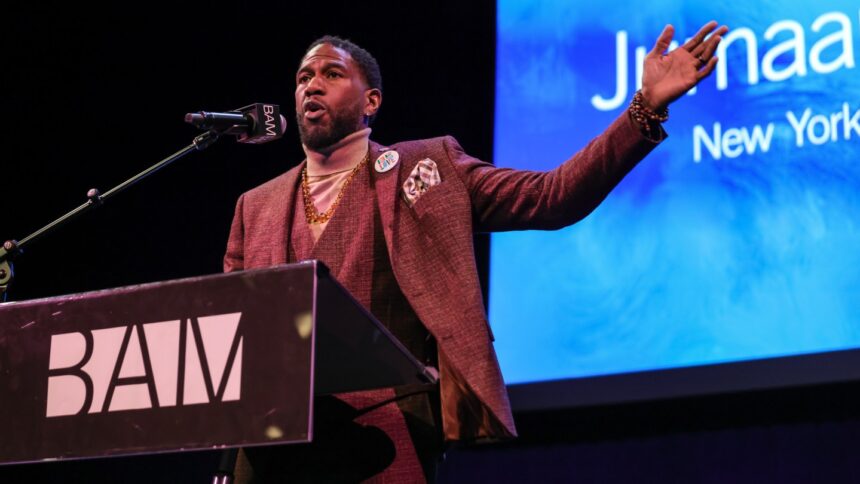
Now, my position as New York City’s second-highest-ranking elected official, and the highest-ranking Black leader in city government, means that I’m in a very clear place with a very clear disability.
My first exposure to Tourette Syndrome came through television, and now a BAFTA broadcast on the BBC has ensured that many people can say the same.
When I heard the N-word thrown at Michael B. Jordan and Delroy Lindo, it was so familiar in every way. As a Black government leader, I was constantly called the N-word by trolls. As one of the 20 percent of people with Tourette’s syndrome who exhibit coprolalia — the involuntary outburst of obscenities — I’ve said the N-word several times.
Tourette’s disease, and especially coprolalia, is not related to filter deficiency. It’s an involuntary compulsion that forces you to do precisely the most intrusive thought or say the worst intrusive thing, and sometimes the more inappropriate it is for the setting, the stronger the compulsion. If I were in a library with a no-shouting sign, that might specifically prompt me to scream.
It’s like sneezing. There is not much you can do to prevent this. Sometimes you can make your tantrums worse – say part of the word calmly, or modify it to hide it – but not everyone can do that, and not all the time. I find ways to cover up verbal tics, by changing the volume or pronunciation. But it’s not easy, there is a real cost, and it can cause pain in the moment, and more aggressive attacks later. Surprisingly, the only time my tics go away is when I’m engaged in my first love – acting.
My experience is my own, but I hope it helps others. I want people to know more about this condition, I want people with Tourette’s to be able to feel comfortable in public, and I want society to understand that. I want compassion to be shown to children who are punished, ridiculed or excluded because of their condition, and I hope this will be the result of the BAFTA controversy.
We must be kind and considerate toward the person with a disability — especially the person who is there as an advocate for engagement about Tourette’s. We also have to thank Michael B. Jordan, Delroy Lindo, and everyone in the room.
All of this does not mean that there was nothing that could be done, or that hearing that word, at that moment, did not cause serious harm. As a black man, no matter what, this word has power and causes real harm, and we cannot underestimate it. I think we can realize that even involuntary influence, devoid of intention, cannot be ignored. Too often, the burden of empathy falls primarily on the Black community.
Like many black people in the public eye, I am aware of what Jordan and Lindo were forced to do in that moment — show poise in the face of pain. BAFTA and the BBC have provided no real support or sponsorship for this burden.
Just as John Davidson had to deal with this high-pressure situation by deliberately increasing sponsorship, so too did BAFTA – a mandate they did not achieve. They did not adequately prepare the room for the specific potential for racial slurs to explode, nor did they respond with care and concern to people affected by their use.
I understand the anger here – on behalf of black artists who have been subjected to this word, on behalf of the disability community who feel evil and misunderstood. I think any anger should be directed at BAFTA and the BBC. I don’t know why they didn’t cut this painful moment from the broadcast. I hope it’s not just to generate controversy and interest, but the fact that they felt free to edit other moments — like one honoree saying “Free Palestine” — shows that they had editorial power and used it to silence voluntary expression, but not involuntary harm.
At the same time, if there’s interest, I hope it turns into a constructive conversation — about what it’s like to have Tourette’s and deal with these impulses, about what it’s like to be a black public figure and be hit by hate speech even in your most triumphant moments. And I hope we can replace the toxicity in that conversation with compassion. Because if there’s one thing Tourette’s has done for me, it’s ensured I’m always moving — and cultural conversation can do that, too.
Some of my most impactful experiences in my position have been when young people come to me and say they don’t think they can access government because of something about their identity — their race, their background, their disability — things that may cause a negative perception in some members of the public. But my experience inspired them, and it inspired me.
I was the first elected official in the country with Tourette’s Syndrome. I’m proud to say I’m no longer the only one. And I want young people like me to know that your condition is part of you, but you’re not defined by it, and you don’t have to limit what you do — just change the way you do it.
I swear.
Jamaan Dr. Williams, the son of immigrants from Grenada, has served as New York City’s public defender since 2019, where he has worked to improve affordable housing, community safety, transparency and accountability. In addition to his role as the second-highest-ranking elected leader of the city government, he regularly performs on stage throughout the Theater of War.