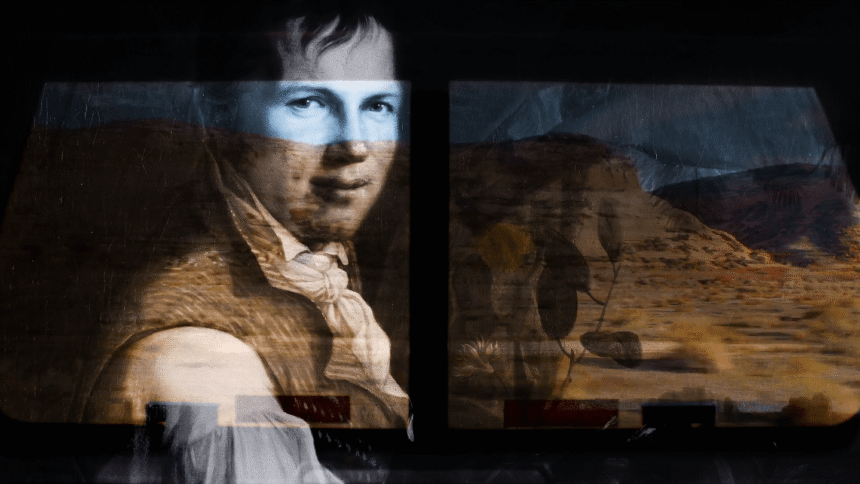
“Everything is connected.” This concept has been applied to everything from nature to society, including our lives in the digital age amid climate change, and was popularized by the German naturalist and polymath Alexander von Humboldt in the 19th century. His thinking and the pros and cons of interconnectedness are major themes explored in the film by director and environmentalist J. Anthony Svatek Humboldt USAwhich makes its world premiere in the International Feature Film Competition of the 57th Annual Visions du Réel Documentary Film Festival in Nyon, Switzerland, on Wednesday, April 22, before its North American premiere on May 2 at the Museum of the Moving Image’s First Look Festival.
The diverse film travels to different parts of Humboldt’s eponymous United States to follow urban activists promoting the greening of neglected neighborhoods, scientists surveying redwood forests, and people returning bighorn sheep to protected lands. “Across generations and landscapes, Humboldt USA “It asks what remains of the ‘interconnectedness’ vision,” the summary states.
“As the film progresses, its form reflects the annihilation of space and time, reflecting the technological interconnectedness and modern infrastructure that contribute to our alienation from the natural world.”Some thoughts on the common frog) The highlights of the director’s statement. “At the core of the film, viewers are asked to question notions of ‘nature’ and ‘environmentalism’ in order to spark imagination and encourage action. In an attempt to break down entrenched beliefs that the environmental crisis is solved through consumerist and individualistic means, Humboldt USA It celebrates the multitude of ways Americans relate to and protect nature—even within frameworks that contribute to the unfolding crises.
The director also describes Humboldt as “someone who opposes the dominant Western scientific model from the inside,” as the film contrasts his life and circumstances with Humboldt’s life and times. “This serves multiple purposes: from establishing a relationship with Humboldt, to critiquing the dominance of colonial and polluting infrastructure, to showing how technology changes our sense of space,” shares Svatek. “Humboldt and I share an approach based on constant code-switching and questioning—by relating to an outsider as a traveling gay colonial figure, I ask how, 200 years later, his ideas might be helpful or harmful in untangling ourselves from the technological web.”
Svatek wrote and directed Humboldt USAWhile the cinematography was handled by Sean Hanley and the director. Editing courtesy of Kaija Siirala and Svatek. The film is produced by Svatek and Elijah Stevens of Space Time Films, which is also handling sales.
THR You can now exclusively premiere a clip from Humboldt USA. “Four degrees and seven years ago…” we hear while seeing photos of the Shells shopping destination. Yes, this is part of Abraham Lincoln’s famous Gettysburg Address, and it turns out Lincoln is taking animated form here. But why are we in a shopping mecca with an indoor Ferris wheel and an aquarium?! Why are those figures from Thomas Jefferson and other US presidents?! What about those animals, whether they are real or in the form of mummification and statues?! Especially those desert sheep with big horns?!
a witness Humboldt USA Clip below to see, hear and feel more of what awaits you in this cinematic exploration of nature and human alienation from it.